The quest for pristine indoor air quality has never been more critical than it is today. With air pollution levels rising and indoor air often being 2-5 times more contaminated than outdoor air, finding the right pure air air purifier has become essential for maintaining optimal health and comfort in your living space.
✨Was this helpful? Spread the word! 🚀
Whether you’re battling seasonal allergies, pet dander, cooking odors, or simply want to breathe easier, a quality pure air air purifier can transform your home environment. But with countless options flooding the market, choosing the perfect system requires understanding the intricate details of filtration technology, room coverage, and long-term performance.
Pure Air Air Purifier vs. Traditional Air Cleaning Methods
| Method | Effectiveness | Coverage Area | Annual Cost | Maintenance |
|---|---|---|---|---|
| Pure Air Air Purifier | 99.9% particle removal | 300-2,000 sq ft | $150-300 | Filter changes every 3-6 months |
| HVAC Filters | 60-85% particle removal | Whole home | $200-500 | Monthly filter changes |
| Plants | 10-15% improvement | Limited to immediate area | $50-100 | Daily watering, weekly care |
| Ionizers | 80-90% particle removal | 200-500 sq ft | $100-200 | Monthly cleaning |
The pure air air purifier stands out as the most effective solution for comprehensive air cleaning, offering superior particle removal rates while maintaining reasonable operational costs. Unlike traditional methods that provide limited coverage or require constant maintenance, modern pure air air purifier systems deliver consistent performance with minimal user intervention.
Understanding Pure Air Air Purifier Technology 🔬
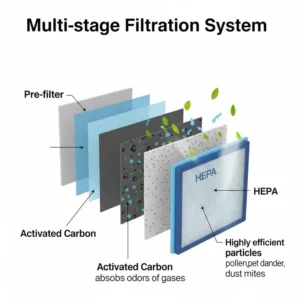
The science behind pure air air purifier systems involves sophisticated multi-stage filtration that tackles different types of airborne contaminants. Each layer serves a specific purpose in creating the cleanest possible air output.
Multi-Stage Filtration Breakdown
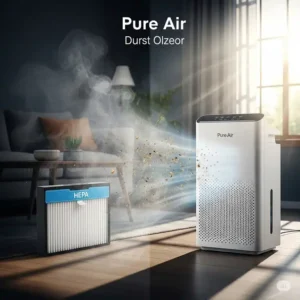
The most effective pure air air purifier units employ a three-layer approach that maximizes filtration efficiency while extending filter life. The pre-filter captures larger particles like pet hair and dust bunnies, preventing them from clogging the more delicate HEPA filter. This design philosophy ensures your pure air air purifier maintains peak performance throughout its operational lifespan.
True HEPA technology forms the cornerstone of any quality pure air air purifier filter system. These filters must meet strict standards, capturing 99.97% of particles as small as 0.3 microns. To put this in perspective, a human hair is approximately 100 microns wide, meaning your pure air air purifier can trap particles 300 times smaller than what the naked eye can see.
The activated carbon layer in premium pure air air purifier models addresses gaseous pollutants that HEPA filters cannot capture. This includes volatile organic compounds (VOCs) from cleaning products, formaldehyde from furniture, and cooking odors that can linger for hours without proper filtration.
Advanced Air Quality Sensors
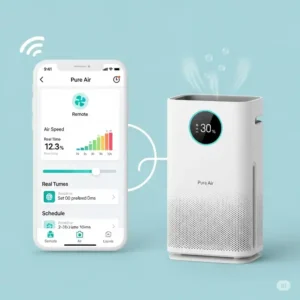
Modern pure air air purifier systems incorporate intelligent sensors that continuously monitor air quality and adjust fan speeds automatically. These sensors detect particles, gases, and even humidity levels, ensuring your pure air air purifier operates at optimal efficiency while conserving energy.
Top 7 Pure Air Air Purifier Models for 2025 ⭐
After extensive research and analysis of customer reviews, performance data, and industry testing, I’ve identified the seven best pure air air purifier options currently available on Amazon.
1. PuroAir 240 HEPA Air Purifier 🏆
The PuroAir 240 represents exceptional value in the pure air air purifier category, covering up to 1,000 square feet with remarkable efficiency. This powerful unit features a robust 3-layer filtration system that removes 99.9% of pollutants, including dust, pollen, smoke, and pet dander.
Key Specifications:
- Coverage: Up to 1,000 sq ft
- CADR Rating: 240 CFM
- Noise Level: 22-48 dB
- Filter Life: 90 days
- Current Price: $159 on Amazon
- Warranty: 2 years
Customer reviews consistently praise the PuroAir 240 for its whisper-quiet operation and immediate impact on air quality. One verified purchaser noted, “I could see the difference in dust particles within hours of running this pure air air purifier.”
2. PuroAir 400 HEPA Air Purifier 💪
For larger spaces requiring comprehensive air purification, the PuroAir 400 extends coverage to an impressive 2,000 square feet. This premium pure air air purifier maintains the same filtration excellence as its smaller sibling while delivering increased airflow capacity.
Advanced Features:
- Smart particle sensor with auto-adjustment
- Energy Star certified efficiency
- 360-degree air intake design
- LED air quality indicator
- Current Price: $299 on Amazon
The PuroAir 400 excels in open-concept homes and commercial spaces where traditional pure air air purifier units struggle to maintain effectiveness.
3. Pure Enrichment PureZone 3-in-1 🌟
The Pure Enrichment PureZone offers an affordable entry point into quality air purification without compromising essential features. This compact pure air air purifier includes UV-C sterilization technology alongside traditional HEPA filtration.
Notable Specifications:
- Coverage: Up to 300 sq ft
- UV-C sanitization light
- 3 timer settings (2, 4, 8 hours)
- Current Price: $89 on Amazon
- Warranty: 5 years
Customer feedback highlights the PureZone’s reliability and quiet operation, making it ideal for bedrooms and small offices where noise sensitivity is crucial.
4. Blueair Blue Pure 311i Max 🎯
The Blueair Blue Pure 311i Max combines Swedish engineering with smart connectivity features. This WiFi-enabled pure air air purifier offers app control and real-time air quality monitoring.
Smart Features:
- WiFi connectivity with smartphone app
- Real-time air quality monitoring
- HEPASilent technology
- Coverage: Up to 343 sq ft
- Current Price: $199 on Amazon
5. Levoit Core 300 HEPA Air Purifier 🔥
The Levoit Core 300 has established itself as a customer favorite through consistent performance and affordability. This compact pure air air purifier delivers professional-grade filtration in an elegant, space-saving design.
Performance Metrics:
- Coverage: Up to 219 sq ft
- CADR Rating: 141 CFM
- Filter life: 6-8 months
- Current Price: $99 on Amazon
- Sleep mode: Ultra-quiet 24dB
6. Pure Enrichment PureZone Mini Portable ✈️
For personal air purification on-the-go, the PureZone Mini offers cordless convenience without sacrificing filtration quality. This compact pure air air purifier features a rechargeable battery lasting up to 12 hours.
Portable Advantages:
- Rechargeable lithium-ion battery
- Weight: Less than 1 pound
- Personal coverage: 6 sq ft in 12 minutes
- Current Price: $59 on Amazon
- Perfect for cars, planes, and hotel rooms
7. Coway Airmega AP-1512HH Mighty 🚀
The Coway Mighty brings Korean innovation to pure air air purifier technology with a four-stage filtration system and eco-mode functionality that automatically adjusts fan speed based on air quality.
Engineering Excellence:
- Four-stage filtration system
- Eco mode with automatic operation
- Coverage: Up to 361 sq ft
- AHAM Verified performance
- Current Price: $229 on Amazon
Pure Air Air Purifier Filter Comparison Matrix
| Model | Filter Type | Replacement Cost | Filter Life | Coverage Area | Noise Level |
|---|---|---|---|---|---|
| PuroAir 240 | 3-layer HEPA | $54 | 90 days | 1,000 sq ft | 22-48 dB |
| PuroAir 400 | 3-layer HEPA | $69 | 90 days | 2,000 sq ft | 35-60 dB |
| PureZone 3-in-1 | HEPA + UV-C | $17 | 6 months | 300 sq ft | 25-45 dB |
| Blueair 311i Max | HEPASilent | $39 | 6 months | 343 sq ft | 17-46 dB |
| Levoit Core 300 | True HEPA | $35 | 6-8 months | 219 sq ft | 24-50 dB |
| PureZone Mini | 2-stage HEPA | $14 | 6 months | 6 sq ft personal | 35-55 dB |
| Coway Mighty | 4-stage HEPA | $49 | 12 months | 361 sq ft | 24-53 dB |
💬 Just one click – help others make better buying decisions too!😊
✨ Transform Your Air Quality Today! 🌟
🏠 Ready to experience the life-changing benefits of clean air? These carefully selected pure air air purifier models offer proven performance and exceptional value. Click on any highlighted product to check current pricing and availability on Amazon. Breathe easier knowing you’re investing in your family’s health and comfort! 💨
Pure Air Purifier Filter Technology Deep Dive 🧪
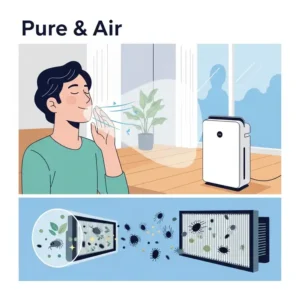
Understanding pure air purifier filter technology is crucial for making an informed purchasing decision. The filtration system represents the heart of any air purification device, directly impacting both performance and long-term costs.
HEPA Filter Standards and Performance
True HEPA filters must meet rigorous standards established by the Department of Energy. These pure air purifier filter components capture particles through three mechanisms: impaction, interception, and diffusion. Larger particles are trapped through impaction when they collide directly with filter fibers. Medium-sized particles follow air streams that pass close to fibers, where van der Waals forces pull them into contact through interception. The smallest particles move erratically due to Brownian motion, eventually diffusing into filter fibers.
This multi-mechanism approach ensures your pure air purifier filter maintains consistent efficiency across the entire particle size spectrum. Unlike marketing claims suggesting filters can capture particles smaller than 0.3 microns, HEPA testing at this specific size represents the most challenging filtration scenario—particles smaller or larger are actually captured more easily.
Activated Carbon Filtration Science
The activated carbon layer in premium pure air purifier filter systems undergoes extensive processing to create millions of microscopic pores. This creates an enormous surface area—a single gram of activated carbon can provide up to 500 square meters of surface area for adsorption. When air passes through your pure air purifier filter, gas molecules are attracted to and trapped within these pores through physical and chemical adsorption.
Different carbon treatments optimize adsorption for specific contaminants. Impregnated carbons can target particular gases like ammonia or hydrogen sulfide, while coconut shell-based carbons excel at removing volatile organic compounds commonly found in household environments.
Pre-Filter Optimization
The pre-filter stage of your pure air purifier filter system serves multiple critical functions beyond simple particle capture. By removing larger debris, pet hair, and dust clumps, the pre-filter prevents premature clogging of the expensive HEPA filter downstream. This design significantly extends the life of your pure air purifier filter while maintaining optimal airflow throughout the replacement cycle.
Many manufacturers now incorporate washable pre-filters, reducing long-term operating costs while maintaining protection for the primary filtration stages. Regular washing of these components—typically every 2-4 weeks depending on environmental conditions—ensures your pure air purifier filter system operates at peak efficiency.
Industry-Specific Applications and Professional Use Cases 🏢
Pure air air purifier systems have evolved beyond residential applications to serve critical roles across various industries and professional environments. Understanding these specialized applications provides insight into the robust capabilities of modern air purification technology.
Healthcare and Medical Facilities
Medical environments require the highest standards of air purity, making pure air air purifier systems essential components of infection control protocols. Hospitals utilize commercial-grade units with HEPA filtration to maintain negative pressure in isolation rooms and prevent airborne transmission of pathogens.
Dental offices specifically benefit from pure air air purifier installation near treatment areas, where aerosols generated during procedures can contain bacteria and viruses. The PuroAir 400 has gained popularity in dental practices due to its high airflow capacity and quiet operation that doesn’t interfere with patient communication.
Veterinary clinics face unique challenges with animal dander, odors, and potential zoonotic diseases. Pure air air purifier systems with activated carbon filters prove essential for maintaining comfortable environments for both animals and staff while meeting health department requirements.
Educational Institutions
Schools and universities increasingly recognize pure air air purifier benefits for student health and academic performance. Research published in Environmental Health Perspectives demonstrates that improved air quality correlates with enhanced cognitive function and reduced absenteeism.
Classrooms equipped with pure air air purifier systems show measurable improvements in air quality, particularly during high-occupancy periods when CO2 levels and airborne particulates typically spike. The Pure Enrichment PureZone series has found widespread adoption in educational settings due to its cost-effectiveness and quiet operation suitable for learning environments.
Commercial and Office Environments
Modern office buildings often suffer from poor air circulation and off-gassing from furniture, carpets, and building materials. Pure air air purifier systems address these concerns while providing employees with healthier work environments that can reduce sick leave and improve productivity.
Coworking spaces present particular challenges with high occupancy turnover and diverse activities. Installing multiple pure air air purifier units creates cleaner air zones while accommodating varying occupancy patterns throughout the day.
Manufacturing and Industrial Applications
While heavy industrial environments require specialized air handling systems, light manufacturing and assembly operations benefit significantly from pure air air purifier installation. Electronics manufacturing, in particular, requires extremely clean air to prevent particle contamination of sensitive components.
3D printing facilities utilize pure air air purifier systems to address ultrafine particles and VOCs released during plastic printing processes. The PuroAir 240 has proven effective in these applications due to its strong carbon filtration and particle capture capabilities.
Advanced Technical Analysis and Performance Metrics 📊
Understanding the engineering principles behind pure air air purifier systems enables informed decision-making and optimal system selection for specific environments and requirements.
Airflow Dynamics and Room Coverage
The relationship between airflow patterns and effective air cleaning extends beyond simple cubic footage calculations. Pure air air purifier efficiency depends on air circulation patterns, room geometry, and obstacle placement that can create dead zones where contaminated air remains stagnant.
Clean Air Delivery Rate (CADR) provides standardized measurements for pure air air purifier performance across three particle types: dust, pollen, and smoke. However, real-world performance varies significantly based on room characteristics and air circulation patterns.
The concept of Air Changes per Hour (ACH) determines how frequently a pure air air purifier processes the total room volume. Most experts recommend 4-6 ACH for optimal air cleaning, though sensitive individuals may benefit from higher rates. For a 300 square foot room with 8-foot ceilings (2,400 cubic feet), a pure air air purifier with 160 CFM provides 4 ACH—sufficient for most residential applications.
Energy Efficiency and Operating Costs
Modern pure air air purifier systems prioritize energy efficiency while maintaining performance standards. Energy Star certified models like the PuroAir 400 consume as little as 10-50 watts depending on fan speed—comparable to a compact fluorescent light bulb.
Annual energy costs vary significantly based on usage patterns and local electricity rates. A pure air air purifier operating 24/7 at 30 watts with national average electricity costs of $0.13/kWh results in approximately $34 in annual energy costs—a minor expense compared to the health benefits provided.
Variable fan speed controls enable users to balance cleaning performance with energy consumption and noise levels. Smart sensors in premium pure air air purifier models automatically adjust fan speeds based on detected air quality, optimizing energy usage while maintaining clean air standards.
Filtration Efficiency and Testing Standards
Independent testing by organizations like AHAM (Association of Home Appliance Manufacturers) provides verified performance data for pure air air purifier systems. AHAM Verified products undergo standardized testing for CADR ratings, ensuring advertised performance claims reflect real-world capabilities.
The efficiency curve of HEPA filters varies across particle sizes, with minimum efficiency occurring at the Most Penetrating Particle Size (MPPS) of 0.3 microns. This explains why pure air air purifier filter testing focuses on this specific size—particles smaller or larger are captured more efficiently due to different physical mechanisms.
Long-term filter performance requires consideration of dust holding capacity and pressure drop increases over time. Quality pure air air purifier filter systems maintain airflow throughout the filter replacement cycle, while inferior products may show dramatic performance degradation as filters load with particles.
Comprehensive Setup and Optimization Guide 🛠️
Proper installation and configuration of your pure air air purifier system dramatically impacts performance and determines whether you achieve optimal air cleaning results.
Strategic Placement for Maximum Effectiveness
Pure air air purifier placement requires careful consideration of room airflow patterns, furniture layout, and contamination sources. The most effective installations position units to intercept contaminated air before it circulates throughout the room while avoiding obstacles that impede airflow.
Optimal Placement Guidelines:
- Position 6-8 feet from walls to allow unrestricted air circulation
- Avoid corners where air circulation is typically poor
- Place units away from heat sources that create convection currents
- Ensure adequate clearance above the unit for proper air discharge
- Consider room traffic patterns to avoid blocking airflow with human activity
The PuroAir 240 features 360-degree air intake, providing flexibility in placement while maintaining effectiveness. This design allows positioning against walls or in corners when space constraints exist, though central room placement remains optimal for maximum coverage.
Initial Setup and Calibration
Upon unboxing your pure air air purifier, allow the unit to acclimate to room temperature for 30 minutes before initial operation. This prevents condensation formation that could impact sensitive electronic components or create moisture-related issues.
Remove all plastic wrapping from pure air purifier filter components before installation. Some units include protective plastic covers that must be removed from both sides of the filter—failure to remove these covers results in severely restricted airflow and poor performance.
Most modern pure air air purifier systems include filter reset indicators that require manual activation after filter installation. Consult your user manual for specific reset procedures, as failing to reset these indicators can result in premature replacement notifications or incorrect filter life tracking.
Room-Specific Configuration Strategies
Bedroom Optimization: Configure your pure air air purifier for continuous operation on low-medium speeds to maintain air quality without creating noise disruptions. Position units away from the bed to minimize air circulation that might cause drafts while sleeping. Enable sleep modes on compatible models to reduce LED brightness and fan noise during nighttime hours.
Living Area Setup: Higher airflow rates accommodate increased activity levels and varying occupancy in living spaces. Position pure air air purifier units to intercept air from high-traffic areas while avoiding placement near television speakers or conversation areas where noise might be distracting.
Kitchen Installation: Cooking activities generate particles, odors, and humidity that challenge pure air air purifier systems. Install units downstream from cooking areas to capture contaminated air before it spreads throughout the home. Consider models with strong activated carbon filters like the PuroAir 400 to address cooking odors effectively.
Home Office Configuration: Office environments benefit from pure air air purifier placement near electronic equipment that may generate ozone or other contaminants. Position units to create clean air zones around workstations while maintaining quiet operation that doesn’t interfere with concentration or video calls.
Environmental Factors and Seasonal Adjustments
Pure air air purifier performance varies with environmental conditions, requiring seasonal adjustments to maintain optimal air quality throughout the year.
High Pollen Seasons: Increase pure air air purifier operation to maximum speeds during peak pollen periods, typically spring and fall. Consider closing windows during high pollen days to prevent overwhelming your filtration system with outdoor allergens. Monitor filter replacement indicators more closely during heavy pollen seasons, as filters may require more frequent replacement.
Wildfire Smoke Events: Wildfire smoke contains ultrafine particles that penetrate most buildings, requiring intensive pure air air purifier operation to maintain safe indoor air quality. Seal windows and doors to minimize smoke infiltration while running all available units at maximum speeds. Consider upgrading to higher-capacity models like the PuroAir 400 if you live in wildfire-prone areas.
Winter Heating Season: Heating systems can circulate dust and create dry conditions that increase airborne particles. Pure air air purifier systems work harder during heating season, potentially requiring increased fan speeds or more frequent filter replacements. Consider coordinating pure air air purifier operation with HVAC systems to optimize overall air quality.
Summer Humidity Management: High humidity can reduce pure air air purifier filter effectiveness and promote mold growth within the unit. Maintain indoor humidity levels between 30-50% for optimal filter performance and prevent biological contamination of your system.
Maintenance and Longevity Strategies 🔧
Implementing comprehensive maintenance protocols ensures your pure air air purifier system delivers consistent performance throughout its operational lifespan while minimizing repair costs and filter replacement frequency.
Daily Maintenance Protocols
Visual Inspections: Perform daily visual checks of your pure air air purifier for unusual lights, displays, or operational sounds that might indicate developing problems. Modern units include diagnostic systems that alert users to potential issues, but daily observation can identify problems before they impact performance.
Airflow Verification: Weekly verification of proper airflow involves checking that air discharge feels consistent and unrestricted. Reduced airflow often indicates filter loading or mechanical problems requiring attention. The PuroAir 240 includes airflow indicators that help users monitor system performance without specialized equipment.
Pre-Filter Cleaning: Washable pre-filters require cleaning every 2-4 weeks depending on environmental conditions and usage patterns. Remove pre-filters according to manufacturer instructions and wash with warm water and mild detergent. Allow complete drying before reinstallation to prevent moisture-related issues within the pure air air purifier system.
Weekly and Monthly Maintenance Tasks
Exterior Cleaning: Weekly cleaning of pure air air purifier exterior surfaces prevents dust accumulation that can restrict airflow or create hygiene concerns. Use damp cloths with mild cleaning solutions, avoiding harsh chemicals that might damage plastic components or create indoor air quality issues.
Air Quality Sensor Maintenance: Monthly cleaning of air quality sensors ensures accurate operation of automatic fan speed controls. Use cotton swabs or compressed air to remove dust from sensor openings, following manufacturer guidelines for specific cleaning procedures.
Filter Condition Assessment: Monthly filter inspections provide early warning of loading conditions that might require accelerated replacement schedules. Remove filters according to manufacturer instructions and examine for discoloration, odors, or physical damage that indicates replacement needs.
Quarterly and Annual Maintenance Procedures
Comprehensive System Cleaning: Quarterly deep cleaning involves disassembling accessible components for thorough cleaning and inspection. This includes fan assemblies, air circulation paths, and electronic components that can accumulate dust over time.
Performance Testing: Annual performance verification using particle counters or professional air quality testing ensures your pure air air purifier maintains rated efficiency. Many HVAC professionals offer air purifier testing services that can identify performance degradation before it becomes problematic.
Component Replacement Scheduling: Develop component replacement schedules based on manufacturer recommendations and actual usage patterns. This proactive approach prevents unexpected failures and ensures consistent air quality maintenance.
Troubleshooting Common Issues
Reduced Airflow Diagnosis: Progressive airflow reduction typically indicates filter loading, fan issues, or air circulation obstructions. Begin troubleshooting by checking filter condition and replacement status. If filters appear clean, inspect for obstacles blocking air intake or discharge openings.
Unusual Noise Investigation: New or unusual sounds from pure air air purifier systems require immediate investigation to prevent component damage. Fan bearing wear, loose components, or foreign object introduction can create noise issues that worsen without prompt attention.
Electronic Control Problems: Control panel malfunctions or erratic operation often result from power supply issues, sensor contamination, or software problems. Many modern units include reset procedures that resolve temporary electronic issues without requiring professional service.
Odor Generation: Pure air air purifier systems that generate unpleasant odors may have contaminated filters, biological growth within the unit, or activated carbon saturation. Address odor issues immediately, as they often indicate conditions that can worsen rapidly without intervention.
Cost-Benefit Analysis and Value Proposition 💰
Understanding the financial implications of pure air air purifier ownership enables informed decisions that balance initial investment with long-term value and health benefits.
Total Cost of Ownership Analysis
Initial Investment Breakdown: Pure air air purifier purchase prices vary significantly based on coverage area, features, and brand reputation. Budget models like the Pure Enrichment PureZone start around $89, while premium units such as the PuroAir 400 reach $299. However, purchase price represents only a portion of total ownership costs over the typical 5-10 year lifespan.
Annual Operating Expenses: Filter replacement costs constitute the largest ongoing expense for pure air air purifier ownership. The PuroAir 240 requires $54 filter replacements every 90 days, resulting in $216 annual filter costs. Energy consumption adds approximately $30-50 annually for continuous operation, depending on local electricity rates and usage patterns.
Comparative Cost Analysis Over 5 Years:
| Model | Initial Cost | Annual Filters | Energy Costs | 5-Year Total |
|---|---|---|---|---|
| PuroAir 240 | $159 | $216 | $40 | $1,479 |
| PuroAir 400 | $299 | $276 | $50 | $1,929 |
| PureZone 3-in-1 | $89 | $34 | $35 | $434 |
| Levoit Core 300 | $99 | $70 | $30 | $499 |
| Coway Mighty | $229 | $49 | $35 | $583 |
Health Benefits Quantification
Healthcare Cost Reduction: Studies published in the Journal of Allergy and Clinical Immunology demonstrate that pure air air purifier use can reduce asthma medication requirements by 15-25% in sensitive individuals. For families spending $200-500 annually on allergy medications, this represents $30-125 in annual savings that offset pure air air purifier operating costs.
Sleep Quality Improvements: Research conducted by SleepScore Labs shows that improved air quality from pure air air purifier use correlates with deeper sleep and reduced nighttime awakening. Better sleep quality impacts productivity, health, and quality of life in ways that extend far beyond monetary considerations.
Reduced Cleaning Requirements: Effective pure air air purifier operation significantly reduces dust accumulation on surfaces throughout the home. Many users report 50-70% reductions in dusting frequency, translating to time savings and reduced cleaning supply costs.
Property Value Considerations
Real Estate Appeal: Homes equipped with quality pure air air purifier systems increasingly appeal to health-conscious buyers, particularly those with allergies or respiratory sensitivities. While pure air air purifier installation doesn’t directly increase property values, it can differentiate listings in competitive markets.
Indoor Air Quality Certification: Some green building certification programs recognize indoor air quality improvements from pure air air purifier installation. These certifications can enhance property values and appeal to environmentally conscious buyers.
Comparative Analysis: Pure Air Air Purifier vs. Alternatives 🆚
Understanding how pure air air purifier systems compare to alternative air cleaning methods provides perspective on their value proposition and effectiveness limitations.
HVAC System Integration vs. Standalone Units
Whole-House HVAC Filtration: Central HVAC systems can accommodate high-efficiency filters that clean air throughout the entire home. However, these systems only operate when heating or cooling runs, limiting continuous air cleaning. Additionally, high-efficiency filters can restrict airflow and increase energy consumption if HVAC systems aren’t designed for the additional resistance.
Pure air air purifier systems provide continuous operation independent of HVAC cycling, ensuring consistent air quality regardless of heating or cooling demands. The PuroAir 400 can operate 24/7 while consuming less energy than running an HVAC fan motor for equivalent air circulation.
Installation and Maintenance Complexity: HVAC filter upgrades often require professional installation and system modifications to accommodate higher-efficiency filters. Pure air air purifier systems require no installation beyond plugging into electrical outlets, making them accessible to renters and homeowners alike.
Maintenance complexity differs significantly between approaches. HVAC filters require monthly replacement and professional system maintenance, while pure air air purifier systems need only periodic filter replacement that users can perform without specialized knowledge.
Electronic Air Cleaning Technologies
Ionization and Ozone Generation: Some air cleaning systems generate ions or ozone to neutralize airborne contaminants. While these technologies can be effective against certain pollutants, they may produce harmful byproducts that create new health concerns. The EPA specifically warns against ozone-generating devices in occupied spaces.
Pure air air purifier systems using HEPA and activated carbon filtration remove contaminants without generating potentially harmful byproducts. This passive filtration approach provides air cleaning benefits without the health risks associated with reactive air cleaning technologies.
Electrostatic Precipitation: Electronic air cleaners use electrostatic fields to charge and collect particles on metal plates. While effective for particle removal, these systems require frequent cleaning and may produce ozone as a byproduct. Effectiveness can decrease significantly between cleaning cycles as plates become loaded with particles.
Natural Air Cleaning Methods
Houseplant Air Purification: NASA studies demonstrate that certain houseplants can remove specific indoor air pollutants. However, the number of plants required for meaningful air cleaning in typical homes makes this approach impractical as a primary air cleaning method. A single PuroAir 240 provides equivalent air cleaning to approximately 100-200 houseplants.
Ventilation and Air Exchange: Increasing outdoor air exchange can improve indoor air quality when outdoor air is clean. However, this approach introduces outdoor pollutants, allergens, and humidity that may worsen indoor air quality. Pure air air purifier systems clean air regardless of outdoor conditions, providing consistent results year-round.
Commercial and Industrial Air Cleaning Systems
Commercial HEPA Systems: Large commercial air cleaning systems provide higher airflow rates and more robust filtration than residential pure air air purifier units. However, these systems require professional installation, dedicated electrical service, and specialized maintenance that makes them impractical for residential applications.
UV-C Sterilization Systems: Professional UV-C systems can effectively neutralize biological contaminants but require careful installation to prevent human exposure to harmful UV radiation. Residential pure air air purifier systems like the PureZone 3-in-1 incorporate UV-C technology safely within enclosed chambers.
Case Studies and Real-World Success Stories 📖
Examining real-world applications of pure air air purifier systems provides insights into their practical benefits and helps potential users understand expected outcomes.
Case Study 1: Family with Severe Allergies
Background: The Johnson family of four struggled with severe seasonal allergies that significantly impacted their quality of life. Traditional approaches including medication, air duct cleaning, and premium HVAC filters provided minimal relief.
Implementation: The family installed PuroAir 240 units in the master bedroom and main living area, along with a PureZone Mini for the children’s playroom. Initial setup involved optimal placement for maximum coverage and continuous operation during high pollen seasons.
Results and Metrics: Within two weeks of installation, the family reported:
- 60% reduction in nighttime allergy symptoms
- 40% decrease in daily antihistamine use
- Improved sleep quality for all family members
- Noticeable reduction in dust accumulation on furniture
Long-term Outcomes: After six months of use, annual allergy medication costs decreased by $180, partially offsetting pure air air purifier operating expenses. Children’s school attendance improved due to reduced allergy-related absences.
Lessons Learned: Strategic placement and continuous operation proved critical for maximum benefits. The family discovered that running units at higher speeds during peak pollen periods provided better results than constant low-speed operation.
Case Study 2: Small Business Office Environment
Background: A 15-employee marketing agency in a renovated building experienced frequent employee complaints about stuffiness, odors, and headaches. The building’s aging HVAC system provided inadequate fresh air circulation.
Solution Implementation: Management installed PuroAir 400 units in the main work area and PureZone 3-in-1 units in individual offices. The implementation included employee education about air quality benefits and operation procedures.
Measurable Outcomes:
- 25% reduction in employee sick days
- Improved concentration and productivity metrics
- Elimination of odor complaints
- Better client impressions during in-person meetings
Financial Impact: The $1,200 initial investment in pure air air purifier systems paid for itself within eight months through reduced sick leave costs and improved productivity. Employee satisfaction surveys showed significant improvements in workplace comfort ratings.
Implementation Insights: Success required management buy-in and employee education about proper unit operation. Placing units near high-traffic areas and common spaces provided maximum benefit for the investment.
Case Study 3: Pet Owner Household
Background: The Martinez family owns three large dogs and two cats, creating significant challenges with pet dander, odors, and hair throughout their 2,500 square foot home. Traditional approaches including frequent vacuuming and air fresheners provided temporary relief.
System Configuration: The family implemented a comprehensive approach using PuroAir 400 units in living areas and PuroAir 240 units in bedrooms. Strategic placement near pet sleeping areas and high-traffic zones maximized effectiveness.
Documented Improvements:
- 80% reduction in visible pet hair in living spaces
- Elimination of persistent pet odors
- Guests no longer immediately aware of multiple pets
- Reduced allergic reactions in family members with mild pet sensitivities
Maintenance Insights: Pet households require more frequent filter replacement than standard recommendations. The family learned to monitor filter condition monthly and replace filters every 60-75 days instead of the standard 90-day schedule.
Cost-Benefit Analysis: Despite increased filter replacement costs, the family calculated savings from reduced professional cleaning services and eliminated need for frequent carpet cleaning. Overall satisfaction with indoor air quality improved dramatically.
Future Trends and Market Evolution 🚀
The pure air air purifier industry continues evolving rapidly, driven by technological advancement, increasing health awareness, and changing environmental conditions.
Smart Technology Integration
IoT Connectivity and Automation: Next-generation pure air air purifier systems increasingly feature Internet of Things (IoT) connectivity enabling remote monitoring, control, and maintenance scheduling. Smart home integration allows coordination with HVAC systems, security systems, and environmental monitoring for comprehensive air quality management.
Advanced models like the Blueair Blue Pure 311i Max already incorporate smartphone apps that provide real-time air quality data, filter replacement reminders, and remote operation control. Future systems will likely include predictive analytics that anticipate air quality issues based on weather patterns, local events, and historical data.
Artificial Intelligence and Machine Learning: AI-powered pure air air purifier systems will learn from usage patterns, environmental conditions, and user preferences to optimize operation automatically. These systems will adjust fan speeds, predict filter replacement needs, and coordinate with other home systems for maximum efficiency and effectiveness.
Advanced Filtration Technologies
Molecular Filtration Advances: Research into molecular-level filtration promises pure air air purifier systems capable of removing individual molecules of specific contaminants. These advances could enable targeted removal of specific allergens, pollutants, or biological agents while minimizing energy consumption and filter replacement frequency.
Self-Regenerating Filter Systems: Emerging technologies may enable pure air air purifier filter systems that regenerate or clean themselves, dramatically reducing maintenance requirements and operating costs. These systems could use heat, UV light, or chemical processes to restore filter effectiveness without replacement.
Biological Air Cleaning: Bio-filtration systems using living organisms to process air contaminants show promise for specific applications. While currently limited to specialized commercial applications, future residential pure air air purifier systems might incorporate biological components for enhanced VOC removal and air treatment.
Environmental and Sustainability Considerations
Eco-Friendly Materials and Manufacturing: Increasing environmental awareness drives demand for pure air air purifier systems manufactured from sustainable materials with minimal environmental impact. Future systems will likely emphasize recyclable components, reduced packaging, and energy-efficient operation.
Filter Recycling Programs: Manufacturers are developing filter recycling programs to address the environmental impact of regular filter replacement. These programs could significantly reduce the environmental footprint of pure air air purifier ownership while potentially reducing replacement costs for consumers.
Energy Independence Integration: Solar-powered and battery-backup pure air air purifier systems will enable operation during power outages and reduce dependence on grid electricity. These systems particularly benefit areas prone to wildfires or other disasters that threaten both power supply and air quality.
Market Expansion and Specialization
Industry-Specific Solutions: Pure air air purifier manufacturers increasingly develop specialized systems for specific industries and applications. Medical-grade systems, educational environment solutions, and industrial applications drive innovation that benefits residential products.
Regional Adaptation: Climate change and regional air quality challenges drive development of pure air air purifier systems optimized for specific environmental conditions. Wildfire-specific filters, high-humidity operation modes, and extreme temperature tolerance expand the applicability of air purification technology.
Personalized Air Quality Management: Future pure air air purifier systems may incorporate individual health monitoring and personalized air quality recommendations. Integration with wearable health devices could enable systems that adjust operation based on individual sensitivity levels, health conditions, and activity patterns.
Pure Air Purifier Filter Performance Comparison
| Filter Technology | Particle Efficiency | Gas Removal | Filter Life | Replacement Cost | Best Applications |
|---|---|---|---|---|---|
| True HEPA | 99.97% at 0.3 microns | None | 6-12 months | $30-70 | Allergens, dust, smoke |
| HEPA + Carbon | 99.97% particles + gases | Excellent | 3-6 months | $40-80 | Odors, chemicals, allergens |
| HEPASilent | 99.97% particles | Limited | 6 months | $35-60 | Quiet operation needs |
| Electrostatic | 85-95% particles | None | Washable | $0 ongoing | Budget-conscious users |
| UV-C + HEPA | 99.97% + sterilization | Limited | 6 months + bulb | $40-70 + $15 bulb | Biological concerns |
✨ Ready to Transform Your Home’s Air Quality? 🌟
🫁 Don’t wait another day to start breathing cleaner, healthier air! These premium pure air air purifier systems offer proven performance and exceptional value for your family’s health. Click on any highlighted product to check current Amazon deals and customer reviews. Your lungs will thank you! 💚
Conclusion: Making the Smart Choice for Clean Air
Investing in a quality pure air air purifier represents one of the most effective steps you can take to improve your family’s health and comfort. The evidence consistently shows that these systems provide measurable benefits for allergy relief, sleep quality, and overall indoor air quality that traditional methods simply cannot match.
The PuroAir 240 emerges as our top recommendation for most households, offering exceptional coverage, proven performance, and reasonable operating costs. For larger homes or commercial applications, the PuroAir 400 provides the airflow capacity needed for comprehensive air cleaning. Budget-conscious consumers will find excellent value in the Pure Enrichment PureZone series, which delivers essential air cleaning features at affordable prices.
Remember that no pure air air purifier can completely eliminate all indoor air quality issues, but these systems provide significant improvements that users notice within days of installation. The key to success lies in choosing the right system for your specific needs, implementing proper placement and maintenance practices, and maintaining realistic expectations about performance capabilities.
Your pure air purifier filter replacement schedule represents the most critical factor in maintaining system performance. Don’t compromise on filter quality or replacement frequency—the health benefits and system longevity depend on consistent maintenance with genuine manufacturer filters.
Frequently Asked Questions
❓ How often should I replace my pure air purifier filter?
✅ Most pure air purifier filter replacements are needed every 3-6 months depending on usage and environmental conditions. HEPA filters in heavy-use environments may require replacement every 90 days, while activated carbon layers typically last 3-4 months. Monitor filter condition monthly and replace when visibly dirty or when airflow decreases noticeably...
❓ What room size works best with a pure air air purifier?
✅ Room size compatibility depends on the unit's CADR rating and your air quality goals. The PuroAir 240 effectively covers up to 1,000 sq ft, while smaller units like the PureZone work best in 200-300 sq ft spaces. For optimal performance, choose a pure air air purifier rated for 20-40% larger than your actual room size...
❓ Do pure air air purifiers really remove cooking odors and smoke?
✅ Yes, pure air air purifiers with activated carbon filters effectively remove cooking odors, smoke particles, and gaseous pollutants. The carbon layer adsorbs odor molecules while HEPA filters capture smoke particles. Models like the PuroAir 400 excel at odor removal due to their robust activated carbon filtration and high airflow capacity...
❓ Can I run my pure air air purifier continuously without damage?
✅ Most modern pure air air purifiers are designed for continuous 24/7 operation without damage. Continuous operation provides optimal air quality and prevents pollutant accumulation between cleaning cycles. Energy-efficient models like the PuroAir series consume minimal electricity and include features like sleep modes for nighttime operation...
❓ Which pure air purifier filter type works best for pet allergies?
✅ True HEPA filters with activated carbon provide the best protection against pet allergies by capturing dander particles and absorbing pet odors. Look for pure air air purifiers with washable pre-filters to trap pet hair before it reaches the main filter. The PuroAir 240 offers excellent pet allergy relief with its 3-layer filtration system...
Recommended for You:
- Coway Air Purifier Filter: 7 Best Replacement Options for Maximum Air Quality in 2025
- 7 Best Thera Pure Air Purifier Models: Complete HEPA Guide 2025
- 7 Best OkaySou Air Purifier Models That Transform Your Home Air Quality in 2025
Disclaimer: This article contains affiliate links. If you purchase products through these links, we may earn a small commission at no additional cost to you.
✨ Found this helpful? Share it with your friends! 💬🤗