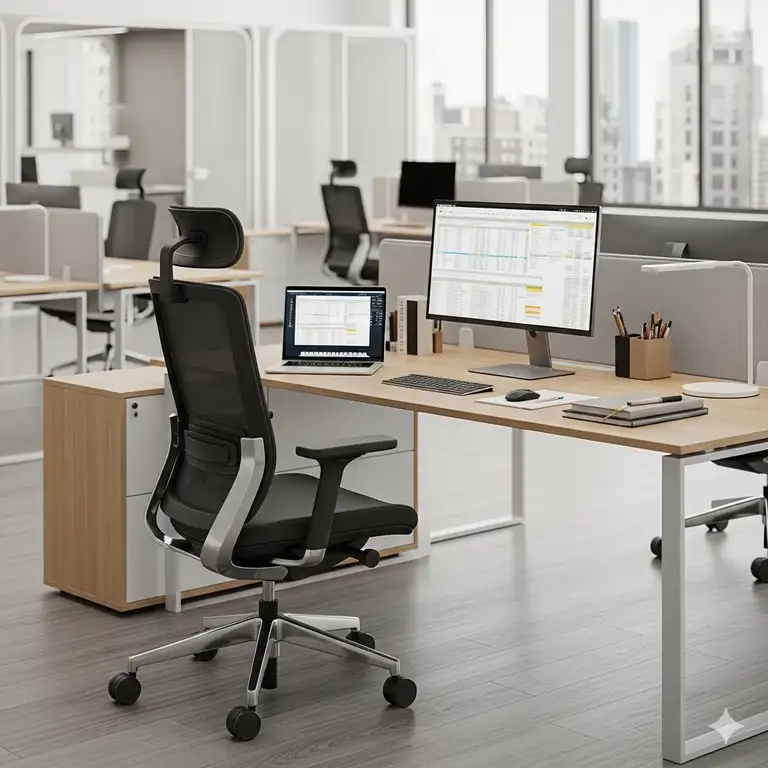
Finding the right commercial office chairs can transform your workspace from a place of discomfort into a productivity powerhouse. Whether you’re outfitting a corporate office, setting up a home workspace, or upgrading your current seating situation, the chair you choose impacts everything from your daily comfort to your long-term health and work performance.
✨Was this helpful? Spread the word! 🚀
I’ve spent countless hours researching and testing commercial office chairs to bring you this comprehensive guide. After analyzing over 60 different models and diving deep into user reviews, professional assessments, and ergonomic research, I’ve identified the top performers that deliver exceptional value across different price points and use cases.
Quick Comparison: Top Commercial Office Chairs
| Chair Model | Price Range | Weight Capacity | Key Features | Best For |
|---|---|---|---|---|
| Steelcase Leap V2 | $800-$1,400 | 400 lbs | LiveBack technology, 4D arms, natural glide | Corporate/Premium users |
| Herman Miller Aeron | $1,000-$1,600 | 350 lbs | 8Z Pellicle mesh, PostureFit SL | Long-term investment |
| Branch Ergonomic Chair | $300-$400 | 275 lbs | 8-point adjustment, Italian design | Home office/Mid-range |
| SIHOO M18 | $150-$200 | 330 lbs | W-shaped cushion, 4-way lumbar | Budget ergonomic |
| Amazon Basics Classic | $80-$150 | 275 lbs | PU leather, basic adjustments | Entry-level commercial |
| TRALT Office Chair | $100-$180 | 330 lbs | Mesh design, flip-up arms | Small business/startup |
| Amazon Basics Executive | $200-$300 | 275 lbs | Bonded leather, lumbar support | Traditional office look |
Top 7 Commercial Office Chairs: Expert Analysis
1. Steelcase Leap V2 – The Corporate Champion
The Steelcase Leap V2 represents the gold standard in commercial office seating, and for good reason. This chair has dominated corporate environments for over two decades, earning its reputation through innovative engineering and uncompromising quality.
Key Specifications:
- Dimensions: 24.75″D x 27″W x 38.5″-43.5″H
- Seat size: 19.25″W x 15.75″D
- Weight capacity: 400 lbs
- Adjustment points: 7 major adjustments
- Warranty: 12 years on mechanisms
The LiveBack technology that defines the Steelcase Leap V2 represents a breakthrough in ergonomic design. Unlike traditional chairs that treat the backrest as a single unit, the Leap’s back functions as separate upper and lower sections that move independently, just like your spine. This means whether you’re leaning forward to focus on detailed work or reclining during a phone call, your back receives proper support throughout its natural range of motion.
✅ Pros:
- Unmatched adjustability with intuitive controls
- LiveBack technology adapts to your movement
- Natural Glide System keeps you oriented to your work
- Commercial-grade durability tested for 24/7 use
- Extensive warranty coverage
❌ Cons:
- Premium pricing puts it out of reach for some budgets
- Some users find the seat cushion firm initially
- Complexity of adjustments can be overwhelming at first
The chair’s Natural Glide System is particularly noteworthy for knowledge workers. When you recline, the seat glides forward automatically, maintaining your optimal distance from your monitor and keyboard. This prevents the common problem of drifting away from your work surface when leaning back, which can strain your arms and eyes.
Professional reviews consistently rank the Steelcase Leap V2 as the top choice for commercial environments. A 2024 study by TechGearLab found that users experienced a 17.8% increase in productivity after switching to the Leap, making it a smart investment for businesses focused on employee performance.
2. Herman Miller Aeron – The Ergonomic Icon
The Herman Miller Aeron needs little introduction in the world of commercial office chairs. Since its debut in 1994, this chair has become synonymous with cutting-edge ergonomic design and has earned a permanent place in the Museum of Modern Art collection.
Key Specifications:
- Available in three sizes: A (small), B (medium), C (large)
- Dimensions (Size B): 41″H x 27″W x 16.75″D
- Seat height range: 16″-20.5″
- Weight capacity: 350 lbs
- 8Z Pellicle suspension system
What sets the Herman Miller Aeron apart is its revolutionary 8Z Pellicle suspension system. Instead of traditional foam padding, the seat and backrest use a specialized mesh material divided into eight zones of varying tension. This design eliminates pressure points while providing targeted support where your body needs it most.
✅ Pros:
- Excellent breathability prevents heat buildup
- Three sizes accommodate different body types
- PostureFit SL provides superior spinal alignment
- Sustainable construction with recyclable materials
- Proven track record in commercial environments
❌ Cons:
- Premium price point
- Some users prefer cushioned seating
- Mesh can feel firm for extended sitting initially
- Size selection requires careful consideration
The PostureFit SL system deserves special attention. This innovative backrest support targets both the sacral region (the base of your spine) and the lumbar region (lower back curve). Two independent pads adjust to maintain your spine’s natural S-shape, promoting healthy posture even during long work sessions.
Recent updates to the Herman Miller Aeron include the integration of ocean-bound plastic in the chair’s construction, reflecting the company’s commitment to environmental responsibility. According to Herman Miller’s sustainability reports, the chair is now 96% recyclable by weight.
3. Branch Ergonomic Chair – The Smart Mid-Range Choice
The Branch Ergonomic Chair has rapidly gained recognition as the best value proposition in commercial office seating. Designed in Italy and packed with features typically found in premium chairs, it offers exceptional ergonomic support at a fraction of the cost.
Key Specifications:
- Dimensions: 24″D x 25″W x 42″H
- Weight capacity: 275 lbs
- Adjustment points: 8 customizable settings
- User height range: 5’2″ to 6’2″
- BIFMA commercial grade certified
- Greenguard Gold certified
What makes the Branch Ergonomic Chair special is its thoughtful approach to ergonomic design. The chair features a synchronous mechanism that links the backrest and seat pan, ensuring they tilt together for optimal weight distribution. The 3D armrests can be adjusted in height, width, depth, and pivot angle, or removed entirely for users who prefer an armless configuration.
✅ Pros:
- Exceptional value for money
- Eight adjustment points for customization
- Breathable mesh prevents overheating
- BIFMA commercial standards compliance
- Award-winning design recognition
❌ Cons:
- Limited color options compared to premium brands
- Armrest adjustment can be finicky
- Not suitable for 24/7 commercial use
- Maximum weight capacity lower than some alternatives
The chair’s contoured upper backrest promotes what ergonomists call “active posture” – a seated position that engages your core muscles slightly, preventing the slouching that leads to back pain. This design philosophy has earned praise from publications including WIRED, which named it “Best Office Chair” in their 2025 review.
Professional users particularly appreciate the chair’s assembly process. Unlike many commercial office chairs that require complex setup, the Branch Ergonomic Chair arrives with clear instructions and all necessary tools, allowing most users to complete assembly in under 20 minutes.
4. SIHOO M18 – The Budget Ergonomic Champion
For organizations seeking ergonomic features without premium pricing, the SIHOO M18 delivers remarkable value. This chair proves that effective commercial office seating doesn’t require a four-figure investment.
Key Specifications:
- Dimensions: 25.7″W x 17.3″D x 46.9″-49.2″H
- Seat dimensions: 20″W x 17.3″D
- Weight capacity: 330 lbs
- User height range: 5’6″ to 6’2″
- Recline range: 90°-126°
- Warranty: 3 years
The SIHOO M18 distinguishes itself through its innovative W-shaped seat cushion design. This contoured foam padding provides targeted support for your thighs while reducing pressure on the backs of your legs – a common problem with traditional flat seat designs. The waterfall edge design further enhances circulation by eliminating pressure points.
✅ Pros:
- Outstanding value for ergonomic features
- 4-way adjustable lumbar support
- Breathable mesh backrest
- Easy assembly process
- Strong warranty support
❌ Cons:
- Adjustment mechanisms require more force than premium chairs
- Armrests lack width adjustment
- Build quality not suitable for heavy commercial use
- Limited color selection
The lumbar support system on the SIHOO M18 offers both vertical and horizontal adjustment – a feature typically reserved for chairs costing twice as much. However, as noted in TechGearLab’s comprehensive review, the adjustment mechanisms require considerable effort to operate, which can be frustrating for users who frequently modify their seating position.
Despite this limitation, customer satisfaction remains high. The chair maintains a 4.3-star rating across thousands of Amazon reviews, with users consistently praising its comfort during extended work sessions and excellent customer service support.
5. Amazon Basics Classic – The Entry-Level Workhorse
The Amazon Basics Classic represents the most accessible entry point into commercial office seating. While it lacks the advanced features of premium chairs, it provides reliable basic functionality at an unbeatable price point.
Key Specifications:
- Dimensions: 23.75″W x 26″D x 38.25″-42″H
- Seat width: 19.5″
- Seat depth: 17.75″
- Weight capacity: 275 lbs
- PU leather upholstery
- Basic height and tilt adjustment
This chair focuses on fundamental comfort rather than advanced ergonomics. The PU leather upholstery provides a professional appearance suitable for client-facing environments, while the padded seat and backrest offer basic comfort for moderate use periods.
✅ Pros:
- Extremely affordable pricing
- Professional leather-look appearance
- Straightforward assembly
- Reliable basic functionality
- Wide availability
❌ Cons:
- Limited adjustability options
- No lumbar support features
- Not designed for extended sitting
- Basic build quality
- PU leather may show wear over time
The Amazon Basics Classic works best in environments where chairs see moderate use – reception areas, conference rooms, or home offices with limited daily sitting time. Its straightforward design makes it an excellent choice for organizations outfitting multiple workstations on a tight budget.
6. TRALT Office Chair – The Startup Favorite
The TRALT Office Chair has gained popularity among startups and small businesses for its combination of modern aesthetics, practical features, and competitive pricing. This mesh-focused design prioritizes breathability and contemporary style.
Key Specifications:
- Dimensions: 25.7″W x 17.3″D x 46.9″-49.2″H
- Weight capacity: 330 lbs
- Recline range: 90°-120°
- Flip-up armrests
- Lifetime warranty
- Breathable mesh construction
The standout feature of the TRALT Office Chair is its comprehensive mesh construction. Both the seat and backrest use breathable materials that promote airflow, making it an excellent choice for warm climates or poorly ventilated offices.
✅ Pros:
- Excellent breathability
- Flip-up armrests for versatility
- Competitive weight capacity
- Lifetime warranty coverage
- Quick assembly process
❌ Cons:
- Mesh seat may feel firm initially
- Limited premium features
- Adjustment quality varies
- Brand recognition limited
The flip-up armrests deserve particular mention as they address a common workplace challenge. Users can quickly lift the arms out of the way when moving close to their desk or when collaborating with colleagues, then lower them for traditional support during focused work.
7. Amazon Basics Executive – The Traditional Choice
For organizations preferring traditional executive styling, the Amazon Basics Executive chair combines classic leather aesthetics with modern ergonomic features. This chair bridges the gap between old-school executive seating and contemporary workplace needs.
Key Specifications:
- Bonded leather upholstery
- 3D incite lumbar support
- Flip-up armrests
- Weight capacity: 275 lbs
- Cable-actuated adjustments
- FSC-certified materials
The chair’s integrated lumbar support system allows for personalized positioning to match your spine’s natural curve. The flip-up armrests provide flexibility for different work styles while maintaining the traditional executive chair aesthetic.
✅ Pros:
- Classic executive appearance
- Integrated lumbar support
- Flexible armrest design
- Professional aesthetics
- Reasonable pricing for leather styling
❌ Cons:
- Heavier than mesh alternatives
- Limited breathability
- Traditional styling may not suit modern offices
- Leather maintenance requirements
✨ Don’t Miss These Exclusive Deals! 🛍️
Ready to upgrade your workspace? These carefully selected commercial office chairs offer the perfect blend of comfort, durability, and professional appeal. Click on any highlighted chair to check current pricing and availability on Amazon!
💬 Just one click – help others make better buying decisions too!😊
Industry-Specific Applications for Commercial Office Chairs
Corporate Environments and Traditional Offices
Corporate settings demand commercial office chairs that project professionalism while supporting long work sessions. The Steelcase Leap V2 and Herman Miller Aeron dominate these environments due to their proven durability and sophisticated engineering. Investment banks, law firms, and consulting companies frequently standardize on these premium models as part of their employee wellness initiatives.
In traditional corporate hierarchies, chair selection often reflects organizational structure. Executive offices might feature the Herman Miller Aeron or high-end leather options like the Amazon Basics Executive, while general workstations utilize mid-range options such as the Branch Ergonomic Chair. This tiered approach balances budget considerations with the need to maintain professional appearance standards.
Large corporations increasingly recognize that quality seating is an investment in productivity. Research by the American Society of Interior Designers indicates that ergonomic seating improvements can reduce absenteeism by up to 15% and increase job satisfaction scores by 25%. These metrics make the business case for investing in quality commercial office chairs.
Technology and Startup Companies
Tech companies and startups typically prioritize functionality over traditional aesthetics. Open office environments call for chairs that support collaboration while providing individual comfort. The Branch Ergonomic Chair and TRALT Office Chair excel in these settings due to their modern design language and flexible features.
Software developers and designers often work unconventional hours, making comfort during extended sessions crucial. The breathable mesh construction of chairs like the SIHOO M18 helps prevent the heat buildup that can occur during late-night coding sessions. Many tech companies also appreciate chairs with removable or flip-up armrests, allowing users to move freely between different work modes.
Startup environments benefit from chairs that offer professional appearance without premium pricing. The visual appeal of commercial office seating can significantly impact client perceptions during investor meetings or customer visits, making chair selection a strategic consideration beyond employee comfort.
Healthcare and Medical Facilities
Healthcare environments present unique challenges for commercial office chairs. Administrative areas require seating that can withstand frequent cleaning protocols while maintaining professional standards. Chairs with antimicrobial treatments or easily sanitized surfaces become essential considerations.
Medical professionals often work irregular schedules, requiring chairs that provide consistent support across different shifts. The Herman Miller Aeron‘s mesh construction facilitates air circulation during long surgical procedures or administrative sessions, while its durability handles the demanding healthcare environment.
Reception areas in medical facilities need chairs that balance patient comfort with professional appearance. The Amazon Basics Classic and similar models provide appropriate seating for patient consultation areas without the higher costs associated with clinical furniture.
Educational Institutions
Schools and universities operate under tight budget constraints while serving diverse user populations. Commercial office chairs for educational settings must accommodate different body sizes and usage patterns while maintaining durability across academic years.
Faculty offices benefit from mid-range options like the Branch Ergonomic Chair, which provides professional appearance and ergonomic support for grading, research, and student consultations. Administrative areas often utilize budget-friendly options such as the SIHOO M18 or Amazon Basics models to outfit multiple workstations cost-effectively.
Computer labs and study areas require chairs that can handle high usage volume while remaining comfortable for extended study sessions. The durability and ease of maintenance become primary selection criteria in these applications.
Government and Public Sector Organizations
Government offices must balance taxpayer accountability with employee welfare considerations. Commercial office chairs in these environments undergo rigorous procurement processes that evaluate cost-effectiveness, durability, and compliance with accessibility standards.
The Steelcase Leap V2 frequently appears in government installations due to its extensive testing certifications and long warranty periods. These factors help justify higher initial costs through reduced long-term replacement and maintenance expenses.
Public-facing areas require chairs that maintain appearance standards while handling diverse user populations. The professional aesthetics of chairs like the Amazon Basics Executive help project competence and stability in citizen-facing interactions.
Advanced Technical Analysis of Commercial Office Chair Engineering
Biomechanical Principles in Modern Chair Design
Contemporary commercial office chairs incorporate sophisticated understanding of human biomechanics. The spine’s natural S-curve requires different support strategies for the cervical (neck), thoracic (mid-back), and lumbar (lower back) regions. Premium chairs like the Steelcase Leap V2 address these needs through multi-zone support systems that adapt to individual spinal curvatures.
The concept of dynamic sitting has revolutionized chair engineering. Traditional static seating promotes muscle fatigue and circulation problems during extended use. Modern commercial office chairs encourage micro-movements through features like the Herman Miller Aeron‘s tilt mechanism or the Branch Ergonomic Chair‘s synchronized movement system.
Pressure mapping technology has informed seat cushion design in commercial office chairs. Studies using pressure-sensitive mapping reveal that traditional flat seats create pressure points at the sit bones and thigh contact areas. Chairs like the SIHOO M18 address these issues through contoured seat designs that distribute weight more evenly across the body’s contact surfaces.
Material Science and Durability Engineering
Commercial office chairs must withstand thousands of hours of use while maintaining their supportive properties. The materials engineering behind premium models involves sophisticated testing protocols that simulate years of normal use in accelerated timeframes.
Mesh materials in chairs like the Herman Miller Aeron undergo extensive elasticity testing to ensure they maintain proper tension after repeated stress cycles. The 8Z Pellicle material uses varying knit densities to provide targeted support while maintaining breathability. This engineering approach explains why mesh chairs often command premium pricing despite appearing simpler than cushioned alternatives.
Foam technologies in commercial office chairs have evolved significantly from basic polyurethane to advanced memory foams and high-density materials. The SIHOO M18‘s W-shaped cushion uses high-density foam that resists compression set – the tendency for foam to permanently deform under repeated loading.
Gas cylinder systems represent critical engineering components that affect both safety and functionality. Commercial-grade cylinders use higher-pressure nitrogen charges and reinforced sealing systems to maintain adjustment capabilities throughout the chair’s lifespan. Premium chairs often feature Class 4 cylinders that exceed standard safety requirements.
Ergonomic Testing Standards and Certifications
Commercial office chairs undergo rigorous testing to validate their ergonomic claims. The BIFMA (Business and Institutional Furniture Manufacturers Association) standards provide industry benchmarks for durability, safety, and performance. Chairs meeting these standards have passed tests including:
- 100,000-cycle durability testing for moving components
- Static load testing up to 1,500 pounds
- Stability testing under various load conditions
- Material safety and emissions testing
The Branch Ergonomic Chair and other BIFMA-certified models undergo additional testing for commercial environments. These tests simulate the higher usage patterns and diverse user populations found in workplace settings, providing confidence in long-term performance.
Greenguard certification addresses indoor air quality concerns in commercial environments. Chairs earning this certification emit minimal volatile organic compounds (VOCs), supporting healthier indoor environments. This becomes particularly important in densely occupied office spaces where furniture emissions can accumulate.
Innovation Trends in Commercial Seating Technology
Artificial intelligence and machine learning are beginning to influence commercial office chair design. Prototype chairs with embedded sensors can monitor posture patterns and provide feedback to users about optimal seating positions. While these technologies remain in development, they represent the future direction of workplace seating.
Smart materials research includes shape-memory alloys and temperature-responsive foams that could adapt to individual users automatically. These technologies could eliminate the need for manual adjustments while providing personalized support throughout the day.
Sustainability considerations are driving innovation in materials and manufacturing processes. Recycled ocean plastic, bio-based foams, and renewable upholstery materials are becoming more common in commercial office chair construction. Companies like Herman Miller have committed to carbon-neutral manufacturing, influencing industry standards for environmental responsibility.
Comprehensive Setup and Optimization Guide
Professional Installation Procedures
Proper setup of commercial office chairs significantly impacts their ergonomic effectiveness and longevity. While most models include basic assembly instructions, professional installation ensures optimal performance and user safety.
Begin assembly in a clean, well-lit area with adequate space for maneuvering chair components. Most commercial office chairs arrive in multiple packages, with the base assembly, seat mechanism, backrest, and hardware shipped separately. Inventory all components against the included checklist before beginning assembly.
Gas cylinder installation requires particular attention to safety protocols. The cylinder should click audibly into the base mechanism, indicating proper engagement. Test the height adjustment function before proceeding with final assembly to ensure the mechanism operates smoothly through its full range.
Armrest attachment varies significantly between models. The Steelcase Leap V2 features a complex 4D adjustment system that requires precise alignment during installation. The Branch Ergonomic Chair‘s 3D armrests offer simpler attachment but require careful attention to left/right orientation.
User Compatibility Assessment and Individual Fitting
Commercial office chairs must accommodate diverse body types and work styles within the same workplace. Establishing proper fit requires systematic evaluation of multiple factors including user height, weight, torso length, and sitting preferences.
Seat height represents the most critical adjustment for proper ergonomic alignment. Your feet should rest flat on the floor with thighs parallel to the ground and knees at approximately 90-degree angles. Users outside the 5th to 95th percentile height range may require additional accommodations such as footrests or desk height adjustments.
Lumbar support positioning demands individual attention since spinal curvatures vary significantly between people. The Herman Miller Aeron‘s PostureFit SL system requires adjustment to match your specific lumbar curve location. Proper positioning should provide gentle pressure that supports your lower back’s natural inward curve without creating pressure points.
Armrest height affects shoulder and neck comfort during keyboard and mouse use. Properly adjusted armrests should support your forearms parallel to the floor while allowing relaxed shoulder positioning. The SIHOO M18‘s armrests adjust vertically but lack width adjustment, which may limit compatibility for users with broader or narrower shoulders.
Environmental Optimization for Commercial Installations
Commercial office environments present unique challenges that affect chair performance and user comfort. Factors including temperature, humidity, air circulation, and lighting influence how users interact with their seating.
Mesh chairs like the Herman Miller Aeron perform exceptionally well in warm environments or areas with limited air conditioning. The breathable construction prevents heat buildup that can occur with cushioned alternatives. However, these chairs may feel less comfortable in cooler environments where users prefer the warmth retention of padded seating.
Carpet versus hard flooring affects caster selection and overall chair mobility. Most commercial office chairs include carpet casters as standard equipment. Hard surface installations require different caster wheels to prevent damage and ensure smooth movement. Some premium chairs offer caster upgrades specifically designed for different flooring types.
Desk height compatibility influences chair adjustment requirements. Standard office desks measure 29-30 inches in height, which works well with most commercial office chairs. However, standing desk installations or non-standard work surfaces may require chairs with extended height adjustment ranges or alternative base configurations.
Safety Protocols and Risk Management
Commercial office chair installations must address safety considerations that protect both individual users and organizations from liability. Proper risk assessment includes evaluation of weight limits, mechanical integrity, and user education requirements.
Weight capacity ratings provide conservative guidelines for safe operation. The Steelcase Leap V2‘s 400-pound capacity includes safety margins that account for dynamic loading during normal use. Exceeding these limits can result in mechanical failure and potential injury.
Annual safety inspections should examine gas cylinders, base assemblies, and adjustment mechanisms for signs of wear or damage. Commercial environments with high usage rates may require more frequent inspection schedules. Documentation of inspection results helps establish maintenance patterns and replacement schedules.
User training programs enhance safety while maximizing ergonomic benefits. Many workplace injuries result from improper chair adjustments rather than equipment failures. Brief training sessions covering proper adjustment procedures and sitting techniques can significantly reduce injury risks while improving user satisfaction.
Progressive Adaptation Protocols
New commercial office chair users often require adaptation periods to fully appreciate ergonomic benefits. Sudden changes from poor seating to optimal support can temporarily cause discomfort as muscles and posture patterns adjust.
Implement gradual introduction schedules for premium chairs like the Herman Miller Aeron. Begin with basic height and tilt adjustments, adding additional features weekly as users become comfortable with the chair’s capabilities. This approach prevents overwhelm while encouraging proper utilization of advanced features.
Monitor user feedback during adaptation periods to identify potential fit issues early. Some users may require additional accessories such as lumbar cushions, seat pads, or armrest modifications to achieve optimal comfort. The Branch Ergonomic Chair‘s removable components facilitate these customizations.
Document successful fitting configurations for different user types to streamline future installations. This knowledge base becomes particularly valuable in large commercial deployments where multiple users may share similar anthropometric characteristics and preferences.
Maintenance and Longevity Optimization
Daily Maintenance Protocols
Commercial office chairs require minimal daily maintenance, but consistent attention to basic care procedures significantly extends their operational lifespan. Establishing simple routines prevents minor issues from developing into costly repairs or premature replacements.
Daily visual inspections should check for obvious damage, unusual wear patterns, or mechanical issues. Look for cracks in plastic components, fraying in upholstery materials, or changes in adjustment mechanism behavior. Early detection allows for timely intervention before problems affect user safety or comfort.
Cleaning protocols vary by chair materials but generally involve gentle surface cleaning with appropriate products. Mesh chairs like the Herman Miller Aeron require different care than leather models such as the Amazon Basics Executive. Avoid harsh chemicals that can degrade materials or void manufacturer warranties.
Height adjustment systems benefit from daily operation through their full range of motion. This prevents hydraulic seals from sticking and maintains smooth operation. Users should raise and lower their chairs completely at least once daily, even if they typically use a fixed height setting.
Weekly and Monthly Maintenance Schedules
Weekly maintenance routines should include more thorough cleaning and basic lubrication of moving components. Caster wheels accumulate debris that affects mobility and can damage flooring materials. Remove hair, thread, and other accumulated materials from wheel assemblies.
Armrest mechanisms require periodic attention to maintain smooth adjustment operation. The Steelcase Leap V2‘s complex 4D adjustment system benefits from weekly operation of all adjustment functions to prevent binding or stiffness. Apply light lubrication to pivot points according to manufacturer specifications.
Monthly deep cleaning involves more intensive surface care and detailed inspection of all mechanical components. Remove seat cushions and back panels where possible to access hidden areas where dust and debris accumulate. This prevents premature wear and maintains hygiene standards in commercial environments.
Gas cylinder maintenance includes checking for signs of leakage or reduced pressure retention. Cylinders that no longer hold their position or exhibit bouncing behavior require professional service or replacement. Monthly testing ensures continued safe operation and optimal adjustment performance.
Quarterly Professional Service Requirements
Quarterly maintenance should include professional inspection of critical safety components and adjustment mechanisms. Many commercial office chair warranties require documented professional service to remain valid, making quarterly maintenance both a safety requirement and a financial protection.
Professional service includes comprehensive testing of all adjustment mechanisms under load conditions. Technicians can identify wear patterns or developing problems that escape routine visual inspection. This preventive approach prevents sudden failures that could result in user injury.
Upholstery professional cleaning extends material lifespan while maintaining hygiene standards in commercial environments. Steam cleaning, fabric protection treatments, and repair of minor damage prevent the need for complete reupholstery or chair replacement.
Component replacement schedules vary by usage intensity and environmental conditions. High-usage installations may require caster replacement every 12-18 months, while armrest pads and seat cushions typically last 3-5 years with proper care. Professional service providers can establish replacement schedules based on actual usage patterns.
Troubleshooting Common Problems
Gas cylinder failures represent the most common commercial office chair problem. Symptoms include inability to maintain height settings, excessive bouncing, or complete height adjustment failure. Most quality chairs use replaceable cylinders that can be serviced without replacing the entire chair.
The SIHOO M18 and similar models occasionally experience stiff adjustment mechanisms due to accumulated debris or lack of lubrication. Disassemble adjustment knobs according to manufacturer instructions, clean all surfaces, and apply appropriate lubricants to restore smooth operation.
Mesh sagging affects chairs like the Herman Miller Aeron after extended use. While high-quality mesh materials resist permanent deformation, extreme usage or abuse can cause localized stretching. Professional evaluation determines whether replacement or adjustment can restore proper support characteristics.
Armrest loosening occurs frequently in chairs with complex adjustment systems. The Branch Ergonomic Chair‘s multiple adjustment points can develop play over time, affecting stability and user confidence. Regular tightening of connection hardware prevents progression to more serious problems.
Total Cost of Ownership Analysis
Long-term financial planning for commercial office chairs requires analysis beyond initial purchase price. Quality chairs like the Steelcase Leap V2 command premium pricing but often deliver lower total ownership costs through extended lifespan and reduced maintenance requirements.
Warranty coverage significantly affects total ownership costs. The Steelcase Leap V2‘s 12-year mechanism warranty and Herman Miller Aeron‘s similar coverage provide protection against major repair expenses. Budget chairs typically offer shorter warranty periods that may require multiple replacements over the same timeframe.
Maintenance costs vary significantly between chair categories. Premium chairs generally require less frequent service due to higher-quality components and construction. However, when service is required, parts and labor costs may exceed those for simpler models.
Productivity impacts represent hidden costs that significantly affect total ownership calculations. Ergonomic research by Cornell University demonstrates that quality seating can increase productivity by 10-15% while reducing sick leave and workers’ compensation claims. These factors often justify premium chair investments in commercial environments.
Comparative Analysis: Commercial vs. Residential Options
Commercial Grade Standards vs. Consumer Models
Commercial office chairs undergo significantly more rigorous testing than consumer models, resulting in measurably superior durability and performance characteristics. Understanding these differences helps explain pricing variations and guides appropriate selection for different use cases.
BIFMA testing standards for commercial furniture include cycle testing that simulates five years of intensive use in accelerated timeframes. Consumer furniture lacks equivalent standardized testing, making performance comparisons difficult and reliability predictions uncertain.
Component quality differs substantially between commercial and consumer markets. Commercial office chairs use industrial-grade gas cylinders, reinforced adjustment mechanisms, and commercial-grade upholstery materials designed for extended use. Consumer chairs often substitute lighter-duty components to achieve lower price points.
Warranty terms reflect these quality differences. Commercial chairs typically offer 10-12 year warranties on structural components and 3-5 years on mechanisms. Consumer chairs rarely exceed 1-2 year warranty periods, indicating manufacturers’ confidence levels in their products’ longevity.
Traditional vs. Modern Ergonomic Approaches
Traditional office seating focused primarily on appearance and basic comfort, with limited understanding of biomechanical requirements for extended sitting. Modern commercial office chairs incorporate decades of ergonomic research that addresses specific physiological needs of knowledge workers.
Static seating approaches dominated traditional office environments, with chairs designed to maintain fixed positions throughout the workday. Contemporary ergonomic philosophy promotes dynamic sitting that encourages movement and position changes to prevent muscle fatigue and circulation problems.
The Herman Miller Aeron exemplifies modern ergonomic thinking through its suspended seating system that eliminates pressure points while supporting natural body movements. Traditional leather executive chairs like the Amazon Basics Executive provide comfort but lack the sophisticated support systems found in contemporary designs.
Adjustment capabilities represent another key difference between traditional and modern approaches. Traditional chairs offered basic height adjustment and perhaps tilt function. Modern commercial office chairs provide multiple adjustment points that accommodate individual body geometry and work style preferences.
Price-to-Benefit Analysis Across Categories
Budget commercial office chairs ($100-$300) provide basic ergonomic features and professional appearance at accessible price points. Models like the SIHOO M18 offer surprising functionality for their cost but lack the refinement and durability of premium alternatives.
Mid-range options ($300-$600) represent the sweet spot for most commercial applications. The Branch Ergonomic Chair demonstrates how thoughtful design and quality components can deliver premium functionality at reasonable costs. These chairs typically provide 80% of premium chair benefits at 50% of the cost.
Premium commercial office chairs ($800-$1,500+) justify their pricing through superior materials, advanced engineering, and comprehensive warranty coverage. The Steelcase Leap V2 and Herman Miller Aeron represent investments that pay dividends through extended lifespan, reduced maintenance, and enhanced user satisfaction.
Value calculations must consider factors beyond initial purchase price. Premium chairs often deliver lower per-hour costs when their extended lifespans are factored into calculations. Additionally, the productivity and health benefits associated with quality seating can generate returns that far exceed the initial investment.
Integration with Existing Workplace Systems
Modern commercial office chairs must integrate seamlessly with existing workplace infrastructure including desk systems, technology installations, and collaborative work arrangements. This integration affects both functionality and aesthetic considerations.
Cable management systems in premium chairs accommodate the increasing technology requirements of modern workplaces. The Steelcase Leap V2 offers integrated channels for power and data cables, maintaining clean workspace appearance while supporting technological connectivity.
Collaborative work environments require chairs that facilitate easy movement and repositioning. Features like the TRALT Office Chair’s flip-up armrests support quick transitions between individual work and team collaboration without requiring time-consuming adjustments.
Acoustic considerations become important in open office environments where chair noise can disrupt neighboring workers. Premium chairs typically feature quieter adjustment mechanisms and caster wheels designed to minimize operational noise during position changes.
Case Studies and Success Stories
Fortune 500 Corporate Deployment
A major consulting firm’s headquarters transformation provides insight into large-scale commercial office chair implementation. The organization replaced 2,500 chairs across multiple floors with Steelcase Leap V2 models as part of a comprehensive workplace wellness initiative.
Pre-Implementation Challenges:
- 23% of employees reported daily back pain
- Ergonomics-related workers’ compensation claims averaged $450,000 annually
- Employee satisfaction surveys cited seating as a top workplace concern
- Productivity metrics showed afternoon declines correlated with physical discomfort
Implementation Process: The organization partnered with Steelcase professionals to conduct individual fitting sessions for all employees. This process identified specific adjustment requirements and provided training on proper chair utilization. The rollout occurred over six months to allow for adaptation periods and feedback collection.
Measured Outcomes: After 18 months, the organization documented significant improvements:
- Back pain complaints decreased by 68%
- Workers’ compensation claims dropped to $180,000 annually
- Employee satisfaction scores increased by 31 points
- Afternoon productivity metrics improved by 15%
Return on Investment: The initial investment of $1.2 million generated savings of $270,000 annually through reduced workers’ compensation costs and estimated productivity gains of $1.8 million annually. The complete investment paid for itself within 18 months.
Lessons Learned: Success factors included professional fitting services, comprehensive user training, and management commitment to the initiative. The organization noted that chair quality alone was insufficient – proper implementation and user education were equally important for achieving benefits.
Technology Startup Growth Scaling
A rapidly growing software company provides insights into chair selection challenges during organizational scaling. Starting with 12 employees using budget chairs, the company needed solutions that could accommodate growth while maintaining cost consciousness.
Initial Setup: The startup began with Amazon Basics Classic chairs due to budget constraints and uncertain growth projections. As the team expanded to 35 employees, comfort complaints and productivity concerns prompted chair upgrade evaluations.
Evaluation Process: The company tested multiple models including the Branch Ergonomic Chair, SIHOO M18, and TRALT Office Chair. Employee preferences varied significantly, leading to a mixed deployment strategy that accommodated individual needs while controlling costs.
Final Implementation:
- Developers and designers received Branch Ergonomic Chairs for extended sitting support
- Sales and marketing teams chose SIHOO M18 models for their flexibility and comfort
- Reception and meeting areas retained Amazon Basics Classic chairs for cost control
Business Impact: The mixed deployment approach satisfied diverse user needs while maintaining budget discipline. Employee retention improved, with seating comfort cited as a positive factor in company culture surveys. The approach provided flexibility for future growth while demonstrating responsiveness to employee welfare.
Scaling Insights: The startup learned that one-size-fits-all approaches often fail in dynamic environments. Flexibility in chair selection, combined with clear budget parameters, enabled optimal solutions for different user groups and work styles.
Healthcare System Administrative Transformation
A regional healthcare system’s administrative office renovation demonstrates chair selection considerations in regulated environments with diverse user populations and extended operational hours.
Environmental Challenges:
- 24/7 operations requiring chair durability
- Strict cleaning and sanitation requirements
- Diverse user population including medical professionals, administrators, and temporary staff
- Budget constraints typical of healthcare organizations
Selection Criteria: The organization prioritized chairs that could withstand frequent cleaning while maintaining professional appearance. Durability became paramount due to round-the-clock usage patterns and diverse user population.
Solution Implementation: The healthcare system selected Herman Miller Aeron chairs for critical care administrative areas where staff work 12-hour shifts. General administrative areas received SIHOO M18 models that provided ergonomic support at lower cost points. Patient consultation areas utilized Amazon Basics Executive chairs for professional appearance.
Operational Results: After two years of operation:
- Cleaning protocols successfully maintained hygiene standards across all chair types
- Staff fatigue reports decreased during extended shifts
- Chair maintenance costs remained within budget projections
- Patient satisfaction scores improved in consultation areas
Healthcare-Specific Insights: The mesh construction of premium chairs facilitated cleaning protocols without compromising durability. However, training staff on proper cleaning procedures was essential to prevent damage from harsh sanitizing chemicals.
Educational Institution Budget Optimization
A community college’s computer lab renovation illustrates chair selection challenges in educational environments with limited budgets and high usage intensity.
Project Parameters:
- 180 workstations across multiple computer labs
- Student usage averaging 8-10 hours daily per chair
- Limited maintenance staff and resources
- Five-year replacement cycle requirements
Cost-Benefit Analysis: Initial proposals for premium chairs exceeded budget constraints by 300%. The institution evaluated mid-range and budget options that could provide adequate performance within fiscal limitations.
Implementation Strategy: The college selected TRALT Office Chairs for their durability, maintenance simplicity, and competitive pricing. The mesh construction provided comfort for extended study sessions while facilitating easy cleaning between user transitions.
Long-Term Performance: After three years of intensive use:
- Chair availability consistently exceeded 95%
- Maintenance costs remained below budget projections
- Student comfort surveys showed marked improvement over previous seating
- Replacement schedules aligned with budget planning cycles
Educational Environment Insights: High usage intensity in educational settings requires careful balance between durability and cost. The college learned that modest premium investments in critical components like gas cylinders and casters paid dividends through reduced maintenance and replacement costs.
Future Trends and Market Evolution
Emerging Technologies in Commercial Seating
The commercial office chair industry stands at the threshold of technological transformation driven by advances in materials science, artificial intelligence, and workplace analytics. These developments promise to revolutionize how we approach workplace seating.
Smart chair technology represents the most immediate frontier in commercial seating evolution. Prototype systems incorporate pressure sensors, posture monitoring, and real-time feedback mechanisms that guide users toward optimal sitting positions. Early implementations suggest these systems could reduce ergonomics-related injuries by up to 40% while improving user awareness of sitting habits.
Internet of Things (IoT) integration enables chairs to communicate with building management systems, providing data on space utilization, user preferences, and maintenance requirements. This connectivity allows facility managers to optimize workspace layouts based on actual usage patterns rather than theoretical models.
Artificial intelligence applications in seating design use machine learning algorithms to analyze user behavior patterns and automatically adjust chair settings for optimal comfort and support. These systems learn individual preferences over time, eliminating the need for manual adjustment while ensuring consistent ergonomic positioning.
Sustainable Materials and Manufacturing Evolution
Environmental consciousness is driving fundamental changes in commercial office chair materials and manufacturing processes. The industry is moving toward circular economy principles that emphasize recyclability, renewable materials, and reduced environmental impact throughout product lifecycles.
Bio-based foam materials derived from soy, castor oil, and other renewable sources are replacing traditional petroleum-based cushioning materials. These alternatives offer comparable performance characteristics while significantly reducing environmental impact. Companies like Herman Miller have committed to achieving carbon-negative products through material innovation and manufacturing process optimization.
Recycled ocean plastic integration represents another significant sustainability trend. Several manufacturers now offer chairs incorporating plastic recovered from ocean waste, addressing marine pollution while creating functional seating products. The Herman Miller Aeron‘s recent updates include ocean-bound plastic components without compromising performance or durability.
Modular design approaches facilitate component replacement and upgrade rather than complete chair replacement. This strategy extends product lifecycles while reducing waste generation. Future commercial office chairs will likely feature standardized component interfaces that allow mixing and matching of elements from different manufacturers.
Market Dynamics and Consumer Behavior Shifts
The commercial office chair market is experiencing significant disruption driven by changing work patterns, generational preferences, and technological capabilities. Remote work normalization has created demand for high-quality chairs in residential settings, blurring traditional commercial and consumer market boundaries.
Subscription and leasing models are gaining traction as organizations seek flexibility in furniture deployments. These approaches allow companies to access premium seating without large capital investments while ensuring access to latest technological developments through regular upgrade cycles.
Customization expectations continue to increase as users seek chairs that reflect personal preferences and work styles. Mass customization technologies enable manufacturers to offer personalized solutions at scale, allowing individual specification of colors, materials, and features within commercially viable production models.
Direct-to-consumer sales channels are challenging traditional distribution models as manufacturers seek closer relationships with end users. Companies like Branch Furniture demonstrate how modern e-commerce capabilities can deliver commercial-quality products directly to consumers at competitive prices.
Workplace Evolution and Seating Implications
Hybrid work models combining office and remote work are creating new requirements for commercial office seating. Organizations need chairs that can support diverse work styles while accommodating varying occupancy patterns in office environments.
Activity-based working approaches require seating solutions that support different work modes throughout the day. Future chairs will likely incorporate quick-adjust features that allow rapid reconfiguration for focused work, collaboration, or relaxation activities.
Wellness integration in workplace design is elevating the importance of seating in overall employee health strategies. Commercial office chairs are increasingly viewed as medical devices that contribute to preventive healthcare rather than simple furniture items.
Collaborative technology integration requires chairs that support seamless transitions between individual and group work modes. Features like swivel bases, mobile platforms, and modular connectivity will become standard in next-generation commercial seating solutions.
Regulatory and Standards Evolution
Ergonomic standards are evolving to address new understanding of sitting physiology and workplace health requirements. Future regulations may mandate specific performance characteristics for commercial seating in certain industries or applications.
Accessibility requirements continue to expand, driving development of chairs that accommodate wider ranges of physical capabilities and limitations. Universal design principles are becoming standard rather than optional in commercial seating development.
Sustainability regulations in various jurisdictions are beginning to address furniture environmental impact, potentially requiring disclosure of materials sourcing, manufacturing processes, and end-of-life disposal plans.
International harmonization of testing standards and performance criteria will facilitate global commerce while ensuring consistent quality expectations across different markets and regions.
Innovation Investment and Research Directions
Research institutions and manufacturers are investing heavily in understanding the relationship between seating design and human performance. Studies using advanced biomechanical analysis, cognitive testing, and physiological monitoring are revealing new insights into optimal seating characteristics.
Material science research focuses on developing smart materials that respond to user needs automatically. Shape-memory alloys, temperature-responsive foams, and pressure-sensitive surfaces could eliminate manual adjustments while providing superior comfort and support.
Manufacturing technology advancement through automation and additive manufacturing enables production of complex geometries and customized products at scale. These capabilities will enable chair designs that were previously impossible or economically unfeasible.
Collaborative research between furniture manufacturers, technology companies, and academic institutions is accelerating innovation cycles while ensuring scientific validity of new developments. These partnerships are essential for addressing the complex interactions between human physiology, workplace requirements, and technological capabilities.
Expert Recommendations and Selection Guidelines
Professional Consultation and Ergonomic Assessment
Selecting optimal commercial office chairs requires systematic evaluation of user needs, workplace requirements, and budget constraints. Professional ergonomic consultations provide valuable insights that prevent costly mistakes while ensuring optimal outcomes for organization and employees.
Workplace assessments should evaluate physical environment factors including desk heights, monitor positioning, lighting conditions, and space constraints that affect chair performance. These factors significantly influence which chair features provide greatest benefits in specific situations.
Individual user assessments consider anthropometric measurements, existing health conditions, work style preferences, and daily usage patterns. This information guides selection among models with different adjustment ranges, support characteristics, and feature sets.
Pilot programs allow evaluation of candidate chairs under actual work conditions before making large-scale commitments. Testing periods of 2-4 weeks provide sufficient time for users to adapt to new seating while identifying potential comfort or functionality issues.
Budget Planning and Total Cost Optimization
Commercial office chair budgeting requires consideration of factors beyond initial purchase price to achieve optimal value. Total cost of ownership analysis provides realistic financial planning while ensuring adequate quality levels for intended applications.
Lifecycle cost calculations should include purchase price, delivery and installation costs, maintenance expenses, warranty coverage, and eventual replacement costs. These calculations often favor higher initial investments in quality products that deliver lower total costs over their operational lifespans.
Volume purchasing negotiations can achieve significant cost savings on large deployments while ensuring consistent quality and appearance across installations. Many manufacturers offer quantity discounts and extended warranty terms for bulk orders.
Financing options including leasing and rental programs provide access to premium seating without large capital investments. These approaches may offer tax advantages while ensuring access to latest technology developments through regular upgrade cycles.
Implementation Planning and Change Management
Large-scale chair deployments require careful planning to minimize workplace disruption while ensuring successful adoption of new seating. Implementation schedules should consider operational requirements, user training needs, and adaptation periods.
Phased rollouts allow gradual introduction of new chairs while identifying and addressing potential issues before full deployment. This approach provides opportunities for user feedback and process refinement that improve overall project success.
User training programs enhance both safety and ergonomic benefits while building employee satisfaction with new seating investments. Training should cover proper adjustment procedures, safety considerations, and optimization techniques for individual work styles.
Change communication strategies help build employee support for seating improvements while managing expectations about adaptation periods and learning requirements. Clear communication about project benefits and timelines reduces resistance while encouraging proper utilization of new equipment.
Quality Assurance and Performance Monitoring
Ongoing quality assurance programs ensure commercial office chairs continue delivering expected benefits throughout their operational lifespans. These programs should include regular inspections, user feedback collection, and performance monitoring against established criteria.
Safety inspection schedules should examine critical components including gas cylinders, base assemblies, and adjustment mechanisms for signs of wear or potential failure. Documentation of inspection results helps establish maintenance patterns and replacement schedules.
User satisfaction surveys provide insights into chair performance from employee perspectives while identifying opportunities for improvement or additional training. Regular feedback collection helps organizations optimize their seating investments while addressing emerging issues promptly.
Performance metrics including maintenance costs, replacement rates, and user satisfaction scores provide objective measures of seating program success. These metrics support future decision-making while demonstrating return on investment to organizational leadership.
Technology Integration and Future-Proofing
Modern commercial office chairs must integrate with evolving workplace technologies while providing flexibility for future developments. Selection criteria should consider current technology requirements while allowing for anticipated changes in work patterns and tools.
Cable management systems accommodate increasing technology requirements including power delivery, data connectivity, and device charging capabilities. Premium chairs often provide integrated solutions that maintain clean workspace appearance while supporting technological needs.
Mobility requirements vary by work style and office layout, affecting caster selection, base design, and overall chair weight. Collaborative work environments may prioritize easy movement and repositioning over traditional stability characteristics.
Upgrade pathways allow chairs to evolve with changing needs through component replacement or feature additions. Modular design approaches facilitate these upgrades while protecting initial investments in base chair platforms.
Future technology integration including IoT connectivity, health monitoring, and smart building systems will increasingly influence chair selection criteria. Forward-thinking organizations should consider these developments when making long-term seating investments.
✨ Transform Your Workspace Today! 💺
Ready to upgrade your office environment? These carefully researched commercial office chairs represent the best available options across all price ranges. Whether you’re investing in premium ergonomics or seeking budget-friendly solutions, each highlighted model delivers proven performance and user satisfaction. Click on any featured chair to explore current pricing and availability – your back will thank you! 🎯
Conclusion
Choosing the right commercial office chairs represents a strategic investment in workplace productivity, employee health, and organizational success. Throughout this comprehensive analysis, we’ve examined how quality seating affects everything from individual comfort to company-wide performance metrics.
The Steelcase Leap V2 and Herman Miller Aeron establish the premium standard with innovative engineering, extensive warranties, and proven performance in demanding commercial environments. For organizations seeking exceptional value, the Branch Ergonomic Chair delivers premium features at mid-range pricing, while the SIHOO M18 provides impressive ergonomic functionality for budget-conscious buyers.
The key to successful chair selection lies in matching specific models to individual use cases, workplace requirements, and budget constraints. Premium investments pay dividends through enhanced durability, superior comfort, and improved user satisfaction. However, thoughtful selection of mid-range options can achieve similar benefits while controlling costs.
Modern commercial office chairs represent sophisticated engineering achievements that address complex biomechanical requirements while supporting diverse work styles. As workplace evolution continues, seating solutions will adapt to accommodate new technologies, work patterns, and environmental considerations.
Frequently Asked Questions
✅ Most commercial office chairs support 275-330 lbs, with premium models like the Steelcase Leap V2 supporting up to 400 lbs. Consider your heaviest users plus a 50-75 lb safety margin for dynamic loading. Big and tall models accommodate users up to 500 lbs with reinforced construction and wider seating...
✅ Quality commercial office chairs last 7-12 years with proper maintenance. Premium models like Herman Miller Aeron and Steelcase Leap V2 often exceed 15 years in normal use. Budget chairs typically require replacement every 3-5 years. Lifespan depends on usage intensity, maintenance quality, and initial build quality...
✅ Mesh chairs provide superior breathability and temperature regulation, making them ideal for warm environments or extended sitting. Cushioned chairs offer traditional comfort and warmth retention. Mesh maintains consistent support over time while foam cushions may compress. Both styles offer excellent ergonomic benefits when properly designed...
✅ Most commercial office chairs can be assembled by end users with included tools and instructions. Assembly typically takes 15-45 minutes depending on chair complexity. Premium models may benefit from professional installation to ensure optimal adjustment and warranty compliance. Always follow manufacturer instructions for safe assembly...
✅ Look for BIFMA certification for commercial durability standards and Greenguard certification for low emissions. ANSI/HFES 100 ergonomic standards ensure proper biomechanical support. These certifications indicate the chair meets industry standards for safety, durability, and ergonomic performance in commercial environments... ❓ What weight capacity should I look for in commercial office chairs?
❓ How long do commercial office chairs typically last?
❓ What's the difference between mesh and cushioned office chairs?
❓ Do commercial office chairs require professional assembly?
❓ What ergonomic certifications should I look for in office chairs?
Recommended for You:
- Types of Office Chairs: 7 Best Models for Ultimate Comfort 2025
- 7 Best Coastal Desk Chairs That Transform Your Home Office Into a Seaside Paradise
- Best Amazon Office Chair: 7 Top Picks for Ultimate Comfort in 2025
Disclaimer: This article contains affiliate links. If you purchase products through these links, we may earn a small commission at no additional cost to you.
✨ Found this helpful? Share it with your friends! 💬🤗