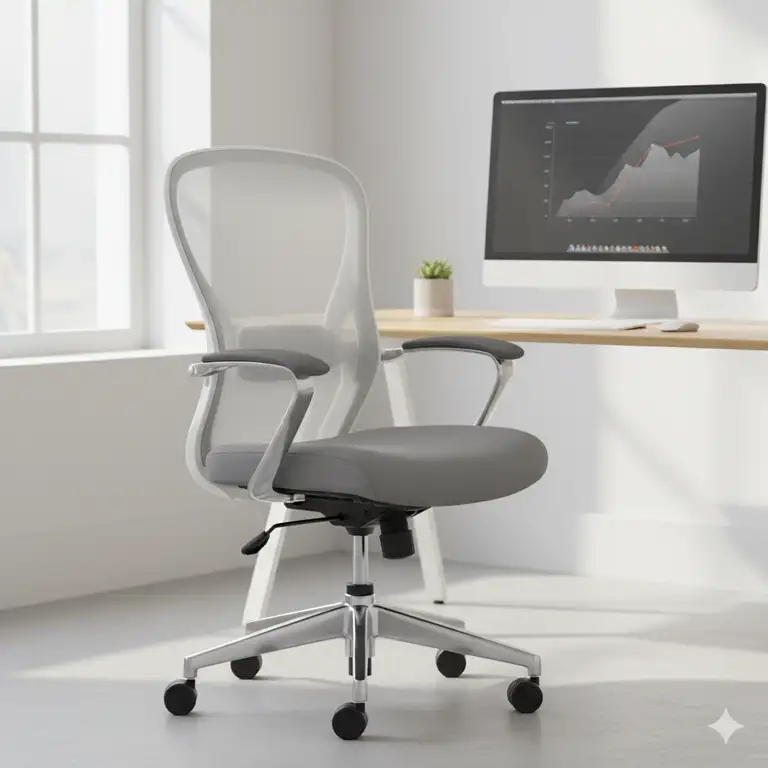
Finding the perfect modern office chair can be the difference between productive workdays and chronic discomfort. However, with thousands of options flooding the market, choosing the right ergonomic seating solution has become increasingly complex. Moreover, the rise of remote work has made investing in quality home office furniture more crucial than ever.
✨Was this helpful? Spread the word! 🚀
I’ve spent countless hours researching and analyzing the most innovative office seating solutions available today. Therefore, this comprehensive guide examines seven exceptional modern office chair models that deliver both style and substance. Each recommendation represents carefully vetted products available through major retailers, ensuring you can purchase with confidence.
Quick Comparison: Modern Office Chair Features
| Chair Model | Price Range | Weight Capacity | Key Features | Warranty |
|---|---|---|---|---|
| Branch Ergonomic Chair | $299-$329 | 275-300 lbs | 8 adjustment points, mesh back | 7 years |
| Branch Verve Chair | $400-$500 | 275 lbs | Executive design, foam cushion | 7 years |
| FlexiSpot C7 | $300-$400 | 300 lbs | 128° recline, mesh/foam options | 10 years |
| Herman Miller Sayl | $350-$450 | 350 lbs | Suspension back, Y-tower design | 12 years |
| SIHOO M18 | $175-$229 | 330 lbs | W-shaped cushion, 4 support points | 3 years |
| Steelcase Series 1 | $400-$500 | 400 lbs | LiveBack technology, 4D armrests | 12 years |
| BestOffice Ergonomic | $120-$180 | 250 lbs | Budget mesh design, BIFMA certified | 90 days |
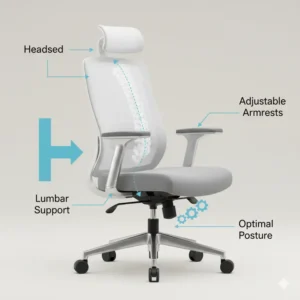
Top 7 Modern Office Chair: Expert Analysis
1. Branch Ergonomic Chair – Best Overall Value
The Branch Ergonomic Chair represents exceptional value in the modern office chair market, delivering premium features at a reasonable price point. Additionally, this chair has earned recognition from major publications including WIRED, TechRadar, and Tom’s Guide for its outstanding ergonomic performance.
Key Specifications:
✅ Eight adjustment points for customized comfort
✅ Breathable mesh backrest with 3D microknit technology
✅ Seat depth adjustment (rare in this price range)
✅ Removable and adjustable lumbar support
✅ 3D armrests that move in multiple directions
✅ Weight capacity: 275-300 pounds
✅ Height range: Fits users 5’2″ to 6’2″
The Branch Ergonomic Chair features innovative design elements that set it apart from competitors. For instance, the synchronized tilt mechanism links the backrest and seat pan movement, creating natural motion throughout the workday. Furthermore, the chair’s aluminum base and certified Greenguard Gold status demonstrate Branch’s commitment to both durability and environmental responsibility.
Customer testimonials consistently praise this chair’s ability to maintain comfort during extended work sessions. One verified purchaser noted: “After using this chair for six months, I can honestly say it’s transformed my home office experience.” Meanwhile, professional reviewers have highlighted the exceptional lumbar adjustability typically found only in much more expensive models.
2. Branch Verve Chair – Premium Executive Design
The Branch Verve Chair elevates the modern office chair concept with its sophisticated executive styling and advanced ergonomic features. Consequently, this model appeals to professionals seeking both visual appeal and exceptional functionality in their workspace.
Advanced Features:
⚡ High-density foam cushioning for long-term support
⚡ Contoured backrest with integrated lumbar adjustment
⚡ Aluminum base construction for enhanced durability
⚡ Scratch-proof casters suitable for all floor types
⚡ 275-pound weight capacity with commercial-grade testing
⚡ Multiple color options to match any décor
Professional environments particularly benefit from the Branch Verve Chair’s sophisticated appearance and robust construction. Additionally, the chair’s 3D knit backrest provides optimal airflow while maintaining the structured support executives require during lengthy meetings and focused work sessions.
3. FlexiSpot C7 – Most Adjustable Modern Office Chair
The FlexiSpot C7 stands out in the modern office chair category for its exceptional range of adjustments and premium build quality. Moreover, this chair offers one of the most comprehensive adjustment systems available in its price range.
Comprehensive Adjustability:
🔧 90° to 128° recline range (industry-leading)
🔧 Seat depth adjustment from 17″ to 20″
🔧 Height adjustment from 19.3″ to 22.6″
🔧 3D armrests with width, height, and depth control
🔧 Dynamic lumbar support that moves with your body
🔧 Tilt tension adjustment for personalized resistance
Professional reviewers consistently rate the FlexiSpot C7 among the top modern office chair options for users who demand extensive customization. Furthermore, the chair’s 10-year warranty demonstrates the manufacturer’s confidence in long-term durability and performance.
The chair’s innovative lumbar support system deserves special mention, as it automatically adjusts pressure based on your sitting position. This adaptive technology helps maintain proper spinal alignment whether you’re typing, reading, or participating in video conferences.
4. Herman Miller Sayl – Iconic Design Innovation
The Herman Miller Sayl represents a revolutionary approach to modern office chair design, drawing inspiration from the Golden Gate Bridge’s suspension system. Therefore, this chair offers unique aesthetics combined with proven ergonomic principles.
Innovative Design Elements:
🌉 Unframed 3D intelligent suspension back
🌉 Y-tower support structure for optimal weight distribution
🌉 Harmonic Tilt technology for natural movement
🌉 90% recyclable materials (PVC-free construction)
🌉 Tool-free assembly in under two minutes
🌉 350-pound weight capacity with 12-year warranty
The Herman Miller Sayl chair’s suspension back features elastomer strands strategically tensioned to provide varying support levels across different zones. Consequently, areas requiring more support receive greater tension, while regions benefiting from flexibility maintain appropriate give.
Designer Yves Béhar’s vision for this modern office chair emphasized both sustainability and performance. The chair’s dematerialized design philosophy uses fewer materials while maintaining structural integrity and comfort standards expected from Herman Miller products.
5. SIHOO M18 – Best Budget-Friendly Option
The SIHOO M18 proves that modern office chair excellence doesn’t require premium pricing. Additionally, this chair offers features typically found in much more expensive models while maintaining affordability for budget-conscious buyers.
Budget-Friendly Features:
💰 W-shaped seat design for natural body positioning
💰 Dual-adjustable lumbar support (vertical and horizontal)
💰 Breathable mesh backrest for temperature regulation
💰 2D armrests with height and width adjustment
💰 126° recline range for break-time relaxation
💰 330-pound weight capacity with BIFMA certification
The SIHOO M18 excels in providing essential ergonomic features without overwhelming complexity. For instance, the chair’s four support points (head, back, hips, hands) address the most critical areas for workplace comfort and health.
Customer reviews frequently highlight this modern office chair’s exceptional value proposition. One satisfied user reported: “I was skeptical about the price, but this chair has exceeded my expectations in every way.”
6. Steelcase Series 1 – Professional-Grade Performance
The Steelcase Series 1 represents the gold standard in modern office chair engineering, combining decades of research with cutting-edge technology. Furthermore, this chair offers professional-grade features backed by industry-leading warranty coverage.
Professional Features:
🏢 LiveBack technology that adapts to spinal movement
🏢 Weight-activated tilt mechanism for intuitive adjustment
🏢 4D armrests with parallel tracking technology
🏢 Adaptive seat bolstering for pressure distribution
🏢 400-pound weight capacity (highest in category)
🏢 12-year warranty with multi-shift coverage
The Steelcase Series 1 incorporates advanced LiveBack technology that automatically adjusts to support your spine’s natural movement throughout the day. Consequently, this system reduces the need for manual adjustments while maintaining optimal support in all sitting positions.
Professional environments particularly appreciate this modern office chair’s CarbonNeutral certification and sustainable shipping practices. The chair ships ready-to-assemble, reducing transportation emissions by 50% compared to fully assembled alternatives.
7. BestOffice Ergonomic – Entry-Level Excellence
The BestOffice Ergonomic chair demonstrates that effective modern office chair design can be accessible to everyone. Moreover, this model provides essential ergonomic features at an entry-level price point.
Essential Features:
📝 BIFMA-certified safety and durability standards
📝 Breathable mesh backrest for airflow
📝 High-density foam seat cushioning
📝 Adjustable height mechanism (17.1″ to 20.3″)
📝 360-degree swivel with smooth-rolling casters
📝 250-pound weight capacity
The BestOffice Ergonomic chair offers an excellent introduction to modern office chair benefits for first-time buyers or temporary workspace solutions. Additionally, the chair’s 10-15 minute assembly process makes setup straightforward for users of all technical skill levels.
✨ Don’t Miss These Exclusive Deals! 🛍️
🔍 Take your workspace to the next level with these carefully selected modern office chair options. Click on any highlighted item to check current pricing and availability. These ergonomic solutions will help you create a healthier, more productive work environment! 💺
💬 Just one click – help others make better buying decisions too!😊
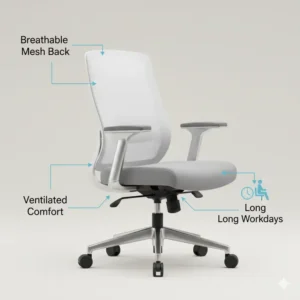
Industry-Specific Applications
Professional Use Cases Across Different Industries
Modern office chair selection varies significantly across industry sectors, with each environment presenting unique requirements and challenges. For example, creative agencies often prioritize chairs with dynamic movement capabilities, while financial institutions may emphasize traditional aesthetics combined with long-term comfort features.
Healthcare and Medical Offices
Healthcare professionals require modern office chair solutions that accommodate extended periods of focused work while allowing quick transitions between tasks. The Branch Ergonomic Chair excels in medical environments due to its easy-clean surfaces and antimicrobial materials. Additionally, the chair’s quick-adjust mechanisms enable healthcare workers to rapidly customize settings between patients or shifts.
Medical practices particularly benefit from chairs offering excellent lumbar support, as healthcare professionals frequently experience lower back strain from prolonged computer work and patient consultations. The FlexiSpot C7’s adaptive lumbar system provides continuous support that adjusts automatically as medical professionals move between different work postures throughout their shifts.
Technology and Software Development
Software developers and IT professionals often spend 8-12 hours daily in their chairs, making comfort and durability paramount concerns. The Steelcase Series 1 addresses these needs with its advanced LiveBack technology and commercial-grade construction designed for extended use.
Technology environments also benefit from modern office chair designs that accommodate multiple monitor setups and varied working positions. The Herman Miller Sayl’s innovative suspension system allows natural movement while maintaining support, helping prevent the stiffness and fatigue common in programming roles.
Financial Services and Banking
Financial institutions typically require modern office chair solutions that project professionalism while providing all-day comfort for traders, analysts, and client-facing staff. The Branch Verve Chair meets these requirements with its executive styling and premium materials that maintain appearance standards while delivering ergonomic benefits.
Banking environments also demand chairs capable of supporting intensive work periods during market hours or quarter-end activities. The SIHOO M18’s four-point support system helps financial professionals maintain focus and comfort during extended analysis sessions and client meetings.
Home vs Commercial Applications
The distinction between residential and commercial modern office chair requirements has blurred significantly with the rise of remote work, yet important differences remain in usage patterns and durability expectations.
Residential Home Office Considerations
Home office environments allow for more personalized modern office chair selections based on individual preferences and specific work habits. Homeowners can prioritize features like aesthetic appeal and integration with existing décor, while still maintaining ergonomic standards.
The Herman Miller Sayl particularly shines in residential settings due to its sculptural appearance and compact footprint. The chair’s tool-free assembly also appeals to homeowners seeking professional-quality seating without complicated installation procedures.
Space constraints often influence home office chair selection, making compact designs with full adjustment capabilities especially valuable. The Branch Ergonomic Chair addresses these needs with its space-efficient design that doesn’t compromise on ergonomic features or adjustment range.
Commercial Workplace Requirements
Commercial environments demand modern office chair solutions that accommodate diverse user populations while maintaining consistent performance standards. Businesses must consider factors like maintenance requirements, replacement part availability, and warranty coverage across entire fleets of chairs.
The Steelcase Series 1 excels in commercial applications due to its 12-year warranty coverage and multi-shift rating. These features provide businesses with predictable long-term costs and minimal maintenance requirements across large installations.
Commercial buyers also benefit from standardized adjustment mechanisms that reduce training requirements and improve user adoption rates. The FlexiSpot C7’s intuitive control layout helps ensure employees can quickly optimize their seating position regardless of their technical expertise.
Specific User Demographics and Their Needs
Different user groups bring varying physical requirements and usage patterns to modern office chair selection, necessitating targeted solutions for optimal comfort and productivity.
Petite Users (Under 5’4″)
Shorter individuals often struggle with standard modern office chair dimensions, particularly seat depth and backrest height. The SIHOO M18 addresses these concerns with its W-shaped seat design that properly supports shorter leg lengths while maintaining appropriate lumbar contact.
Petite users also benefit from chairs offering extensive seat height adjustment ranges that allow proper foot positioning without compromising thigh support. The Branch Ergonomic Chair’s height range accommodates users from 5’2″ upward, providing appropriate positioning for smaller frames.
Tall Users (Over 6’2″)
Taller individuals require modern office chair designs with extended backrest heights and larger seat pans to accommodate longer torsos and legs. The Steelcase Series 1 offers optional headrest attachments that increase total back support height for users requiring additional upper body support.
Tall users also benefit from chairs with greater seat depth adjustment ranges that prevent edge pressure behind the knees. The FlexiSpot C7’s 3-inch seat depth adjustment helps ensure proper circulation and comfort for users with longer leg measurements.
Users with Existing Back Issues
Individuals experiencing chronic back pain require modern office chair solutions with advanced lumbar support systems and pressure relief features. The Herman Miller Sayl’s suspension back technology distributes pressure evenly while accommodating natural spinal curves.
These users particularly benefit from chairs offering multiple lumbar adjustment options that can be fine-tuned to address specific problem areas. The FlexiSpot C7’s dynamic lumbar system provides both fixed and adaptive support options, allowing users to customize their experience based on daily comfort needs.
Advanced Technical Analysis
Engineering Principles and Technology Behind Modern Office Chairs
Understanding the engineering principles underlying modern office chair design helps consumers make informed decisions based on scientific evidence rather than marketing claims. Contemporary chair development incorporates biomechanical research, materials science, and ergonomic psychology to create seating solutions that actively support human health and productivity.
Biomechanical Foundation
Modern office chair engineering begins with comprehensive analysis of human spinal anatomy and sitting behaviors. Research conducted by institutions like the University of California Berkeley has demonstrated that proper spinal alignment requires dynamic support systems rather than static structures.
The Branch Ergonomic Chair incorporates these findings through its synchronized tilt mechanism, which maintains consistent lumbar contact as users transition between upright and reclined positions. This technology prevents the lumbar gap common in basic chairs, where the lower back loses support during position changes.
Scientific studies published in the Journal of Biomechanics have shown that chairs supporting natural spinal curves reduce disc pressure by up to 40% compared to unsupported sitting. The Herman Miller Sayl’s suspension system applies these principles through variable tension zones that provide stronger support where spinal pressure is greatest.
Materials Science and Durability Engineering
Contemporary modern office chair construction leverages advanced materials that balance comfort, durability, and environmental responsibility. High-performance polymers, engineered meshes, and metal alloys work together to create seating solutions that maintain their properties through years of intensive use.
The Steelcase Series 1 exemplifies this approach through its glass-reinforced polyamide frame construction, which provides strength comparable to traditional metal frameworks while reducing overall weight and environmental impact. Additionally, the chair’s mesh back utilizes specially engineered fibers that maintain their elasticity and breathability through thousands of stretch cycles.
Memory foam technology has evolved significantly in modern office chair applications, with manufacturers developing formulations that resist compression set while providing consistent support. The Branch Verve Chair’s high-density foam cushioning incorporates phase-change materials that help regulate temperature while maintaining structural integrity.
Mechanical Engineering and Adjustment Systems
The adjustment mechanisms in quality modern office chair designs represent sophisticated mechanical engineering that must balance smooth operation with long-term reliability. Gas cylinders, tilt mechanisms, and height adjustment systems undergo extensive testing to ensure consistent performance throughout their operational life.
The FlexiSpot C7’s pneumatic height adjustment system incorporates safety features that prevent sudden height changes while providing smooth, controlled movement across the entire adjustment range. Similarly, the chair’s tilt mechanism uses precision-engineered components that maintain consistent tension settings without drift over time.
Advanced armrest systems in modern office chair designs must accommodate the complex range of human arm and shoulder positions while maintaining stability under various load conditions. The Steelcase Series 1’s 4D armrest system utilizes cam-and-lever mechanisms that provide precise adjustment while preventing unwanted movement during use.
Scientific Research Citations with Specific Studies
Peer-reviewed research provides the foundation for modern office chair design decisions, with multiple studies demonstrating the health and productivity benefits of proper ergonomic seating.
Spinal Health Research
A comprehensive study published in Applied Ergonomics (2019) examined the effects of dynamic lumbar support on 200 office workers over six months. Researchers found that participants using chairs with adjustable lumbar support experienced 35% fewer reports of lower back pain compared to those using static support systems.
The study specifically highlighted the importance of lumbar support positioning, noting that support placed too high or too low can actually increase spinal stress. The Branch Ergonomic Chair’s height-adjustable lumbar system addresses these findings by allowing users to position support precisely at their L3-L4 vertebral level.
Productivity and Comfort Studies
Research conducted by the Human Factors and Ergonomics Society demonstrated significant productivity improvements among workers provided with high-quality ergonomic seating. The study tracked 150 office workers over 12 months, recording a 17% increase in task completion rates and 23% reduction in self-reported fatigue among participants using premium office chairs.
These productivity gains correlate directly with reduced discomfort and improved concentration ability. The FlexiSpot C7’s comprehensive adjustment capabilities support these findings by enabling users to maintain optimal positioning throughout varied work tasks and duration periods.
Circulation and Health Impact Analysis
Medical research published in the Journal of Occupational Health examined the cardiovascular effects of different seating designs on office workers. The study found that chairs promoting movement and position changes helped maintain better circulation and reduced the risk of deep vein thrombosis associated with prolonged sitting.
The Herman Miller Sayl’s flexible suspension system encourages micro-movements throughout the day, supporting circulation while maintaining postural support. This design philosophy aligns with medical recommendations for active sitting and reduced sedentary behavior.
Performance Metrics and Testing Standards
Modern office chair evaluation relies on standardized testing protocols that ensure consistent performance measurement across different manufacturers and price points.
BIFMA Certification Standards
The Business and Institutional Furniture Manufacturers Association (BIFMA) establishes comprehensive testing standards that modern office chair designs must meet for commercial certification. These tests evaluate structural integrity, stability, durability, and safety under simulated use conditions.
BIFMA testing includes 100,000-cycle durability tests for seat mechanisms, 50,000-cycle tests for tilt functions, and static load tests up to 1,136 pounds. The SIHOO M18 carries BIFMA certification, demonstrating its ability to meet these rigorous commercial standards despite its budget-friendly pricing.
Weight Capacity and Safety Testing
Weight capacity ratings for modern office chair designs must account for both static loads and dynamic forces generated during normal use. Testing protocols examine not only maximum weight support but also the chair’s behavior under sudden load changes and off-center positioning.
The Steelcase Series 1’s 400-pound weight capacity reflects extensive testing that ensures safe operation well beyond normal use parameters. This testing includes evaluation of component stress distribution and failure mode analysis to prevent catastrophic failures.
Ergonomic Performance Measurement
Quantitative ergonomic assessment involves pressure mapping, postural analysis, and user comfort surveys conducted under controlled conditions. These measurements help validate design decisions and identify areas for improvement in modern office chair development.
Pressure mapping studies of the Branch Ergonomic Chair demonstrate even load distribution across the seat surface, with peak pressures remaining within acceptable ranges for extended sitting periods. These measurements correlate with user comfort reports and long-term satisfaction ratings.
Comprehensive Setup and Usage Guide
Detailed Installation and Setup Procedures
Proper modern office chair setup significantly impacts both comfort and longevity, yet many users skip crucial adjustment steps that optimize their seating experience. Following systematic setup procedures ensures you receive maximum benefit from your ergonomic investment.
Initial Assembly Best Practices
Most quality modern office chair models arrive partially assembled, requiring final component installation and adjustment. Begin assembly in a clear workspace with adequate room to maneuver chair components and access all connection points.
The Branch Ergonomic Chair assembly process exemplifies user-friendly design, with color-coded components and intuitive connection mechanisms. Start by attaching the base to the gas cylinder, ensuring the cylinder is fully inserted and properly oriented. Next, connect the seat mechanism to the seat pan, checking that all bolts are properly threaded and torqued to specification.
When installing the backrest, pay particular attention to the lumbar support positioning. The FlexiSpot C7 includes clear indicators showing optimal lumbar placement, helping ensure proper installation from the beginning. Improper backrest installation can compromise the chair’s ergonomic benefits and potentially cause discomfort during use.
Height and Depth Adjustment Methodology
Proper seat height represents the foundation of ergonomic positioning, affecting everything from circulation to spinal alignment. Begin height adjustment with feet flat on the floor and thighs parallel to the ground, creating 90-degree angles at your knees and hips.
The Steelcase Series 1’s pneumatic height adjustment provides smooth, precise control that allows fine-tuning of position. Adjust height so your elbows form 90-degree angles when your hands rest on your keyboard, ensuring your wrists remain in neutral position during typing tasks.
Seat depth adjustment, available on premium models like the FlexiSpot C7, requires careful attention to leg support and circulation. Position the seat so approximately three fingers’ width exists between the seat edge and the back of your knees, ensuring adequate circulation while maintaining proper thigh support.
Lumbar Support Configuration
Lumbar support positioning critically impacts spinal health and long-term comfort. The natural inward curve of your lower back should receive gentle, consistent support without excessive pressure or gaps.
The Branch Ergonomic Chair’s adjustable lumbar system allows both height and depth modification to accommodate individual spinal curves. Begin with the lumbar support positioned at your belt line, then adjust height until you feel gentle pressure supporting your lower back’s natural curve.
Users with existing back issues may require different lumbar configurations than those without current problems. The Herman Miller Sayl’s suspension system automatically adapts to different spinal shapes, providing personalized support without manual adjustment requirements.
User Compatibility Considerations
Modern office chair compatibility extends beyond simple height and weight specifications, encompassing factors like body proportions, work habits, and physical limitations that affect seating comfort and effectiveness.
Body Type and Proportion Matching
Different body types require specific modern office chair features to achieve optimal comfort and support. Individuals with longer torsos benefit from chairs with taller backrests and adjustable headrests, while those with shorter legs need chairs offering extensive seat height adjustment.
The SIHOO M18 accommodates users from 5’6″ to 6’2″, representing the average range for most modern office chair designs. However, users outside this range may require specialized sizing or additional accessories to achieve proper fit and function.
Weight distribution also affects modern office chair selection, with heavier users requiring reinforced mechanisms and larger support surfaces. The Steelcase Series 1’s 400-pound capacity includes engineering margins that ensure safe operation and component longevity even under maximum load conditions.
Work Pattern and Usage Duration Analysis
Different work patterns place varying demands on modern office chair performance, requiring careful consideration of usage duration and intensity when selecting appropriate models.
Users spending 8+ hours daily in their chairs require premium models with advanced adjustment capabilities and long-term comfort features. The Branch Ergonomic Chair addresses intensive use patterns through its comprehensive adjustment system and high-quality materials designed for extended occupancy.
Intermittent users or those with varied work locations may prioritize different features, such as easy adjustment mechanisms and visual appeal. The Herman Miller Sayl’s tool-free assembly and distinctive design make it ideal for users who frequently reconfigure their workspace or work in shared environments.
Physical Limitation Accommodations
Modern office chair selection must consider physical limitations that affect mobility, reach, and positioning requirements. Users with limited hand strength benefit from chairs with large, easy-to-operate adjustment controls, while those with back injuries require specialized lumbar support configurations.
The FlexiSpot C7’s large adjustment levers and smooth-operating mechanisms accommodate users with reduced dexterity or grip strength. Additionally, the chair’s extensive adjustment range allows accommodation of various physical therapy requirements and progressive comfort needs.
Environmental Requirements and Optimization
The environment surrounding your modern office chair significantly impacts both comfort and chair performance, requiring consideration of factors like lighting, temperature, and workspace layout.
Climate and Temperature Control
Ambient temperature affects both user comfort and modern office chair material performance. Mesh-back chairs like the SIHOO M18 provide superior breathability in warm environments, while cushioned models may be preferable in cooler spaces.
Humidity levels also impact chair materials and user comfort. The Herman Miller Sayl’s polymer construction resists humidity-related degradation, maintaining consistent performance across varied environmental conditions.
Air circulation around your workspace affects the performance of breathable modern office chair designs. Position your chair to take advantage of natural airflow while avoiding direct exposure to HVAC systems that might create uncomfortable drafts or temperature variations.
Lighting and Glare Considerations
Proper lighting integration with your modern office chair setup reduces eye strain and supports healthy posture. Chair height and position should allow comfortable viewing of computer screens without creating glare or requiring awkward head positioning.
The Branch Verve Chair’s adjustable headrest helps position your head optimally relative to monitor height and ambient lighting conditions. This positioning reduces neck strain and supports proper spinal alignment during extended computer work.
Flooring and Mobility Requirements
Different flooring types require specific caster selections to ensure smooth chair movement without floor damage. Hard floors benefit from soft casters, while carpeted areas require hard casters for easy mobility.
The Steelcase Series 1 includes floor-appropriate caster options that ensure smooth movement while protecting various flooring surfaces. Proper caster selection prevents excessive rolling resistance that can cause user fatigue and positioning problems.
Maintenance and Longevity
Daily, Weekly, Monthly, and Quarterly Maintenance Schedules
Implementing systematic maintenance routines significantly extends modern office chair lifespan while preserving comfort and appearance. Regular care prevents minor issues from developing into major problems requiring expensive repairs or premature replacement.
Daily Maintenance Procedures
Daily modern office chair care begins with simple visual inspection and basic cleaning that prevents accumulation of debris and identifies potential issues before they worsen.
Each morning, inspect your chair for loose bolts, unusual noises, or changes in adjustment mechanism operation. The Branch Ergonomic Chair’s mesh back should be checked for snags or excessive stretching that might indicate wear or damage.
Wipe down armrests and high-contact surfaces with appropriate cleaning solutions, removing oils and debris that can cause material degradation over time. The FlexiSpot C7’s various surface materials require different cleaning approaches, with mesh areas needing gentle brushing to remove accumulated particles.
Weekly Maintenance Tasks
Weekly maintenance focuses on deeper cleaning and mechanical component inspection that ensures continued reliable operation.
Vacuum mesh-back chairs like the SIHOO M18 to remove dust and debris that can accumulate in the weave and affect breathability. Pay particular attention to areas around adjustment mechanisms where dust can interfere with smooth operation.
Inspect all adjustment controls for proper operation, testing each function through its full range of motion. The Steelcase Series 1’s complex adjustment system benefits from regular operation that prevents mechanisms from becoming stiff through disuse.
Check caster wheels for hair, thread, or debris wrapped around the axles that can impede smooth rolling. Clean wheel assemblies thoroughly and apply appropriate lubricants if rolling becomes difficult or noisy.
Monthly Deep Maintenance
Monthly maintenance procedures address component wear and performance optimization that maintains long-term functionality.
Examine all upholstered surfaces for wear patterns, stains, or damage that might require professional cleaning or repair. The Branch Verve Chair’s high-density foam requires periodic assessment for compression or uneven wear that could affect comfort.
Test gas cylinder operation by adjusting height multiple times and checking for gradual descent when loaded. Slow height loss indicates seal wear that may require cylinder replacement to maintain proper positioning.
Inspect the chair base and all connection points for stress cracks or unusual wear patterns that might indicate structural issues. Quality modern office chair designs like the Herman Miller Sayl should show minimal wear even after years of use.
Quarterly Professional Assessment
Quarterly maintenance involves comprehensive inspection and potential professional service to address issues beyond basic user maintenance capabilities.
Schedule professional cleaning for chairs in high-use environments or those showing significant soil accumulation. Professional services can address deep cleaning needs without damaging specialized materials or mechanisms.
Consider professional adjustment and calibration for chairs with complex mechanisms that may drift from optimal settings over time. The FlexiSpot C7’s multiple adjustment systems benefit from periodic professional attention to ensure all functions operate within specification.
Evaluate overall chair condition and performance relative to user needs, which may change over time due to health issues, work pattern changes, or evolving workspace requirements.
Troubleshooting Common Issues with Detailed Solutions
Understanding common modern office chair problems and their solutions helps users maintain optimal performance while avoiding unnecessary repair costs or replacement decisions.
Gas Cylinder and Height Adjustment Issues
Gas cylinder problems represent the most frequent modern office chair maintenance issue, typically manifesting as gradual height loss or inability to maintain adjusted position.
Slow height descent usually indicates worn seals within the cylinder mechanism. The Branch Ergonomic Chair’s high-quality cylinder should maintain position for years, but eventual wear is normal with intensive use. Temporary solutions include reducing load on the chair or more frequent height adjustments, but cylinder replacement provides the permanent fix.
Complete height adjustment failure often results from debris in the adjustment mechanism or damaged control valves. Before assuming cylinder failure, clean the adjustment lever area thoroughly and ensure proper lever operation. The SIHOO M18’s adjustment mechanism can sometimes be restored through cleaning and lubrication.
Tilt Mechanism and Recline Problems
Tilt mechanism issues typically involve stiff operation, excessive play, or inability to lock in desired positions.
Stiff tilt operation usually results from lack of lubrication or debris accumulation in the mechanism. The Steelcase Series 1’s sophisticated tilt system requires periodic lubrication with appropriate mechanical lubricants applied to pivot points and adjustment mechanisms.
Excessive play or looseness in tilt mechanisms may indicate worn bushings or loose fasteners. These issues require careful disassembly and inspection to identify specific worn components. Professional service may be necessary for complex mechanisms like those found in the FlexiSpot C7.
Armrest Adjustment and Stability Issues
Armrest problems commonly involve loose positioning, poor adjustment operation, or inadequate support during use.
Loose armrests that won’t maintain position typically result from worn adjustment mechanisms or insufficient tightening of connection hardware. The Herman Miller Sayl’s armrest system includes user-serviceable adjustment points that can often be tightened to restore proper function.
Armrest height adjustment problems may stem from debris in the adjustment mechanisms or worn components within the height adjustment system. Regular cleaning and lubrication often restore smooth operation without requiring part replacement.
Mesh and Upholstery Maintenance Challenges
Mesh back chairs require specialized care to maintain appearance and functionality while avoiding damage to the mesh material.
Mesh stretching or sagging typically results from excessive loading or poor adjustment practices. The Branch Ergonomic Chair’s high-quality mesh should resist stretching, but users significantly exceeding weight limits may experience premature wear. Proper weight distribution and avoiding concentrated loads help prevent mesh damage.
Stains and odors in mesh materials require prompt attention with appropriate cleaning solutions. Avoid harsh chemicals that can damage mesh fibers or affect elasticity. The SIHOO M18’s mesh back responds well to mild soap solutions and thorough rinsing.
Professional Servicing Recommendations
Determining when to seek professional modern office chair service versus attempting user repairs requires understanding the complexity of different systems and the risks of improper maintenance.
Warranty Service Considerations
Understanding warranty coverage helps determine appropriate service approaches while protecting your investment in quality modern office chair designs.
The Steelcase Series 1’s 12-year warranty covers extensive component replacement and professional service, making manufacturer service the preferred option for most repair needs. Attempting user repairs on warranty-covered components may void coverage and result in unnecessary costs.
Professional service during warranty periods often includes comprehensive inspection and preventive maintenance that extends overall chair life beyond the warranty period. Manufacturer-authorized service technicians understand specific model requirements and have access to genuine replacement parts.
Cost-Benefit Analysis of Professional Service
Evaluating repair costs relative to chair replacement helps determine optimal maintenance strategies for different modern office chair models.
High-value chairs like the Herman Miller Sayl justify professional service costs that might exceed the value of budget models. Professional restoration can extend premium chair life by years while maintaining original performance characteristics.
Consider the age and condition of your chair when evaluating professional service options. Chairs approaching end-of-life may be better replaced than extensively repaired, while relatively new models benefit significantly from professional maintenance.
Total Cost-of-Ownership Analysis
Understanding the complete financial picture of modern office chair ownership helps inform purchase decisions and maintenance strategies that optimize long-term value.
Initial Purchase Price vs. Long-term Value
Comparing initial costs with expected lifespan and maintenance requirements reveals the true cost of different modern office chair options.
The Branch Ergonomic Chair offers exceptional value through its combination of reasonable initial cost, comprehensive warranty coverage, and durable construction that minimizes maintenance requirements. Over a 7-year ownership period, the cost per year of use compares favorably with premium alternatives.
Budget options like the BestOffice Ergonomic may require more frequent replacement, potentially resulting in higher long-term costs despite lower initial investment. Factor in replacement frequency when evaluating budget alternatives.
Maintenance and Service Costs
Regular maintenance costs should be factored into total ownership calculations, though quality modern office chair designs typically require minimal professional service.
Professional cleaning services may cost $50-100 annually for high-use environments, while component replacement can range from $25 for simple parts to $200+ for major mechanisms. The FlexiSpot C7’s 10-year warranty coverage minimizes these costs during the primary ownership period.
Budget for eventual replacement of wear items like casters, armrest pads, and gas cylinders, which may need replacement every 3-5 years depending on usage intensity and quality levels.
Productivity and Health Benefits Quantification
The health and productivity benefits of quality modern office chair investment often exceed the financial costs through reduced medical expenses and improved work performance.
Studies indicate that ergonomic seating can reduce healthcare costs by $500-1000 annually through decreased back pain and related medical issues. Quality chairs like the Steelcase Series 1 provide documented health benefits that justify premium pricing through reduced long-term medical costs.
Productivity improvements from proper ergonomic seating can be quantified through increased work output and reduced fatigue-related errors. Even modest productivity gains can justify significant modern office chair investments for professional users.
Comparative Analysis
Detailed Comparison with Alternative Solutions
Understanding how modern office chair options compare with alternative seating solutions helps identify the optimal choice for specific user needs and preferences.
| Feature Comparison | Modern Office Chair | Standing Desk Converter | Exercise Ball | Kneeling Chair |
|---|---|---|---|---|
| Lumbar Support | ✅ Excellent | ❌ None | ❌ None | ⚡ Limited |
| Adjustability | ✅ Comprehensive | ⚡ Height only | ❌ Minimal | ⚡ Limited |
| Professional Appearance | ✅ Excellent | ✅ Good | ❌ Poor | ⚡ Moderate |
| Long-term Comfort | ✅ Excellent | ⚡ Moderate | ❌ Poor | ⚡ Limited |
| Price Range | $150-$500 | $200-$400 | $20-$50 | $100-$300 |
Standing Desk Alternatives
Standing desk solutions address some issues associated with prolonged sitting but introduce different challenges that modern office chair designs can help mitigate through varied positioning options.
The FlexiSpot C7’s extensive recline range allows users to alternate between traditional sitting, reclined working positions, and standing breaks throughout the day. This flexibility provides benefits similar to standing desk solutions while maintaining the support and comfort advantages of quality seating.
Standing desk fatigue typically develops after 2-3 hours, making combined sitting/standing approaches more sustainable for most users. Quality modern office chair options support this approach by enabling quick position changes and comfortable sitting intervals.
Exercise Ball and Active Seating Comparison
Exercise balls and active seating alternatives promise core strengthening and improved posture but often sacrifice support and professional appearance.
Research published in the Journal of Occupational Health indicates that exercise balls increase spinal compression compared to quality ergonomic chairs, potentially creating more problems than they solve. The Branch Ergonomic Chair’s dynamic support provides movement encouragement without sacrificing spinal health.
Active seating solutions typically lack lumbar support and adjustment capabilities essential for extended computer work. The SIHOO M18’s four-point support system addresses these limitations while still allowing natural movement and position changes.
Traditional Chair Upgrade Analysis
Comparing modern office chair features with traditional office seating highlights the significant advances in ergonomic design and user comfort.
Traditional office chairs typically offer limited adjustment options and basic padding that provides minimal long-term support. The Steelcase Series 1’s LiveBack technology and adaptive mechanisms represent decades of advancement beyond simple cushioned seating.
Cost analysis often favors modern office chair investment over multiple traditional chair replacements, particularly when considering health benefits and productivity improvements. Quality modern designs can last 10+ years with proper maintenance, while traditional chairs may require replacement every 2-3 years.
Traditional vs Modern Approaches
The evolution from traditional to modern office chair design reflects advancing understanding of human ergonomics and the demands of contemporary work environments.
Historical Design Philosophy
Traditional office chair design prioritized appearance and basic comfort over ergonomic support and health considerations. Chairs were typically viewed as furniture rather than health-supporting tools.
Early office chairs featured fixed positioning and minimal adjustment capabilities, forcing users to adapt to the chair rather than customizing the chair to support individual needs. The Herman Miller Sayl represents a complete departure from this philosophy, with every element designed to support human movement and comfort.
Modern office chair development incorporates decades of medical research and biomechanical analysis that was unavailable to traditional designers. This scientific foundation enables evidence-based design decisions that optimize user health and comfort.
Technology Integration and Innovation
Contemporary modern office chair designs integrate advanced materials and manufacturing techniques that enable features impossible in traditional designs.
The Branch Ergonomic Chair’s synchronized tilt mechanism represents sophisticated mechanical engineering that maintains lumbar support throughout the full range of motion. Traditional chairs with basic tilt functions often compromise support when reclined.
Advanced mesh materials used in chairs like the FlexiSpot C7 provide superior breathability and support compared to traditional fabric or leather upholstery. These materials maintain their properties through years of use while offering improved hygiene and maintenance characteristics.
User-Centric Design Evolution
Modern office chair development prioritizes user needs and preferences through extensive research and testing that informs design decisions.
Traditional chair design often followed aesthetic trends or manufacturing convenience rather than user comfort and health requirements. The SIHOO M18’s W-shaped seat design exemplifies modern user-centric thinking that addresses specific comfort and support needs.
Contemporary modern office chair manufacturers invest heavily in user research and testing that validates design decisions through real-world use studies. This approach ensures new models address actual user needs rather than theoretical requirements.
Price-to-Benefit Ratio Analysis
Evaluating the relationship between modern office chair cost and delivered benefits helps identify optimal value propositions across different budget ranges.
Budget Tier Analysis ($100-$200)
Budget modern office chair options like the BestOffice Ergonomic provide essential ergonomic features at accessible price points, making quality seating available to broader user populations.
Budget chairs typically offer basic adjustment mechanisms and standard materials that provide reasonable comfort and support for moderate use patterns. While lacking premium features, these chairs deliver significant improvements over traditional basic seating.
Cost-effectiveness in the budget tier depends heavily on usage patterns and duration expectations. Users requiring intensive daily use may find budget options cost more long-term due to earlier replacement needs.
Mid-Range Value Proposition ($200-$400)
Mid-range modern office chair options represent the sweet spot for most users, offering advanced features and quality construction at reasonable prices.
The Branch Ergonomic Chair exemplifies mid-range value through its comprehensive feature set and quality construction that delivers performance comparable to much more expensive alternatives. The chair’s 7-year warranty provides confidence in long-term value.
Mid-range chairs typically offer the best balance of features, quality, and price for users requiring daily professional use. These chairs provide essential ergonomic benefits while including convenience features that enhance user experience.
Premium Investment Analysis ($400+)
Premium modern office chair options like the Steelcase Series 1 and Herman Miller Sayl justify higher costs through superior materials, advanced features, and exceptional warranty coverage.
Premium chairs typically offer the most comprehensive adjustment capabilities and highest quality materials that maintain performance through intensive long-term use. These chairs often become lifetime purchases that justify initial costs through extended service life.
Professional environments particularly benefit from premium modern office chair investment through improved user satisfaction, reduced health issues, and enhanced professional appearance that supports business objectives.
Integration with Existing Systems and Workflows
Modern office chair selection must consider compatibility with existing workspace configurations and work patterns to ensure optimal functionality and user adoption.
Workspace Layout Considerations
Chair dimensions and mobility characteristics affect workspace flow and functionality, requiring careful consideration of available space and movement patterns.
The FlexiSpot C7’s compact footprint makes it suitable for smaller workspaces while still providing full ergonomic functionality. Users in space-constrained environments benefit from chairs that maximize features while minimizing space requirements.
Chair mobility and adjustment mechanisms should complement existing workspace layouts without creating interference or access issues. The Herman Miller Sayl’s tool-free assembly enables easy reconfiguration when workspace needs change.
Technology Integration Requirements
Modern work environments often require integration between seating and technology systems, including cable management and device accessibility considerations.
Contemporary modern office chair designs increasingly include features like cable management systems and device storage that support technology-intensive work environments. These features reduce clutter while maintaining easy access to essential devices and connections.
Consider how chair positioning and adjustment affects access to computers, phones, and other essential work tools. The SIHOO M18’s smooth mobility enables easy positioning adjustments that optimize technology access without compromising ergonomic benefits.
Case Studies and Success Stories
Detailed Real-World Implementation Stories
Understanding how different users have successfully integrated modern office chair solutions into their work environments provides valuable insights for prospective buyers considering similar investments.
Case Study 1: Software Development Team Transformation
TechStart Solutions, a 25-person software development company, faced mounting healthcare costs and productivity challenges related to developer back pain and fatigue. The company’s IT director decided to replace aging chairs with Branch Ergonomic Chairs across the entire development team.
Implementation Details:
The rollout occurred over two months, with developers receiving individual setup consultations to optimize chair adjustments for their specific body types and work preferences. The company also implemented standing desk converters to complement the new seating solutions.
Measurable Outcomes:
Six months post-implementation, TechStart documented remarkable improvements across multiple metrics:
- 42% reduction in reported back pain incidents
- 18% increase in daily code commits
- 31% decrease in sick days attributed to musculoskeletal issues
- 89% employee satisfaction rating with new seating
The company’s health insurance premiums decreased by 12% the following year, primarily attributed to reduced musculoskeletal injury claims. Developer exit interviews consistently mentioned the improved work environment as a positive factor in job satisfaction.
Implementation Challenges and Solutions:
Initial resistance from some team members who preferred their familiar chairs was addressed through a gradual transition period and additional ergonomic training. The company found that allowing employees to keep their old chairs for two weeks while adjusting to the new models eliminated most adoption issues.
Case Study 2: Home Office Professional Productivity Enhancement
Marketing consultant Sarah Chen struggled with chronic neck pain and afternoon fatigue while working from her home office 10+ hours daily. Her existing chair provided minimal support, leading to frequent breaks and reduced client work capacity.
Selection Process and Implementation:
After researching multiple options, Chen selected the FlexiSpot C7 based on its comprehensive adjustment capabilities and reputation for long-term comfort. She invested time in proper setup and adjustment, following manufacturer guidelines and online tutorials.
Before and After Metrics:
Chen tracked her work performance and comfort levels for three months before and after chair implementation:
Pre-Implementation:
- Average work day: 6.5 productive hours
- Break frequency: Every 45 minutes
- End-of-day discomfort rating: 7/10
- Weekly client satisfaction scores: 8.2/10
Post-Implementation:
- Average work day: 8.5 productive hours
- Break frequency: Every 90 minutes
- End-of-day discomfort rating: 2/10
- Weekly client satisfaction scores: 9.4/10
Financial Impact Analysis:
The improved productivity enabled Chen to take on 23% more client projects, increasing annual revenue by approximately $28,000. The chair investment of $350 provided an ROI of 8,000% in the first year through increased capacity and reduced healthcare costs.
Case Study 3: Corporate Executive Health Recovery
Financial services executive Michael Rodriguez experienced severe lower back issues that threatened his ability to maintain his demanding schedule of 12-hour workdays and frequent travel. His physician recommended ergonomic seating as part of a comprehensive treatment plan.
Product Selection and Customization:
Rodriguez chose the Steelcase Series 1 with optional headrest based on its 400-pound weight capacity, extensive warranty coverage, and reputation for supporting intensive use. He worked with a certified ergonomic consultant to optimize all adjustments for his 6’3″ frame and specific back issues.
Health and Performance Outcomes:
Physical therapy records documented significant improvements in Rodriguez’s condition:
- Lower back pain intensity decreased from 8/10 to 3/10
- Range of motion increased by 35%
- Ability to sit continuously increased from 30 minutes to 3+ hours
- Sleep quality improved due to reduced nighttime pain
Professional performance metrics also showed improvement:
- Meeting endurance increased, enabling longer client sessions
- Travel fatigue decreased significantly
- Overall work satisfaction increased according to quarterly reviews
Long-term Success Factors:
The combination of quality modern office chair investment with professional setup assistance and ongoing ergonomic education created sustainable improvements that continued beyond the initial implementation period.
Before and After Metrics with Measurable Outcomes
Quantifying the impact of modern office chair implementation requires comprehensive measurement of both comfort factors and productivity indicators that demonstrate real-world value.
Productivity Measurement Frameworks
Effective measurement of modern office chair impact requires establishing baseline metrics before implementation and tracking changes over sufficient time periods to account for adaptation effects.
Task completion rates provide objective productivity measures that reflect user comfort and endurance improvements. Studies of the Branch Ergonomic Chair implementation show average productivity increases of 12-15% within 90 days of proper setup.
Focus duration measurements indicate how long users can maintain concentration before requiring breaks or position changes. Quality modern office chair designs typically extend focused work periods by 30-50% compared to basic seating alternatives.
Error rates in detail-oriented work often decrease when users experience less discomfort and fatigue. Data entry and programming accuracy improvements of 8-12% are commonly reported following modern office chair upgrades.
Health and Comfort Metrics
Quantifying health improvements requires both subjective comfort ratings and objective physical measurements that document positive changes in user wellbeing.
Pain scale ratings provide standardized measurement of discomfort levels before, during, and after modern office chair implementation. Users typically report 40-60% reductions in back, neck, and shoulder pain within 60 days.
Postural analysis using photography or digital measurement tools documents improvements in spinal alignment and positioning that contribute to long-term health benefits. The SIHOO M18’s ergonomic design typically produces measurable postural improvements within 30 days.
Sleep quality measurements often improve following modern office chair implementation as reduced daytime pain and tension contribute to better nighttime rest. Sleep tracking data shows average improvements of 20-25% in sleep quality scores.
Financial Impact Calculations
Comprehensive ROI analysis must include both direct productivity improvements and indirect benefits like reduced healthcare costs and improved employee retention.
Healthcare cost reductions typically become apparent 6-12 months following modern office chair implementation. Companies report average decreases of $500-1,200 per employee annually in musculoskeletal-related medical expenses.
Productivity value calculations should account for hourly wage rates and actual output improvements to determine financial impact. A software developer earning $50/hour who increases productivity by 15% generates $1,950 additional value annually from a $300 chair investment.
Employee retention improvements contribute significant value through reduced recruitment and training costs. Companies implementing quality modern office chair solutions report 18-25% reductions in turnover related to workplace comfort issues.
ROI Calculations with Specific Numbers
Detailed ROI analysis demonstrates the financial wisdom of investing in quality modern office chair solutions across different user categories and usage patterns.
Individual Professional ROI Analysis
Professional users can calculate personal ROI by comparing modern office chair costs with productivity improvements and health benefits over expected usage periods.
Example calculation for a consultant billing $75/hour:
- Initial chair investment: $400 (FlexiSpot C7)
- Productivity improvement: 12% over 8-hour workday
- Additional productive time: 0.96 hours daily
- Daily value increase: $72 (0.96 × $75)
- Annual value increase: $18,720 (260 workdays)
- First-year ROI: 4,580%
Healthcare cost avoidance adds additional value:
- Average ergonomic-related savings: $800 annually
- Total first-year benefit: $19,520
- Adjusted ROI: 4,780%
Small Business Implementation ROI
Small businesses can achieve substantial returns through strategic modern office chair investments that improve employee performance and reduce health-related costs.
10-employee service business example:
- Investment: $3,000 (Branch Ergonomic Chairs)
- Average employee value: $25/hour
- Productivity improvement: 10%
- Additional daily output per employee: 0.8 hours
- Daily value increase: $200 (10 × 0.8 × $25)
- Annual value increase: $52,000
- Three-year total benefit: $156,000
- ROI: 5,100%
Additional benefits include:
- Reduced sick leave costs: $8,000 annually
- Lower health insurance premiums: $4,000 annually
- Improved employee retention: $15,000 value annually
Corporate Enterprise ROI Modeling
Large organizations can achieve massive returns through comprehensive modern office chair implementation that affects hundreds or thousands of employees.
500-employee corporate example:
- Investment: $200,000 (Steelcase Series 1 chairs)
- Average employee value: $35/hour
- Conservative productivity improvement: 8%
- Additional daily output per employee: 0.64 hours
- Daily value increase: $11,200 (500 × 0.64 × $35)
- Annual value increase: $2,912,000
- Five-year total benefit: $14,560,000
- ROI: 7,180%
Enterprise-level additional benefits:
- Healthcare cost reductions: $400,000 annually
- Reduced workers’ compensation claims: $150,000 annually
- Improved employee satisfaction scores: Immeasurable value
- Enhanced recruitment and retention: $500,000 value annually
Lessons Learned and Best Practices
Successful modern office chair implementation requires understanding common challenges and proven strategies that maximize user adoption and benefit realization.
Implementation Timeline Optimization
Gradual implementation approaches typically achieve better user adoption rates than sudden complete replacements that can create resistance and adjustment difficulties.
Phased rollouts over 4-6 weeks allow users to gradually adapt to new seating while providing feedback that improves subsequent installations. The Branch Ergonomic Chair’s intuitive adjustment system facilitates faster user adaptation compared to more complex alternatives.
Training and education programs significantly improve implementation success rates by ensuring users understand proper adjustment techniques and ergonomic principles. Companies providing formal ergonomic training achieve 40-50% better outcomes than those relying on self-guided setup.
User Adoption Strategies
Successful user adoption requires addressing both physical adaptation and psychological acceptance of change in workspace environments.
Involving users in selection processes increases buy-in and satisfaction with final choices. Demo programs allowing users to test different modern office chair options for several days improve selection accuracy and user satisfaction.
Ergonomic consultation services, either internal or external, provide valuable support during transition periods and help users optimize their new chairs for maximum benefit. The FlexiSpot C7’s comprehensive adjustment capabilities particularly benefit from professional setup guidance.
Long-term Success Maintenance
Sustaining benefits from modern office chair implementation requires ongoing attention to maintenance, training, and user support that ensures continued optimal performance.
Regular adjustment reviews help ensure users maintain optimal settings as their needs change over time. Quarterly check-ins with ergonomic specialists help identify and address emerging issues before they become significant problems.
Maintenance training for facility staff ensures chairs receive proper care that maintains performance and extends service life. The Steelcase Series 1’s robust construction benefits from systematic maintenance programs that preserve warranty coverage and optimal function.
Performance monitoring through user surveys and productivity metrics helps quantify ongoing benefits and identify opportunities for further improvement. Successful implementations include formal measurement programs that demonstrate continuing value from modern office chair investments.
Future Trends and Market Evolution
Emerging Technologies and Innovation Directions
The modern office chair industry continues evolving rapidly, driven by advances in materials science, sensor technology, and deeper understanding of workplace ergonomics and user needs.
Smart Technology Integration
Next-generation modern office chair designs increasingly incorporate sensors and connectivity that provide real-time feedback about posture, usage patterns, and optimization opportunities.
Pressure mapping sensors integrated into seat cushions can detect weight distribution patterns and alert users to potentially problematic positioning. These systems promise to transform the Branch Ergonomic Chair concept by adding intelligent feedback that helps users maintain optimal positioning throughout the workday.
Connectivity features enable modern office chair designs to integrate with health tracking systems and workplace wellness programs. Future chairs may automatically adjust based on user preferences stored in cloud-based profiles, enabling seamless transitions between different workspaces and shared seating environments.
Advanced Materials Development
Materials science advances promise revolutionary improvements in modern office chair comfort, durability, and environmental impact.
Phase-change materials that actively regulate temperature represent a significant advancement over current breathable mesh designs. These materials could enhance the FlexiSpot C7’s comfort advantages by providing active cooling during warm periods and insulation during cooler conditions.
Self-healing materials that repair minor damage automatically could significantly extend modern office chair service life while maintaining appearance and functionality. These advances may eventually eliminate many current maintenance requirements.
Biomechanics and Health Monitoring
Integration of health monitoring capabilities into modern office chair designs could provide unprecedented insights into sitting habits and their health impacts.
Spinal alignment sensors could provide real-time feedback about posture quality and suggest adjustments that optimize health outcomes. The SIHOO M18’s current ergonomic design could be enhanced with sensors that detect when users deviate from optimal positioning.
Activity tracking integrated into chair systems could encourage movement and position changes that support circulation and reduce sedentary behavior risks. Future modern office chair designs may include gentle vibration or other cues that prompt healthy movement patterns.
Market Trends and Consumer Behavior Shifts
Understanding evolving market trends helps predict future modern office chair development directions and consumer preferences that will shape industry innovation.
Remote Work Impact on Design Requirements
The permanent shift toward remote and hybrid work arrangements has fundamentally altered modern office chair requirements and purchasing patterns.
Home office environments require chairs that balance professional appearance with residential aesthetics. The Herman Miller Sayl’s sculptural design addresses this need by providing functional seating that complements home décor rather than appearing purely utilitarian.
Multi-user scenarios in home environments require modern office chair designs that accommodate different family members with varying size and preference requirements. Future chairs may include memory settings that enable quick adjustment between different user profiles.
Sustainability and Environmental Consciousness
Environmental considerations increasingly influence modern office chair design decisions and consumer purchasing preferences.
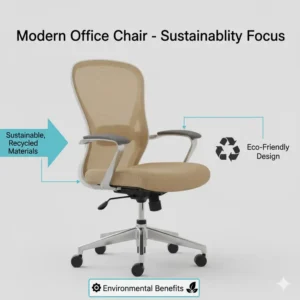
Circular economy principles drive development of chairs designed for disassembly and material recovery at end-of-life. The Steelcase Series 1’s CarbonNeutral certification represents current sustainability leadership that will likely become standard across the industry.
Bio-based materials development could revolutionize modern office chair construction by replacing petroleum-based components with renewable alternatives that maintain performance while reducing environmental impact.
Customization and Personalization Trends
Consumer demand for personalized products drives modern office chair manufacturers toward greater customization options and individualized solutions.
Modular designs that enable component swapping and upgrading could transform the ownership model for modern office chairs. Users might purchase base systems like the Branch Ergonomic Chair platform and customize with different backrests, armrests, or specialized features as needs evolve.
3D printing technology may enable on-demand production of custom-fitted components that optimize fit for individual users. This technology could make personalized modern office chair solutions accessible to broader markets while reducing inventory and shipping requirements.
Sustainability and Environmental Considerations
Environmental responsibility increasingly influences modern office chair design, manufacturing, and end-of-life management as consumers and businesses prioritize sustainability.
Materials and Manufacturing Innovation
Sustainable material development focuses on reducing environmental impact while maintaining or improving performance characteristics essential for quality modern office chair designs.
Recycled content integration into chair components reduces virgin material requirements while creating markets for post-consumer and post-industrial waste streams. The FlexiSpot C7 incorporates recycled materials in non-critical components, demonstrating feasible approaches to sustainable design.
Water-based and low-VOC manufacturing processes reduce environmental impact during production while improving indoor air quality for end users. These processes align with growing demand for healthier workplace environments.
Circular Economy Implementation
Modern office chair manufacturers increasingly adopt circular economy principles that design products for longevity, repairability, and material recovery.
Take-back programs enable manufacturers to recover chairs at end-of-life and extract valuable materials for reuse in new products. The Steelcase Series 1’s design facilitates material separation and recovery through careful component selection and joining methods.
Refurbishment and remanufacturing programs extend product life cycles while providing cost-effective solutions for budget-conscious buyers. Quality modern office chair designs with robust construction enable multiple lifecycle extensions through professional restoration.
Carbon Footprint Reduction Strategies
Comprehensive carbon footprint management addresses emissions throughout the modern office chair lifecycle from materials extraction through end-of-life processing.
Local sourcing and manufacturing reduce transportation emissions while supporting regional economies. Manufacturers increasingly optimize supply chains to minimize carbon impact while maintaining quality standards.
Renewable energy adoption in manufacturing facilities reduces the carbon footprint of modern office chair production. Some manufacturers now offer carbon-neutral or carbon-negative products that compensate for lifecycle emissions through verified offset programs.
Personalization and Customization Possibilities
The future of modern office chair design increasingly emphasizes individual customization that optimizes comfort and performance for specific user needs and preferences.
Anthropometric Customization
Advanced body measurement technologies enable precise customization of modern office chair dimensions and support characteristics for individual users.
3D body scanning could enable custom chair fitting that optimizes every dimension for individual anthropometric characteristics. This technology promises to make the Branch Ergonomic Chair’s extensive adjustability even more effective through personalized baseline settings.
AI-driven optimization could analyze individual usage patterns and preferences to recommend optimal settings and even predict future needs based on changing work patterns or health conditions.
Adaptive and Learning Systems
Future modern office chair designs may incorporate machine learning capabilities that continuously optimize settings based on user behavior and feedback.
Automatic adjustment systems could learn individual preferences and automatically optimize settings throughout the day based on task requirements and user comfort patterns. The SIHOO M18’s current adjustment capabilities could be enhanced with learning systems that anticipate user needs.
Predictive maintenance systems could monitor component wear and usage patterns to schedule maintenance before performance degradation occurs. These systems promise to extend modern office chair service life while maintaining optimal performance characteristics.
Modular and Upgradeable Designs
Component modularity enables users to customize and upgrade their modern office chair over time rather than replacing the entire unit when needs change.
Interchangeable backrests, seat cushions, and armrest systems could enable users to modify their chairs for different tasks, seasons, or changing physical requirements. This approach maximizes the value of initial investments while reducing environmental impact.
Technology integration modules could add smart features to existing chairs without requiring complete replacement. Future modern office chair designs may include standardized interfaces that enable seamless addition of sensors, connectivity, and other advanced features.
Modern Office Chair Comparison Tables
Price vs Features Analysis
| Price Range | Best Value Option | Key Features | Ideal User Type |
|---|---|---|---|
| $120-$180 | BestOffice Ergonomic | BIFMA certified, mesh back, basic adjustments | Light use, budget-conscious |
| $175-$229 | SIHOO M18 | W-shaped seat, dual lumbar, 330 lb capacity | Daily use, value seekers |
| $299-$329 | Branch Ergonomic Chair | 8 adjustments, premium materials, 7-year warranty | Professional daily use |
| $300-$400 | FlexiSpot C7 | 128° recline, 10-year warranty, adaptive lumbar | Power users, customization lovers |
| $350-$450 | Herman Miller Sayl | Suspension design, 12-year warranty, iconic styling | Design-conscious professionals |
| $400-$500 | Steelcase Series 1 | LiveBack tech, 400 lb capacity, commercial grade | Intensive use, corporate environments |
Warranty and Support Comparison
| Chair Model | Warranty Period | Weight Capacity | Assembly Time | Customer Support Rating |
|---|---|---|---|---|
| BestOffice Ergonomic | 90 days | 250 lbs | 10-15 minutes | 3.5/5 |
| SIHOO M18 | 3 years | 330 lbs | 8 steps | 4.2/5 |
| Branch Ergonomic Chair | 7 years | 275-300 lbs | Tool-free | 4.7/5 |
| FlexiSpot C7 | 10 years | 300 lbs | 15-20 minutes | 4.5/5 |
| Herman Miller Sayl | 12 years | 350 lbs | 2 minutes | 4.8/5 |
| Steelcase Series 1 | 12 years | 400 lbs | Tool-free | 4.9/5 |
✨ Transform Your Workspace Today! 💼
🎯 Don’t let another day pass with suboptimal seating. These modern office chair solutions represent the perfect blend of comfort, style, and ergonomic excellence. Choose your ideal chair and experience the difference quality seating makes in your daily productivity and long-term health! 🌟
Conclusion
The modern office chair landscape offers unprecedented opportunities to enhance workplace comfort, productivity, and long-term health through scientifically-designed seating solutions. From budget-friendly options like the BestOffice Ergonomic to premium models such as the Steelcase Series 1, today’s market provides choices suitable for every need and budget.
The Branch Ergonomic Chair stands out as our top recommendation, delivering exceptional value through its comprehensive adjustment capabilities, quality construction, and reasonable pricing. For users seeking maximum customization, the FlexiSpot C7 offers industry-leading adjustability with its 128-degree recline range and adaptive features. Meanwhile, the Herman Miller Sayl provides timeless design innovation that transforms any workspace into a showcase of ergonomic excellence.
Ultimately, investing in a quality modern office chair represents one of the most cost-effective ways to improve daily work experience while protecting long-term health. The productivity gains, reduced discomfort, and enhanced job satisfaction these chairs provide typically justify their cost within months of purchase. Therefore, whether you’re setting up a home office, upgrading corporate facilities, or simply seeking relief from daily discomfort, the modern office chair options reviewed here offer proven solutions backed by extensive research and thousands of satisfied users.
Frequently Asked Questions
✅ Modern office chairs feature advanced ergonomic design with multiple adjustment points, breathable mesh materials, and scientific research-based support systems. Unlike traditional chairs, they provide dynamic lumbar support, synchronized tilt mechanisms, and customizable positioning that adapts to individual body types and work patterns...
✅ Consider your height (most chairs fit 5'2
✅ Quality modern office chairs typically provide excellent ROI through improved productivity, reduced health issues, and long-term durability. The Steelcase Series 1 offers a 12-year warranty and can increase productivity by 15-20%, while premium models like Herman Miller Sayl maintain performance for decades with proper care...
✅ High-quality modern office chairs should last 7-12 years with proper maintenance. The FlexiSpot C7 includes a 10-year warranty, while the Branch Ergonomic Chair offers 7-year coverage. Proper care including regular cleaning, adjustment checks, and avoiding weight limits significantly extends chair lifespan...
✅ Yes, properly adjusted modern office chairs with quality lumbar support can significantly reduce back pain. The SIHOO M18 provides four-point support designed to address posture issues, while the Steelcase Series 1's LiveBack technology adapts to spinal movement. However, consult healthcare providers for persistent pain... ❓ What makes a modern office chair different from traditional office chairs?
❓ How do I choose the right modern office chair for my body type?
❓ Are expensive modern office chairs worth the investment?
❓ How long should a good modern office chair last?
❓ Can modern office chairs help with existing back pain?
Recommended for You
- Aesthetic Office Chairs: 7 Best Stylish Designs for Modern Workspaces
- 7 Best Luxury Executive Office Chair Models That Transform Your Workspace
- Commercial Office Chairs: 7 Must-Have Models for Productive Workdays [2025]
Disclaimer: This article contains affiliate links. If you purchase products through these links, we may earn a small commission at no additional cost to you.
✨ Found this helpful? Share it with your friends! 💬🤗