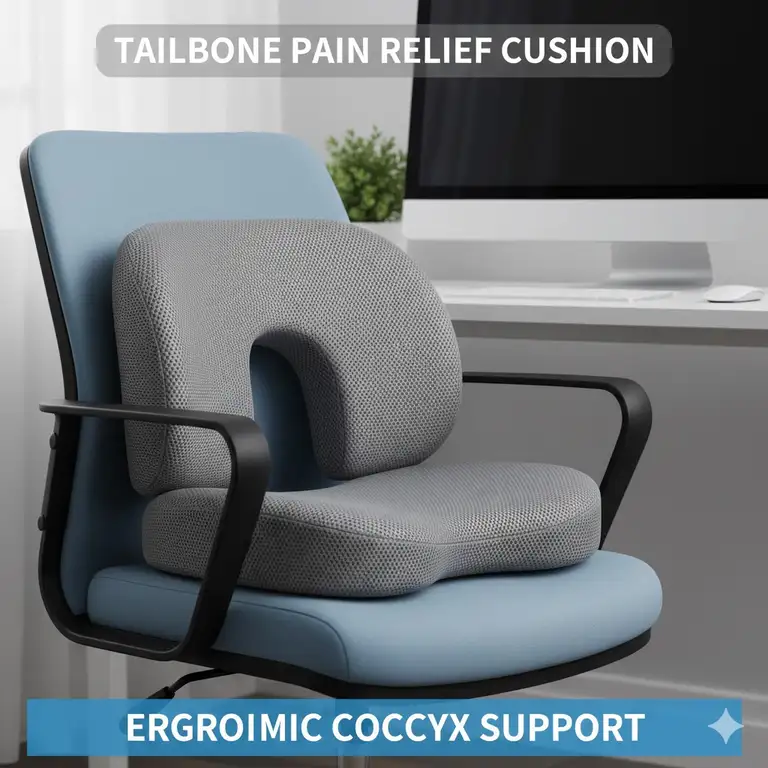
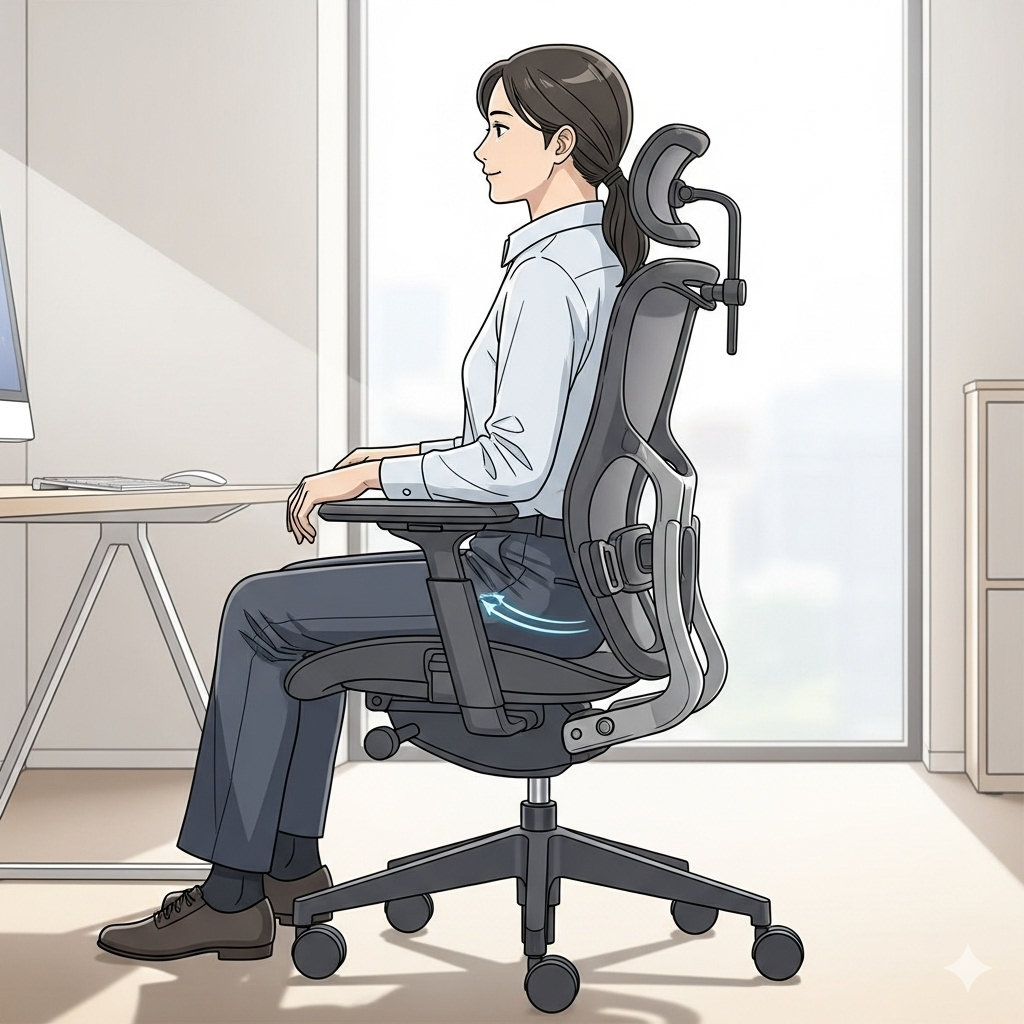
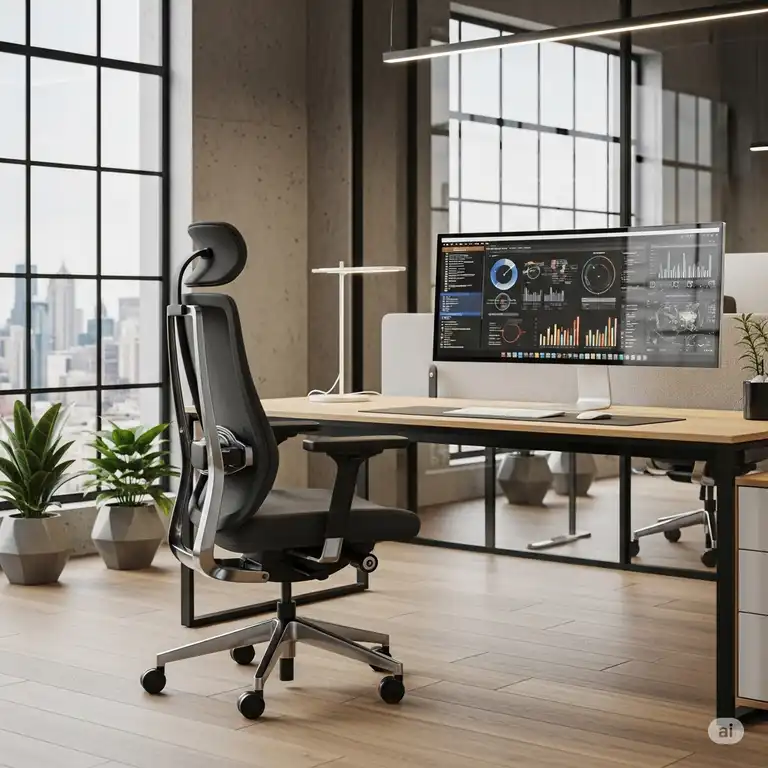
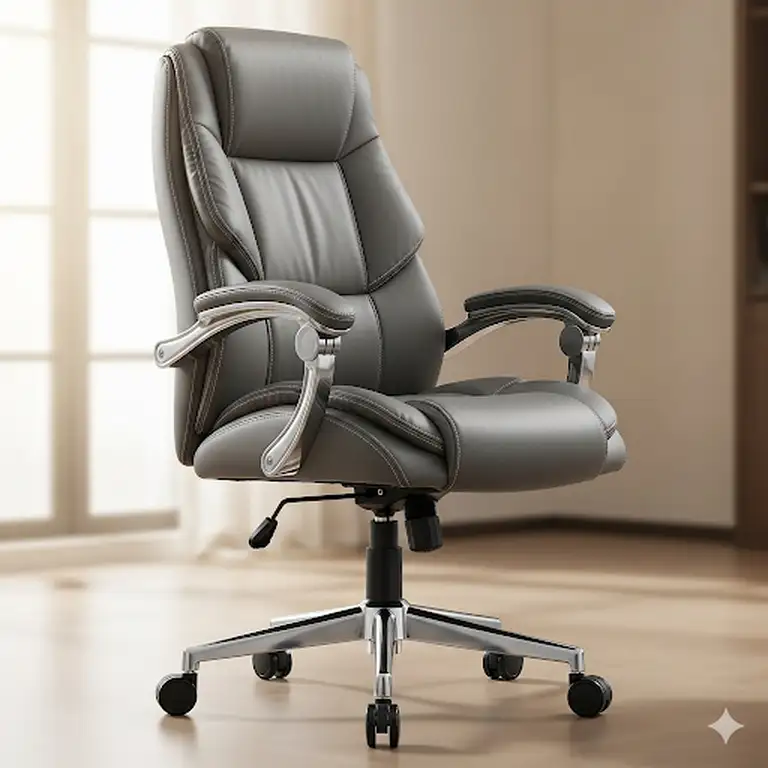
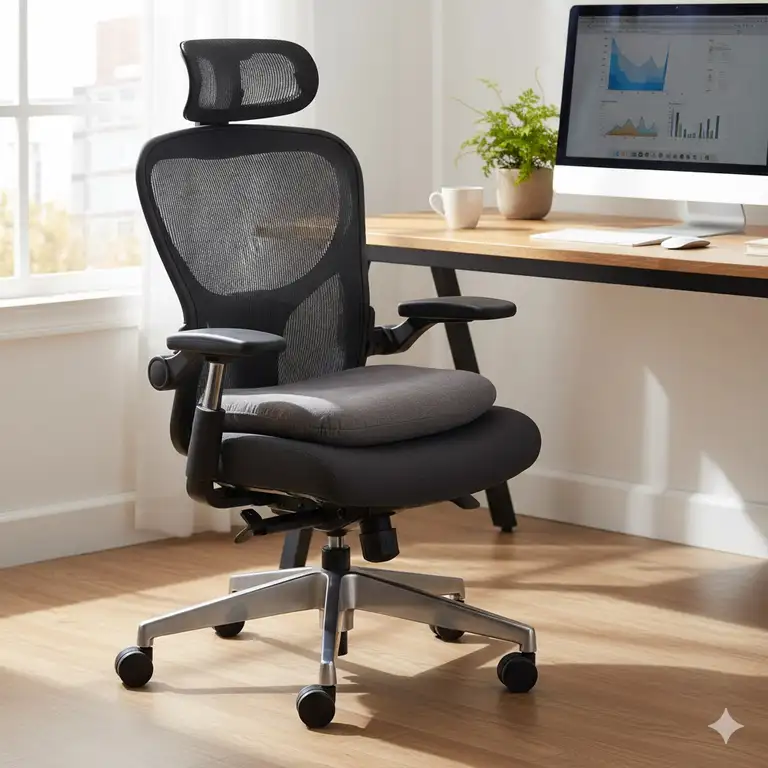
Many shoppers assume a sciatica chair is the softest, thickest seat they can find. The best chair for sciatica in 2027 is the one that adjusts to your body: seat depth, seat height, lumbar position and a weight rating with room to spare. Padding is the least useful of those.
This guide builds the method first and the chairs second. The findings rest on maker spec sheets, OSHA and university workstation guidance, Mayo Clinic’s sciatica pages, specialist-press reviews and owner reviews on retailer pages. Four real chairs follow, each with a stated weak spot.
One caveat. Needs differ, and a clinician should look at any pain that lingers or travels down the leg.
What a chair can and can’t do for sciatica
Mayo Clinic describes sciatica as pain that can get worse with coughing, sneezing or sitting a long time. It also lists prolonged sitting as a risk factor for herniated disks.
So the problem isn’t only the chair. It’s how long you stay in it.
A chair can’t treat anything. What it can do is let you sit in a supported, well-fitted position, and make it easy to change position. That’s what workplace-ergonomics guidance asks for, and it’s the yardstick used here.
The OSHA computer workstation checklist says seat width and depth should suit the user. The seat should be deep enough to support the thigh, but not so deep that you can’t use the backrest. A city ergonomics guide, Evaluating your computer workstation, turns that into numbers. Leave two to three fingers’ width (3 to 3.5 inches) between the seat edge and the back of your knee. It also asks for a five-leg base, a seat pan 15 to 17 inches long and a backrest that supports the lower back.
That answers “what’s the best type of chair for sciatica.” It’s an adjustable task chair with a height-adjustable lumbar support and a seat that fits your thigh length. The sections below show how to check each point.
Best office chair for sciatica: two entry-level picks
Start here if you want real adjustability without spending flagship money. Both chairs below are firm rather than plush, and that suits some sitters and not others.
Two review sites put the Sihoo M57 at around $190 to $200. For that money you get an adjustable lumbar pad, a mesh back, 3D armrests, three recline positions and an optional headrest, according to the maker’s page.
It’s built for smaller and mid-sized sitters. An Australian review says Sihoo rates it for roughly 155 to 185 cm, which is about 5’1″ to 6’1″, and notes that people under about 160 cm may struggle to reach the floor at the lowest seat height. Another review lists the seat height range as 16.5 to 20 inches.
Here’s the weak spot. That same review reports no seat depth adjustment, and that matters for the 3-finger gap described above. Reviewers also keep describing the lumbar as hard. One blog says the top edge of the plastic lumbar block digs in when it’s raised. A one-star Walmart reviewer reports hip discomfort from the seat and calls the lumbar hard. That’s a single report, but the firm-lumbar theme shows up in several places.
Sources disagree on capacity. One review cites 300 pounds verified to BIFMA, while another says 150 kg, around 330 pounds. Plan around the lower number. The blog that flagged the lumbar also notes the return window is only 30 days.
Sihoo M57 Ergonomic Office ChairCheck the current price, sizes and reviews on Amazon.
Steelcase’s own page lists a 400-pound capacity and a 12-year warranty covering parts and labor. The seat height runs from 16.5 to 21.5 inches, per a furniture retailer. A reviewer on Best Buy’s page mentions adjusting both the lumbar bar and the seat depth.
It reclines by body weight, with a boost setting, and has an upright lock. One review calls it the most credible entry-level ergonomic chair at its price point. That same review says the Series 1 has just one level of firmness.
Owner and press reports point at the lumbar. Gear Patrol says a few reviewers reported a broken lumbar support. TechGearLab calls the adjustment finicky and quotes one buyer whose lumbar broke after a few months and another whose gas cylinder leaked. Those are individual reports, not a pattern, but the lumbar is where they cluster.
Listings also disagree. A Wayfair page shows a 10-year commercial warranty and West Elm lists a 300-pound limit, while Steelcase’s page says 12 years and 400 pounds. Trust the maker’s page and the figure on the exact listing.
It’s the better fit for heavier sitters in this pair.
Steelcase Series 1 Office ChairCheck the current price, sizes and reviews on Amazon.
Run these steps on any chair. They come from the OSHA and university guidance above, with a few hypothetical numbers to show the math.
Measure your thigh length. Sit back against a wall with your knees bent. Measure from the wall to the back of your knee. Subtract 3 inches. That’s the seat depth you want. Suppose the measurement is 17 inches. The target is about 14 inches, which is shallower than many chairs go.
Set the seat height. Feet flat on the floor, knees about level with your hips. OSHA-style guidance treats roughly 16 inches as a minimum seat height, so very short users should check the low end of the range.
Place the lumbar support. It should meet the curve of your lower back, not sit above or below it. If a chair’s support doesn’t slide, as with the Herman Miller Aeron below, it has to match you from the start.
Check the backrest size. The city guide says 15 to 20 inches high and about 13 inches wide is preferable.
Check the weight rating. Use a headroom check, below.
Plan the breaks. Mayo Clinic’s page ties long sitting to symptoms. Standing every 30 minutes or so is a habit health sites suggest, though no chair replaces it.
Weight headroom and cost per warranty year
Assumption for the table: a 5’10” sitter at 230 pounds, at a desk about seven hours a day. Capacities come from maker or retailer pages. Headroom is capacity minus 230.
Chair
Maker or retailer capacity
Headroom at 230 lb
Height or seat guidance
Sihoo M57 Ergonomic Office Chair
300 lb (or about 330 lb, per another review)
70 to 100 lb
About 5’1″ to 6’1″
Steelcase Series 1 Office Chair
400 lb (Steelcase)
170 lb
Seat 16.5 to 21.5 in
Branch Ergonomic Chair Pro
275 lb (Branch)
45 lb
5’2″ to 6’2″
Herman Miller Aeron Chair, Size B
350 lb
120 lb
5’2″ to 6′
At 230 pounds, the Branch Ergonomic Chair Pro has the thinnest margin, about 20% above the sitter’s weight. The Steelcase Series 1 Office Chair has the most. If you sit near the top of a rating, move up a chair size or a model.
Warranty math, with the price ranges given in each entry. The Branch Ergonomic Chair Pro comes with a 7-year warranty at about $500, which works out to roughly $70 per covered year. A fully configured Herman Miller Aeron Chair was reported at around $2,000, with 12 years of coverage. That’s roughly $165 per year. Warranties cover defects, not comfort, so this measures durability value only.
Hard lumbar, finicky levers and missing seat depth: the repeat complaints
Confidence labels are in plain words, so you can weigh each one.
Hard or sharp lumbar on budget chairs. Several sources agree. Reviews of the Sihoo M57 Ergonomic Office Chair from Walmart’s review page, a blog and an Australian reviewer all describe it as firm.
Lumbar mechanism failures on the Series 1. Gear Patrol mentions a few reviewers, while TechGearLab quotes individual buyers. Treat it as a reported weak point, not a certainty.
Seat depth missing on some chairs. The Sihoo review reports none, and one Aeron review lists no seat depth adjustment among the cons. For a short-thighed or long-thighed sitter, this is the adjustment that matters most.
Firm seat. One Aeron review notes the seat is quite firm, with pronounced side bolsters. A long-term review adds that the lumbar sits at a set height and doesn’t slide. Both are single sources.
Return windows. One reviewer says the Sihoo return period is 30 days. West Elm lists a 30-day return policy for the Steelcase chair.
“Adjustable lumbar,” “ergonomic” and “tested to BIFMA”: what the labels leave out
A few phrases deserve a second look before you order.
“Adjustable lumbar.” Ask what adjusts. Height only, or depth too? One review of the Sihoo M57 Ergonomic Office Chair calls its pad height-adjustable but fixed in depth, while the maker’s page says it adjusts vertically and horizontally.
“Ergonomic” with no seat depth control. If the listing doesn’t mention seat depth or a sliding seat, assume it’s fixed.
A capacity with no context. The same chair shows 300 and 400 pounds on different pages, as with the Series 1. Use the maker’s figure.
“Leather.” Branch sells the Pro in vegan leather and leather, as well as mesh. Check which one you’re ordering, since materials change warmth and feel.
“Tested to BIFMA.” It’s a commercial durability standard. It says the chair meets a bar, not that the seat or lumbar will suit you.
Short return windows. If you only get 30 days, run the fit method in the first week.
Questions about sciatica chairs, answered
What is the best type of chair for sciatica?
An adjustable task chair with a height-adjustable lumbar support, seat height control and ideally seat depth control. Workplace guidance asks for a backrest that supports the lower back and a seat that fits your thighs. Soft padding alone doesn't meet that standard.
What is the best home chair for sciatica?
For daily sitting, an adjustable desk chair beats a sofa or dining chair, because those can't be tuned to your body. As a stopgap, health sites suggest a rolled towel at the lower back. Persistent pain still deserves a clinician's opinion.
Is a comfortable chair for sciatica pain enough by itself?
No. Mayo Clinic says sitting a long time can make sciatica symptoms worse, so movement matters as much as seating. Stand up regularly, vary your posture, and see a clinician if pain persists or spreads down the leg.
How much does a good chair for sciatica sufferers cost?
Sources in this guide put the Sihoo M57 near $190 to $200, the Branch Ergonomic Chair Pro between $450 and $550, and a configured Herman Miller Aeron around $2,000. Fit and adjustability decide value more than price does.
How long do you have to return an ergonomic chair?
It depends on the seller. One reviewer reports a 30-day window for the Sihoo M57, and West Elm lists 30 days for the Steelcase Series 1. Run the seat depth and lumbar checks in the first week.
Two chairs for bigger budgets and longer days
These two cost more and offer finer control. One adds seat depth and lumbar depth. The other trades some adjustments for a fixed, firm design and a long warranty.
Branch lists the Pro for people 5’2″ to 6’2″ and up to 275 pounds, at 8-plus hours a day. Expect to spend between $450 and $550, based on Branch’s comparison page and reviews. The lumbar is height- and depth-adjustable and removable. Seat height, seat depth, tilt and tension, and an optional forward tilt are there too.
That’s the most direct match to the fit method above, since seat depth runs 16.7 to 19.7 inches per Branch’s spec sheet. Sources agree on the controls. A review at The Desk Riser says the lumbar can press firmly into the lower back or be backed off to light contact.
Here’s the limit. With the earlier example of a 17-inch thigh length, the shallowest setting leaves less than an inch to the knee, not the 3 inches guidance asks for. Shorter-legged sitters should measure first. The warranty is 7 years, shorter than the other chairs here. Capacity also differs by retailer: Branch says 275 pounds, while West Elm’s leather listing says 300.
Branch Ergonomic Chair ProCheck the current price, sizes and reviews on Amazon.
The Aeron comes in three sizes. Size A is warrantied to 300 pounds, B to 350 and C to 400, according to a Lumens buyer’s guide. Herman Miller’s store lists Size B for users 5’2″ to 6′ and 350 pounds, with a 12-year warranty.
Its PostureFit SL lumbar uses two pads that conform to the lower back, according to TechGearLab. Owners and reviewers describe it as an acquired taste. A long-term review says the lumbar stays at the height the support arms set, so it can’t be slid up or down. BTOD finds the seat quite firm and flags the lack of seat depth adjustment.
So size choice does the fitting here. A hypothetical sitter between sizes can end up with a seat that’s too deep or too shallow, and the tilt limiter is optional and priced into configurations. At around $2,000 configured, it’s the expensive pick in this guide. Cost per covered year (about $165) is still higher than for the Branch Ergonomic Chair Pro.
Herman Miller Aeron ChairCheck the current price, sizes and reviews on Amazon.
If your thigh length is short and your budget is tight, the Sihoo M57 Ergonomic Office Chair fits within its stated height range, though a 30-day return window leaves little room for error. For heavier sitters, the Steelcase Series 1 Office Chair has the most headroom and the longest warranty. For anyone who wants to tune lumbar depth and seat depth, the Branch Ergonomic Chair Pro gives the most control for the money. The Herman Miller Aeron Chair is for people who’ll pay for a 12-year warranty and sized fit.
The best chair for sciatica is still the one that passes your own thigh-length and lumbar checks.
At WorkComfortHub, we are dedicated to helping you create a comfortable and productive workspace. Our team provides expert insights, reviews, and recommendations on ergonomic office chairs, standing desks, and other essential work accessories to enhance your daily work experience.