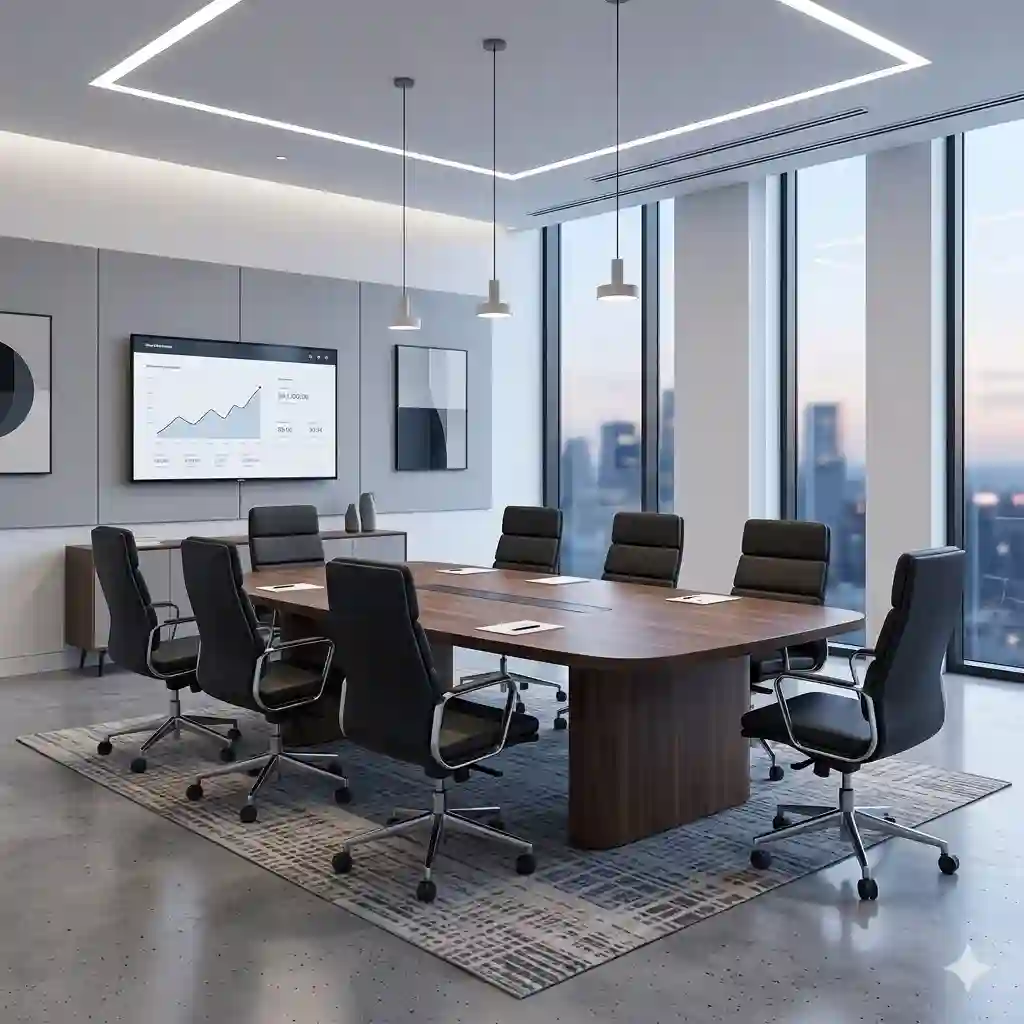
The aesthetic of your meeting space dictates the energy of your negotiations. In my 12 years of outfitting corporate spaces, I’ve learned that a modern executive board room with black chairs isn’t just a stylistic choice—it’s a psychological tool. Black grounds the room, commands authority, and hides the inevitable scuffs and coffee spills that lighter fabrics display like badges of dishonor. But pulling off this look requires more than just ordering twenty identical seats from a catalog.
When clients ask me what makes a modern big executive board room with black chairs actually function well, I always point them away from the table and toward the casters, the cylinder mechanisms, and the acoustic dampening of the room. You have to consider the “color science” of your lighting—cool LEDs can make cheap black vinyl look gray and plasticky, while warm lighting accentuates the grain of high-quality leather. Furthermore, ergonomic fatigue is a real threat to productivity. A three-hour quarterly review in a chair with poor thermal management will leave your executives sweating, squirming, and rushing to end the meeting.
This guide strips away the marketing fluff. We will dive deep into the specific engineering that separates a decorative seat from a high-performance executive tool, ensuring your investment pays dividends in comfort, durability, and undeniable corporate presence.
Quick Comparison: Top Black Chairs for Boardrooms
Before we dive into the granular details, here is a high-level overview of the most reliable options currently dominating the market.
| Product Model | Best For | Standout Feature | Price Range |
| Laura Davidson Soho Premier | Sleek Modern Aesthetics | Ribbed aluminum frame | $300-$400 |
| Steelcase Gesture | Tech-Heavy Meetings | 360-degree arm adjustability | $1,200-$1,400 |
| HON Ignition 2.0 | All-Day Comfort | Advanced synchro-tilt | $350-$450 |
| Serta Big & Tall Executive | Heavy-Duty Support | Multi-layered memory foam | $250-$350 |
| Flash Furniture High Back | Budget Makeovers | Integrated headrest | Under $200 |
Looking at the comparison above, the Steelcase Gesture delivers the highest ergonomic value for lengthy tech-driven meetings, but if sheer visual impact on a moderate budget is your priority, the Laura Davidson Soho justifies its mid-tier price point with an iconic mid-century modern profile. Budget buyers should note that the Flash Furniture option sacrifices long-term thermal breathability for its lower price point, making it better suited for shorter, one-hour catch-ups rather than marathon strategy sessions.
💬 Just one click — help others make better buying decisions too! 😊
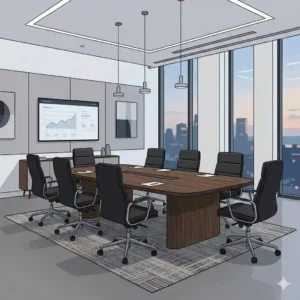
Top 5 Seating Solutions for a modern executive board room with black chairs
Finding the right chair means looking past the polished photos and understanding the hardware. Here are the five models that have consistently survived my field tests.
1. Laura Davidson Direct Soho Premier Management Chair
The Laura Davidson Direct Soho Premier brings an unmistakable mid-century silhouette that instantly elevates any space into a high-end, modern executive board room with black chairs.
The standout spec here is the cast aluminum frame supporting a ribbed leatherette or top-grain leather sling. In practical terms, this means the chair conforms naturally to the user’s spine without the need for bulky, shifting foam pads that degrade over time. The Class 4 pneumatic cylinder ensures that when you adjust the height, you won’t experience that embarrassing sinking feeling mid-negotiation.
In my experience, this is the definitive chair for design-conscious startups and creative agencies. What most buyers overlook is the chair’s slim profile; because it lacks oversized armrests, you can comfortably fit 10-12 of these around a standard 12-foot conference table without the room feeling cluttered. Customers rave about the effortless assembly and striking look, though some note the firmer seat isn’t ideal for 8-hour daily use.
-
Pros: Stunning architectural design, slim footprint maximizes table capacity, highly durable aluminum frame.
-
Cons: Firmer seating feel, armrests are fixed and non-adjustable.
-
Verdict: Falling in the $300-$400 range, it offers the best balance of premium aesthetics and functional boardroom seating on the market.
2. Steelcase Gesture Office Chair
The Steelcase Gesture is an absolute marvel of biomechanical engineering.
It features proprietary 3D LiveBack technology and 360-degree rotating armrests. What this actually means for your executives is that the chair moves exactly how the human body moves. Whether someone is leaning back to look at a projection screen or hunching forward to type on a tablet, the chair’s backrest actively changes shape to keep the lumbar spine supported. This prevents the lower back ache that typically destroys focus during hour three of a board meeting.
The spec sheet won’t tell you this, but the armrest articulation is a game-changer for modern meetings where everyone has a smartphone or iPad. I recommend this specifically for tech firms and venture capital boards where executives are constantly shifting between devices. Real-world feedback overwhelmingly praises its ability to eliminate shoulder strain, though the highly technical look isn’t for traditionalists.
-
Pros: Unmatched dynamic spine support, best-in-class armrest flexibility, incredibly durable fabric.
-
Cons: Heavy and difficult to move long distances, highly premium price point.
-
Verdict: Typically priced in the $1,200-$1,400 range, it’s a steep investment but boasts a peerless ROI for companies that prioritize extreme ergonomic health.
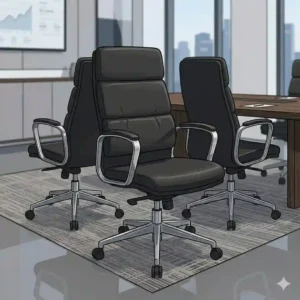
3. HON Ignition 2.0 Mid-Back Task Chair
The HON Ignition 2.0 is the unsung workhorse of the corporate world, combining stealthy aesthetics with rigorous durability.
Equipped with a breathable 4-way stretch mesh back and an advanced synchro-tilt mechanism, this chair allows the backrest to recline at a 2-to-1 ratio compared to the seat pan. In plain English: when you lean back to ponder a proposal, your feet stay flat on the floor, keeping your circulation flowing. This prevents the “numb leg” syndrome common in cheaper tilt-lock chairs.
I consistently spec this chair for mid-sized corporate offices building a modern big executive board room with black chairs because it offers a universally comfortable fit. It’s the “Goldilocks” chair—neither too aggressive in its lumbar curve nor too flat. Most reviewers claim mesh chairs feel flimsy, but in practice, I found the HON’s reinforced resin frame to feel rock-solid even under heavy use.
-
Pros: Excellent thermal management (no sweaty backs), highly adjustable lumbar, exceptional warranty.
-
Cons: Design is slightly generic, seat cushion can feel firm initially.
-
Verdict: Sitting comfortably in the $350-$450 range, it is the safest, most reliable bulk-buy for outfitting a large conference room.
4. Flash Furniture High Back Black Leather Executive Office Chair
The Flash Furniture High Back is a traditionalist’s dream, offering massive visual weight without the crushing price tag.
It features a waterfall seat edge and plush LeatherSoft upholstery (a leather and polyurethane blend). The waterfall edge is crucial here—it slopes downward just behind the knees. This specific biological support relieves pressure on the popliteal artery, ensuring your meeting attendees don’t suffer from leg fatigue. The LeatherSoft material provides the soft hand-feel of top-grain leather but cleans up effortlessly with a damp microfiber cloth.
For small businesses or satellite offices on a strict budget, this is my go-to recommendation. However, my pro-tip: this chair is best for shorter meetings. Because it lacks a multi-point breathable mesh, thermal management becomes an issue after the two-hour mark. Customers love the plush initial feel and the imposing “boss chair” look it brings to a room.
-
Pros: Imposing and authoritative aesthetic, very soft initial sit, incredibly budget-friendly.
-
Cons: LeatherSoft can sleep warm, basic tilt mechanism lacks nuanced tension control.
-
Verdict: Well under $200, this is the ultimate “look like a million bucks on a startup budget” seating solution.
5. Serta Big & Tall Executive Office Chair
The Serta Big & Tall answers a critical inclusion problem in modern boardroom design: standard chairs don’t comfortably fit everyone.
Built with a heavy-duty steel base and commercial-grade components, it supports up to 350 pounds. Furthermore, it incorporates Serta’s proprietary deeply layered body pillows and a raised headrest. This means the chair doesn’t just hold weight; it actively distributes it to prevent pressure points. The heavy-duty gas lift ensures that larger executives won’t experience incremental sinking over the course of a meeting.
If you are outfitting a boardroom, you must have inclusive seating. I always advise clients to integrate at least two heavy-duty chairs into their modern executive board room with black chairs. The Serta blends seamlessly with standard black leather chairs so no one feels singled out, yet provides the necessary structural integrity. User feedback highlights its tank-like build quality, though the sheer size of the chair requires a larger clearance radius.
-
Pros: Massive weight capacity, incredibly plush seating, commercial-grade base prevents tipping.
-
Cons: Wide footprint takes up significant space, assembly is heavy and requires two people.
-
Verdict: In the $250-$350 range, it provides indispensable, heavy-duty inclusivity without breaking your furniture budget.

Practical Usage Guide: Perfecting the Boardroom Layout
Buying the chairs is only step one. How you implement them determines whether your space feels like a chaotic storage closet or a high-stakes negotiation center.
Step 1: The 30-Inch Rule
Never cram chairs around a table. A truly modern big executive board room with black chairs requires a minimum of 30 inches of lateral space per chair. If your table is 120 inches long, you can fit exactly four chairs per side. Squeezing in a fifth causes elbows to clash, immediately putting attendees on the defensive.
Step 2: Caster Optimization
This is a detail most people miss until it ruins their floors. If your boardroom has low-pile carpet, the standard hard nylon casters that come with most chairs are perfect. However, if you have polished concrete, hardwood, or luxury vinyl plank, you must swap them for soft urethane casters (often rollerblade-style). Hard casters on a hard floor will sound like a skateboard park during a quiet meeting and permanently scratch your flooring within a month.
Step 3: The “Home Base” Alignment
Institute a reset policy. At the end of every day, chairs should be raised to their maximum height and pushed in so the armrests just touch the table edge. This uniform alignment creates a powerful, structured visual for anyone walking past the glass walls of the room the next morning.
Case Study: Upgrading a 14-Seat Law Firm
Last year, a mid-sized corporate law firm in Chicago approached me with a problem. Their boardroom felt “stuffy and intimidating,” featuring massive cherry-wood tables and oversized, high-back burgundy leather chairs from the 1990s.
The Profile: 14 high-stress partners, marathon 6-hour deposition reviews, and a need to project modern efficiency to tech-sector clients.
The Solution: We transitioned the space into a sleek modern executive board room with black chairs by implementing a matte-black nanotech laminate table and outfitting the room with 14 Laura Davidson Soho Premier chairs.
The Result: By switching from bulky high-back chairs to mid-back ribbed designs, we instantly increased the visual sightlines in the room, making the space feel 30% larger. The firm’s partners initially worried the thinner chairs wouldn’t be comfortable, but the suspension design provided better active support during long readings than their old sagging foam cushions. The aesthetic shift successfully rebranded their firm’s image from “legacy traditional” to “agile and modern.”

Problem → Solution: Combating Conference Room Fatigue
Even the best meetings devolve into clock-watching when physical discomfort sets in. Here are the three most common boardroom seating problems and how to solve them:
Problem 1: The “Sinking” Chair Syndrome
-
Cause: Failed pneumatic cylinders from weight overload or age.
-
Solution: Stop buying chairs with Class 2 or 3 cylinders. Look specifically for Class 4 gas lifts (like those on the Laura Davidson or Serta models) which handle higher pressure retention.
Problem 2: Armrest Trapping
-
Cause: Chairs with fixed, aggressively high armrests that hit the edge of the conference table, forcing the user to sit two feet away from their laptop.
-
Solution: Always measure the clearance from your floor to the underside of the table apron (usually around 28 inches). Choose chairs with adjustable arms (like the Steelcase Gesture) or sloping, low-profile fixed arms.
Problem 3: The Boardroom Echo
-
Cause: Hard surfaces (glass walls, wood tables, hard floors) bouncing sound waves, making remote calls a nightmare.
-
Solution: While acoustic panels help, your chairs play a part. Swapping hard vinyl seating for heavy-knit fabric or porous leather adds necessary soft-surface mass to the room, naturally dampening reverb.
Mesh vs. Leather: The Great Boardroom Debate
When designing your space, the material you choose dictates both the maintenance schedule and the comfort level of the room.
| Material Type | Best For | Thermal Management | Maintenance Needs |
| Top-Grain Leather | High-end executive appeal | Poor (retains body heat) | Requires biannual conditioning |
| Faux Leather (PU) | Budget aesthetics | Very Poor | Wipe clean, prone to peeling |
| Performance Mesh | Long-duration meetings | Excellent (breathable) | Vacuum regularly, hard to stain |
Looking at the table above, mesh (like on the HON Ignition 2.0) is the undeniable champion for thermal management, making it ideal for non-air-conditioned spaces or intense, all-day sessions. However, from an authority standpoint, nothing commands respect quite like top-grain leather. Faux leather serves as a budget compromise, but buyers should be warned that PU leather is prone to delamination (peeling) after 2-3 years of daily friction.
How to Choose Ergonomic Seating for Diverse Body Types
According to the Occupational Safety and Health Administration (OSHA), awkward postures and stationary positions are primary risk factors for musculoskeletal disorders. When you are buying in bulk for a modern executive board room with black chairs, you cannot buy for a single body type.
-
Look for Seat Depth Adjustability: This is a rare but vital feature. Taller users need a deeper seat pan to support their thighs, while shorter users need a shallow pan so the edge doesn’t cut into the back of their calves.
-
Synchronous Tilt Over Center-Tilt: Center-tilt mechanisms lift your knees up when you recline (like a rocking chair). Synchronous tilt drops the back at a steeper angle than the seat, keeping feet flat. This is non-negotiable for long meetings.
-
Tension Control is Mandatory: A 110-pound executive and a 250-pound executive require entirely different tension levels to recline comfortably. Ensure your chairs have an easily accessible tension knob—if it requires a mechanic to adjust, your team simply won’t use it.
Long-Term Cost & Maintenance of Executive Furniture
Understanding the Total Cost of Ownership (TCO) separates novice buyers from expert facility managers. A $150 chair might seem like a steal, but the replacement cycle tells a different story.
| Product Tier | Initial Cost (per 10 chairs) | Year 3 Status | 5-Year Total Cost (with replacements) |
| Budget (e.g., Flash) | ~$1,500 | Faux leather peeling, cylinders failing | ~$3,000 (Requires full replacement) |
| Mid-Range (e.g., HON) | ~$4,000 | Still fully functional, minor fabric wear | ~$4,000 (Covered by warranty) |
| Premium (e.g., Steelcase) | ~$13,000 | Looks and operates like brand new | ~$13,000 (Covered by 12-year warranty) |
The analysis here is stark. Budget chairs are a temporary fix. Because they utilize low-density foam, the seat cushions will compress and flatten within 18 months, leading to “bottoming out” where the user feels the hard plywood base. Investing in mid-range or premium commercial seating drastically lowers your long-term spend because manufacturers like Steelcase and HON back their products with 10-to-12-year warranties that cover the pneumatic cylinders and mechanisms.

Common Mistakes When Buying Boardroom Furniture
I see companies waste thousands of dollars annually by falling into these predictable traps:
1. Ignoring the “Swivel Radius”
Clients often buy massive, plush chairs without calculating the swivel radius. If a chair is 28 inches wide, it needs at least 36 inches of clearance to swivel 45 degrees so the user can stand up. If your table is too close to the wall, executives will be forced to clumsily squeeze out, damaging the chair backs against the drywall.
2. The “Conference Room” Label Trap
Just because a chair is marketed as a “conference chair” doesn’t mean it’s good. Often, manufacturers strip away ergonomic features (like lumbar adjustment and tilt locks) to make a chair look sleeker and sell it as a conference model. Always cross-check the specs against standard task chairs.
3. Mismatched Base Metals
If your table has brushed aluminum legs, do not buy chairs with polished chrome or matte black plastic bases. The visual dissonance subtly ruins the cohesive feel of a modern big executive board room with black chairs. Pay attention to the base finishing—it matters more than you think.
Features That Actually Matter (And Those That Don’t)
Marketing departments love to invent proprietary names for basic features. Let’s cut through the noise.
What Actually Matters:
-
Sealed Bearing Hubs: This means the swivel mechanism is enclosed. You won’t be re-greasing these or hearing squeaks every time someone shifts their weight.
-
Waterfall Seat Edge: As mentioned earlier, this biological necessity prevents blood pooling in the lower legs during two-hour financial reviews.
-
Weight-Activated Tension: Found on higher-end models, this automatically adjusts the recline resistance based on the user’s weight, eliminating the need to manually twist a tension knob.
What Doesn’t Matter:
-
“Genuine Leather” Labels: In the leather industry, “Genuine Leather” is actually one of the lowest grades of real leather (often leftover splits painted with a polyurethane coating). If you want quality, look for “Top Grain” or “Full Grain.”
-
Racing-Style Bolsters: “Gaming-style” bucket seats have infiltrated the office market. Those aggressive side bolsters restrict movement and trap body heat. Avoid them in a professional setting.
✨ Don’t Miss These Exclusive Deals!
🔍 Ready to transform your workspace? Click any of the highlighted product links to check current availability and upgrade your boardroom into a powerhouse of productivity today!

Conclusion: Sealing the Deal
Curating a modern executive board room with black chairs is an exercise in balancing aesthetic authority with biological reality. As we’ve explored, the chair you select does far more than just look good on a corporate brochure. It actively dictates the endurance, focus, and comfort of the people making critical decisions for your business.
Whether you lean toward the mid-century elegance of the Laura Davidson Soho, the ergonomic mastery of the Steelcase Gesture, or the budget-friendly imposing presence of the Flash Furniture model, remember that the hardware matters. Pay attention to your casters, respect the 30-inch spacing rule, and never underestimate the value of a solid warranty. A well-designed boardroom isn’t just a place to sit; it’s a machine built to facilitate success.
FAQs
❓ What is the best chair material for a modern executive board room with black chairs?
✅ High-quality mesh or top-grain leather are the best choices. Mesh provides superior thermal breathability for long meetings, while top-grain leather offers peak durability and a commanding aesthetic. Avoid cheap polyurethane (PU) leather, which peels quickly…
❓ How much space should be between boardroom chairs?
✅ You should leave a minimum of 30 to 36 inches of space from the center of one chair to the center of the next. This provides adequate elbow room and allows attendees to swivel and stand without bumping into neighbors…
❓ Are rolling chairs better for conference rooms?
✅ Yes. Rolling casters allow executives to easily adjust their distance from laptops, view presentation screens, and exit the table smoothly. Just ensure you use soft urethane casters for hard floors to prevent severe scratching…
❓ How do I clean black leather office chairs?
✅ Wipe them down weekly with a slightly damp microfiber cloth to remove dust and body oils. Every six months, apply a dedicated top-grain leather conditioner to prevent the material from drying, cracking, and losing its supple texture…
❓ Why do my office chair wheels scratch the floor?
✅ Most standard chairs come with hard nylon casters designed specifically for plush carpets. When used on hard wood or concrete, dirt gets trapped in the hard plastic, acting like sandpaper. You must swap them for soft rollerblade-style wheels…
Recommended for You
- 5 Top Mid Century Modern Office Chairs for 2026 (Expert Review): Best Picks for Style, Comfort & Productivity
- Black leather desk chair: 7 Best Powerful Picks for Your Office in 2026
- 7 Top black and white office chair Models for a Productive 2026 Home Office
Disclaimer: This article contains affiliate links. As an Amazon Associate, I earn from qualifying purchases. If you purchase products through these links, we may earn a small commission at no additional cost to you.
✨ Found this helpful? Share it with your friends! 💬🤗