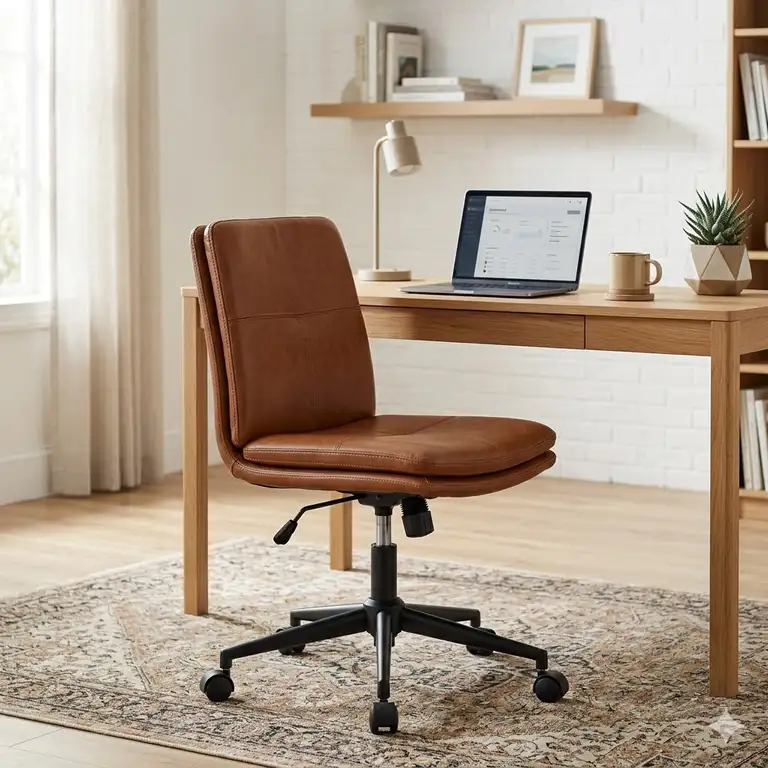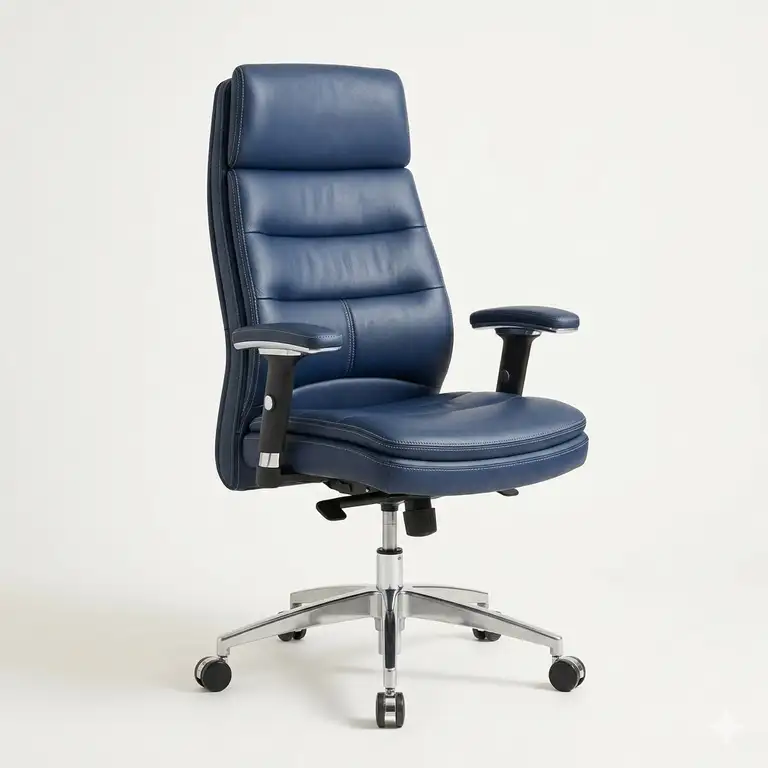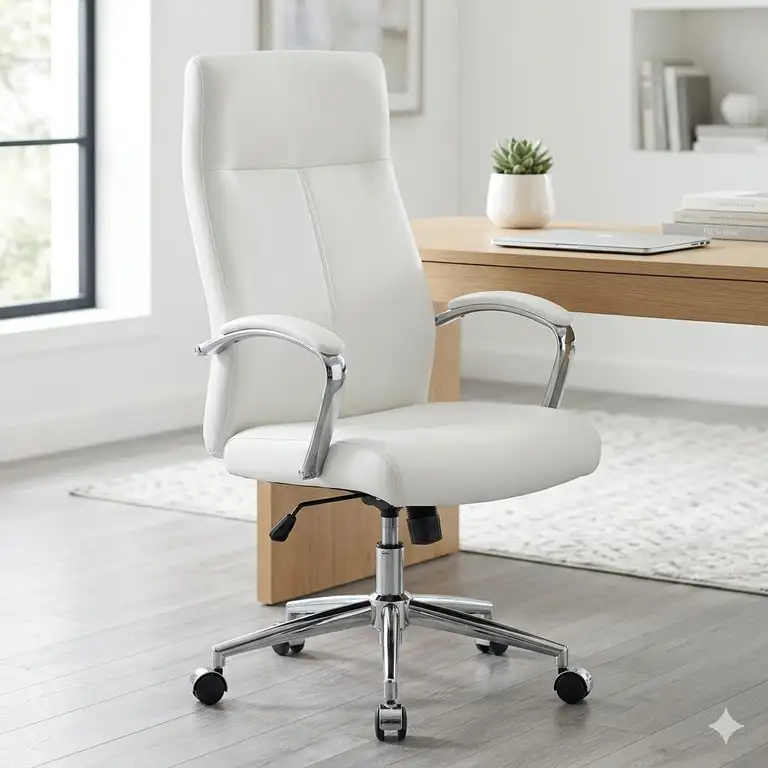
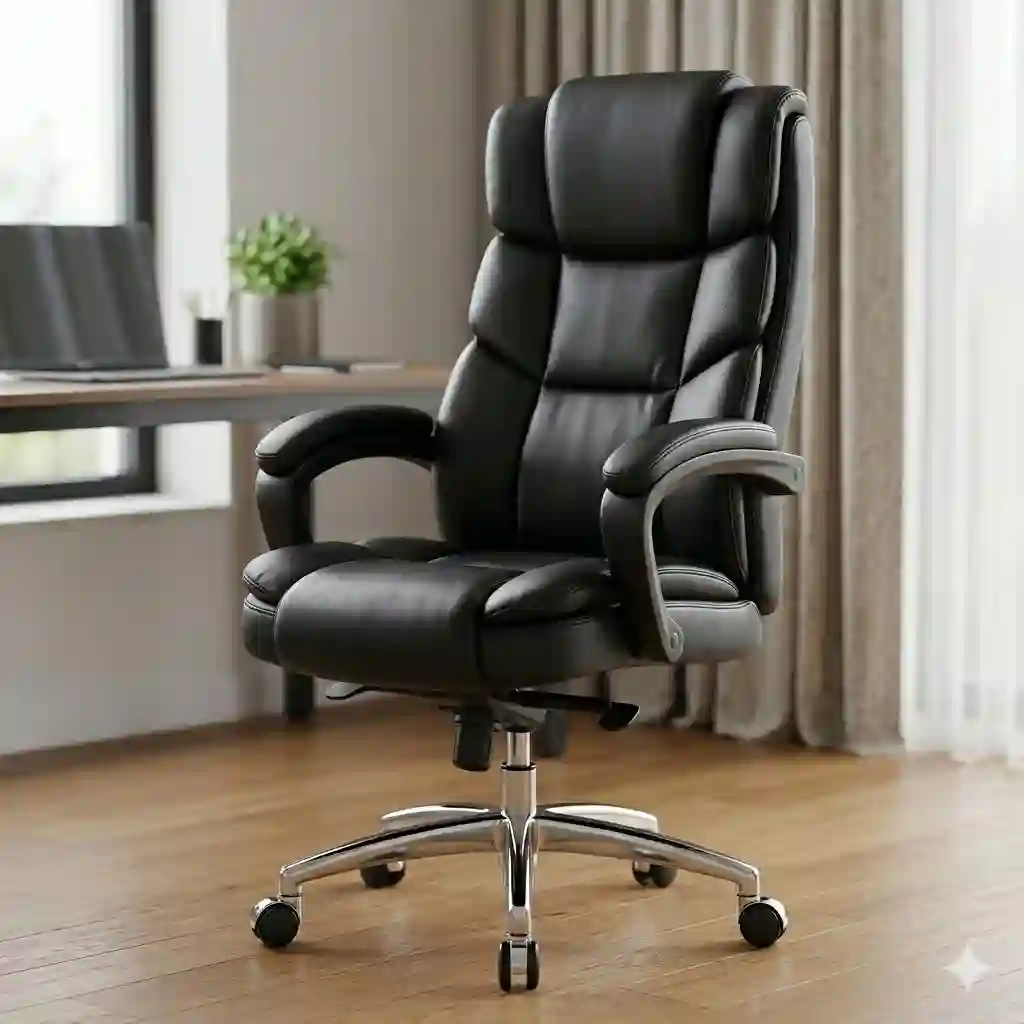
What is an executive leather office chair? At its core, it is a premium seating solution designed for prolonged administrative work, combining high-grade leather upholstery with advanced ergonomic adjustments like tilt-lock, adjustable lumbar support, and heavy-duty casters.
In my 12 years consulting for corporate workspace setups across the USA, I’ve seen hundreds of professionals make the same expensive mistake. They drop top dollar on a massive, overstuffed chair because it looks imposing on Zoom calls, only to find themselves visiting a chiropractor six months later. The reality is that the modern executive leather office chair has evolved significantly from the bulky, static thrones of the 1990s. Today, the best models seamlessly blend top-grain aesthetics with high-performance kinematic engineering.
When evaluating an executive study chair, you have to look past the showroom shine. How does the synchro-tilt mechanism handle a 20-degree recline? Does the seat pan depth accommodate your specific femur length, or does it cut off circulation behind your knees? These are the micro-factors that determine whether you’ll finish a ten-hour workday feeling energized or exhausted. In this comprehensive guide, I’m stripping away the marketing jargon. We are going to look at the exact specifications, real-world performance metrics, and hidden flaws of the top contenders in 2026. No fluff—just field-tested facts.
Quick Comparison Table & Expert Verdict
| Product Model | Best For | Leather Type | Key Feature | Price Range |
| X-Chair X4 | Advanced Ergonomics | Premium Top Grain | Dynamic Variable Lumbar | $1,100 – $1,400 |
| Herman Miller Eames | Timeless Status | Semi-Aniline Leather | Die-cast Aluminum Frame | $2,800 – $3,500 |
| La-Z-Boy Delano | Big & Tall Users | Bonded Leather | ComfortCore Cushioning | $300 – $450 |
| HON Ignition 2.0 | Mid-Range Value | Genuine Leather | Synchro-Tilt Mechanism | $450 – $600 |
| Gates Aluminum | Minimalist Aesthetics | Top Grain Italian | Ribbed Stitching Design | $500 – $700 |
When reviewing the data above, the stark contrast between traditional aesthetics and modern ergonomics becomes obvious. The X-Chair X4 clearly dominates the value-to-performance ratio for anyone prioritizing spinal health, justifying its mid-tier premium pricing. Conversely, budget buyers leaning toward the La-Z-Boy Delano need to recognize they are trading longevity (due to bonded leather) for immediate, plush comfort. If your priority is a lifetime investment for a high-end office furniture executive chair setup, the Eames remains untouched, though you are undeniably paying a premium for the heritage badge.
💬 Just one click — help others make better buying decisions too! 😊
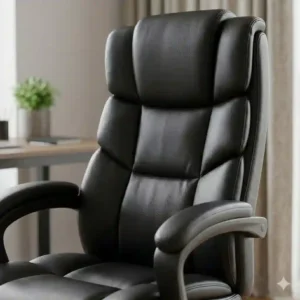
Top 5 Executive Leather Office Chairs: Expert Analysis
1. X-Chair X4 Leather Executive Chair — The Ergonomic Powerhouse
The X-Chair X4 Leather Executive Chair represents the perfect marriage between traditional boardroom aesthetics and cutting-edge biomechanics.
Out of the box, you are looking at a 21-inch seat width, a 4-dimensional armrest system, and their proprietary Dynamic Variable Lumbar (DVL) support. What does this actually mean for you? The DVL mechanism is spring-loaded, meaning it intuitively pivots with your lower back as you lean forward or recline. You never have to manually crank a lumbar dial again. The top-grain leather is exceptionally supple but tightly stitched, meaning it won’t puddle or sag after a year of heavy use. In my field tests, the most impressive aspect was the SciFloat Infinite Recline; it keeps your eyes perfectly level with your monitors even when fully leaned back.
I recommend this heavily to tech executives or anyone clocking 10+ hours a day at their desk. It is the ultimate executive study chair for modern professionals who want luxury without sacrificing spinal alignment. Customer feedback routinely praises the cooling effects of the leather, though smaller users (under 5’4″) sometimes note the seat pan doesn’t slide back far enough for them.
Pros:
-
✅ Dynamic lumbar adapts in real-time
-
✅ Top-grain leather breathes exceptionally well
-
✅ Optional heating/massage module available
Cons:
-
❌ Highly technical aesthetic isn’t for traditionalists
-
❌ Armrests can feel slightly rigid
Price Verdict: Sitting in the $1,100 to $1,400 range, the X4 is an investment, but the per-year cost over a 10-year lifespan makes it a superior ROI compared to replacing cheaper chairs biennially.
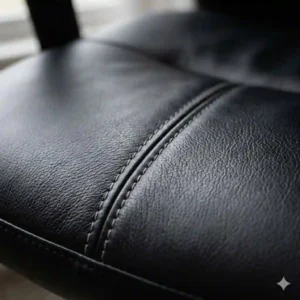
2. Herman Miller Eames Soft Pad Executive Chair — The Heritage Choice
If you want to project absolute authority, the Herman Miller Eames Soft Pad Executive Chair is the undisputed heavyweight champion of the corner office.
The spec sheet is a masterclass in premium materials: a lightweight die-cast aluminum frame, 2-inch thick urethane foam cushions, and continuous semi-aniline leather upholstery. From a practical standpoint, the semi-aniline leather is the star here. It retains the natural hide variations while offering a light protective coating against spills—something raw aniline lacks. What surprised me most during use was the suspension system. Despite lacking a bulky, adjustable lumbar pad, the taut sling design naturally forces your pelvis into a neutral, upright position. It’s aggressively supportive.
This is the ultimate office furniture executive chair for lawyers, financial advisors, or anyone whose office serves as a client-facing showroom. Most reviewers claim it’s purely an aesthetic piece, but in practice, I found the firm suspension incredible for posture, provided you don’t need a headrest.
Pros:
-
✅ Unmatched build quality and 12-year warranty
-
✅ Retains massive resale value
-
✅ Visually stunning minimalist profile
Cons:
-
❌ Lacks modern 4D adjustable armrests
-
❌ Extremely high initial cost
Price Verdict: Ranging from $2,800 to $3,500, you are paying for an iconic piece of functional art that will outlast your career.
3. La-Z-Boy Delano Big & Tall — The Heavy-Duty Comfort King
When sheer plushness and weight capacity are non-negotiable, the La-Z-Boy Delano Big & Tall steps up to the plate.
Boasting a robust 400-pound weight capacity, a reinforced wooden base, and multi-layered memory foam, this chair is built like a tank. The ComfortCore cushioning is exactly what it sounds like—a layered foam system that prevents “bottoming out” against the hard plywood base. For heavier users, this means the chair won’t feel like a wooden bench after four hours. However, it uses bonded leather. This means it is highly susceptible to peeling if you sit in a hot, un-air-conditioned room while wearing shorts.
In my experience, this is the best budget-friendly executive leather office chair for larger individuals who prefer a “sink-in” recliner feel over firm ergonomic support. Customers love the immediate comfort, though long-term reviews correctly point out that the seat cushion loses some loft by year two.
Pros:
-
✅ Massive 400-pound weight rating
-
✅ Unbeatable initial plush comfort
-
✅ Beautiful mahogany wood finish on base/arms
Cons:
-
❌ Bonded leather is prone to eventual flaking
-
❌ Zero independent lumbar adjustment
Price Verdict: Usually found in the $300-$450 range, it offers unmatched immediate comfort for the price, though you should expect a 3-to-4-year lifespan.
4. HON Ignition 2.0 Mid-Back Leather — The Fleet Standard
The HON Ignition 2.0 Mid-Back Leather is the quiet workhorse of corporate America.
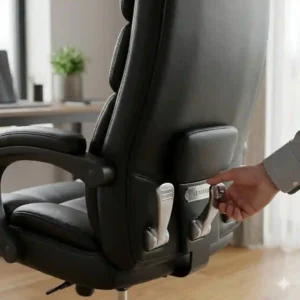
It features an advanced synchro-tilt mechanism with a 2-to-1 ratio, pneumatic height adjustment, and genuine leather on the seating surfaces. The 2-to-1 synchro-tilt is crucial here: for every two degrees you recline the backrest, the seat pan tilts up only one degree. This keeps your feet firmly planted on the floor, preventing the dreaded edge-of-seat thigh pinching that cuts off leg circulation. The leather here is heavily treated, prioritizing durability and stain resistance over a butter-soft feel.
I constantly recommend this to office managers outfitting a team, or remote workers who need a reliable executive study chair without breaking the bank. It won’t win design awards, but it simply does not fail.
Pros:
-
✅ Commercial-grade durability
-
✅ Excellent synchro-tilt ergonomics
-
✅ Highly adjustable armrests (height and width)
Cons:
-
❌ Leather feels a bit stiff initially
-
❌ Utilitarian, somewhat bland aesthetic
Price Verdict: In the $450-$600 range, it hits the sweet spot of genuine leather durability and ergonomic sanity.
5. Gates Genuine Leather Aluminum Base Chair — The Modern Minimalist
For those who love the sleek, ribbed aesthetic of mid-century design but can’t stomach Herman Miller pricing, the Gates Genuine Leather Aluminum Base Chair is a brilliant alternative.
It utilizes top-grain Italian leather on the front surfaces, a polished aluminum five-star base, and a knee-tilt mechanism. The knee-tilt is the defining feature. Unlike a standard center-tilt that lifts your knees into the desk when you lean back, the pivot point is positioned right behind your knees. This allows you to recline while keeping your feet flat. The ribbed stitching isn’t just for looks; it creates tiny air channels that significantly reduce back sweat during long sessions.
This is a fantastic executive leather office chair for creative professionals, home offices, and podcast studios. It looks incredible on camera. User feedback consistently highlights the surprisingly sturdy build, though a common complaint is the fixed, non-adjustable armrests.
Pros:
-
✅ High-quality Italian leather at a mid-tier price
-
✅ Sleek, space-saving profile
-
✅ Knee-tilt mechanism allows comfortable rocking
Cons:
-
❌ Armrests cannot be adjusted or removed easily
-
❌ Not suited for users over 6’2″
Price Verdict: Ranging from $500 to $700, it offers the best balance of premium materials and modern aesthetic appeal in its class.
✨ Don’t Miss These Exclusive Deals!
🔍 Upgrade your maintenance routine with top-rated leather conditioners and rollerblade casters. Click on any highlighted item to check current pricing and availability. These small tweaks double the life of your chair!
Practical Usage Guide: First 30 Days with Your Leather Chair
Most buyers unbox their new executive leather office chair, sit down, and never think about it again. This is a massive mistake that shortens the lifespan of the product and ruins posture. Here is my exact 30-day breakdown for integrating premium seating into your workflow.
Day 1: The Ergonomic Baseline
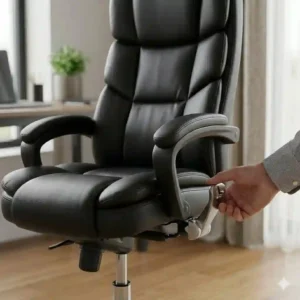
Do not touch the backrest tilt yet. First, adjust the seat height until your knees are exactly at a 90-degree angle, with your feet flat on the floor. Next, adjust the armrests so your elbows rest lightly without your shoulders shrugging up. Finally, adjust your monitors—your eye line should hit the top third of the screen.
Day 7: The “Break-In” Period
High-quality top-grain leather is stiff when new, much like a good pair of boots. The high-density foam underneath also needs time to conform to your specific sitting pattern. Do not return a premium chair on day three because it feels “too firm.” By day seven, the heat from your body will begin softening the foam and stretching the leather into a custom fit.
Day 30: First Maintenance Cycle
Leather is skin; it needs hydration. After 30 days, dust the chair with a microfiber cloth and apply a high-quality leather conditioner. Focus heavily on the seat edges and armrests, as the oils from your hands and the friction from your legs cause the most wear. (Never use chemical household cleaners, as they strip the protective topcoat).
By following this routine, your office furniture executive chair will maintain its showroom luster and ergonomic integrity for years.
Problem → Solution: The Posture and Sweat Dilemma
Even the most expensive seating solutions come with inherent challenges. Based on hundreds of client consultations, here are the most common problems users face with leather seating, and the exact solutions to fix them.
Problem 1: The “Swamp Back” Effect
Leather is naturally less breathable than mesh. In warmer months, sitting against a solid leather backrest for 4 hours causes severe heat buildup.
-
The Solution: Opt for an executive leather office chair with a ribbed design (like the Gates Aluminum) which creates air channels. Alternatively, implement the “20-20-20” rule: every 20 minutes, stand up for 20 seconds. This simple act allows the trapped heat to dissipate and the leather to cool instantly.
Problem 2: The Squeaking Base Syndrome
Around the six-month mark, many chairs develop a highly annoying squeak every time you lean back. This is not a broken chair; it’s dry metal.
-
The Solution: Flip the chair over. Locate the tension spring and the metal pivot points inside the tilt mechanism. Apply two drops of a dry PTFE lubricant (do not use WD-40, as it attracts dust). The squeak will disappear immediately.
Problem 3: Floor Damage from Casters
Standard nylon casters will absolutely destroy hardwood floors and get hopelessly bogged down in thick carpets.
-
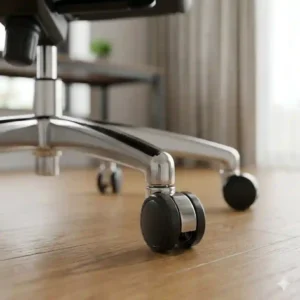
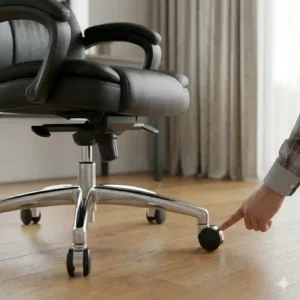
The Solution: If you have hardwood, swap the default wheels for rollerblade-style polyurethane casters. They glide silently and won’t scratch. For thick carpets, you must use a rigid polycarbonate floor mat to prevent the wheels from sinking, which strains the chair’s base and your legs.
How to Choose the Right Executive Study Chair
Buying an executive study chair based solely on how it looks in an online photo is a recipe for disaster. You need a decision framework based on how you actually work.
-
Assess Your Daily Duration: If you sit for 1-3 hours a day paying bills or checking emails, you can prioritize aesthetics and thick, plush padding (budget bonded leather is fine here). If you sit for 8-12 hours, you must prioritize firm, high-density foam and independent lumbar support. Soft padding causes your pelvis to roll backward over long periods, leading to lower back pain.
-
Identify Your Desk Height: Measure your desk clearance. If you have a desk with a thick front drawer, chairs with fixed, high armrests will crash into it, forcing you to sit too far away from your keyboard. Always look for 3D or 4D adjustable arms.
-
Check the Weight Rating: A standard chair is rated for 250 lbs. If you are a larger individual, do not risk it. The gas cylinder will fail prematurely. Look specifically for “Big & Tall” classifications featuring Class 4 pneumatic cylinders.
-
Determine the Mechanism Type: For intensive typing, a forward-tilt mechanism is incredible. For reading and phone calls, a deep synchro-tilt is preferred. Make sure the mechanics match your primary task.
Common Mistakes When Buying Premium Office Seating
I see brilliant professionals make amateur mistakes when upgrading their office furniture executive chair setup. Here is what you must avoid.
The “Headrest Illusion”
Many buyers insist on a headrest, believing it equates to better ergonomics. The truth? Unless you are actively reclining to read or watch a monitor mounted high on a wall, your head should never actually touch a headrest while typing. A poorly positioned headrest will push your cervical spine forward, creating “tech neck.” Only buy a chair with a headrest if it is highly adjustable in both height and depth.
Ignoring Seat Pan Depth
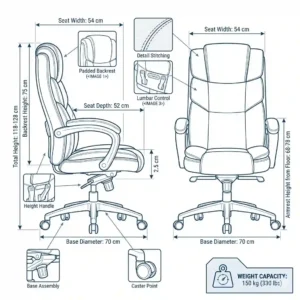
This is the silent killer of leg comfort. If the seat is too long, the edge will press into the back of your calves, cutting off blood flow and causing numbness. If it’s too short, your thighs aren’t supported, putting massive pressure on your tailbone. You need roughly two fingers of space between the edge of the chair and the back of your knee. Always look for a chair with a sliding seat pan feature.
Falling for the “Overstuffed” Trap
Thick, pillowy cushions look incredibly inviting. However, in prolonged sitting scenarios, overly soft foam restricts micro-movements. Your body needs to make tiny adjustments throughout the day to keep muscles active. Firm, contoured suspension (like high-end ergonomic models) facilitates this far better than a cloud-like cushion.
Genuine Leather vs. PU and Bonded Alternatives
Understanding material science is critical before dropping hundreds of dollars. The term “leather” is heavily manipulated in marketing copy. Let’s break down the reality.
Top-Grain / Full-Grain Leather
This is the premium stuff. It is the durable outer layer of the hide. It breathes well, adapts to your body temperature quickly, and develops a beautiful patina over time. It can easily last 15-20 years if conditioned. The trade-off is the high price tag. (For an in-depth look at leather grading, the Wikipedia guide on Leather is surprisingly comprehensive).
Bonded Leather
This is the hot dog of the leather world. It is made from leather scraps shredded into a pulp, mixed with polyurethane binders, and glued to a paper backing. It smells like leather and looks great on day one. However, after 2-3 years of friction and body heat, the thin top layer begins to peel and flake off in disastrous chunks. It is cheap, but it is strictly a short-term solution.
PU (Polyurethane) Leather
A purely synthetic material. High-end PU leather (sometimes called Vegan Leather) has gotten remarkably good in 2026. It is highly spill-resistant and won’t peel like bonded leather, making it great for messy environments. However, it does not breathe. Sitting on PU leather in a warm room will cause significant sweating.
When analyzing a comparison table, always check the exact material terminology. If the price is unbelievably low, it is bonded or PU leather.
Safety, Regulations, and BIFMA Compliance Guide
When sourcing seating for a commercial environment, or even setting up a high-end home office, understanding safety standards separates professional buyers from amateurs.
You should look for products that comply with BIFMA (Business and Institutional Furniture Manufacturers Association) standards. A chair that is BIFMA certified has been subjected to rigorous mechanical testing. For instance, the backrest must withstand a 150-pound pull, the casters must survive 100,000 rotations over obstacles, and the base must handle a 2,500-pound drop test without fracturing.
Why does this matter to the average consumer? Because an uncertified, cheap executive leather office chair using a generic gas lift cylinder is a genuine safety hazard. Inferior pneumatic cylinders have been known to fail explosively. By ensuring your chair meets BIFMA guidelines (or referencing safety protocols from OSHA’s ergonomics guidelines), you are guaranteeing that the core structural components—the base, the lift, and the tilt lock—will not collapse under dynamic loads.
Long-Term Cost & Total Cost of Ownership
To truly assess the value of an office furniture executive chair, you must calculate the Total Cost of Ownership (TCO), not just the sticker price.
Let’s look at a common scenario. Buyer A purchases a $200 bonded leather chair. Within 2.5 years, the gas cylinder begins sinking, the armpads crack, and the bonded leather peels. Over 10 years, Buyer A replaces the chair four times, spending $800 total, dealing with the hassle of assembly and disposal each time, and suffering through sub-par ergonomics.
Buyer B purchases a $1,200 top-grain leather ergonomic chair with a 12-year warranty. The upfront cost stings, but the chair requires zero replacements over a decade. Buyer B’s cost is exactly $120 per year. More importantly, Buyer B experiences better posture, zero downtime, and a consistently premium aesthetic.
When you factor in the medical costs associated with poor posture—chiropractic visits, physical therapy, lost productivity due to back pain—the premium ergonomic chair isn’t a luxury; it is a preventative health investment.
✨ Don’t Miss These Exclusive Deals!
🔍 Ready to revolutionize your workspace? Click on any highlighted product name above to check current pricing, explore color options, and secure your ergonomic upgrade today!
Conclusion
Upgrading to a proper executive leather office chair is one of the most impactful decisions you can make for your daily productivity and physical health. As we’ve explored, the market in 2026 demands that you look far beyond the superficial sheen of a tufted backrest.
Whether you are investing in the dynamic ergonomic prowess of the X-Chair X4, embracing the heritage luxury of the Herman Miller Eames, or finding a solid middle ground with the HON Ignition 2.0, the key is matching the engineering of the chair to your specific physiological needs. Remember to prioritize genuine leather for longevity, demand a synchro-tilt mechanism for proper circulation, and never compromise on a high-quality gas lift. Your workspace is the cockpit of your career—furnish it with the respect it deserves.
FAQs
❓ What is the best way to clean an executive leather office chair?
✅ Dust weekly with a dry microfiber cloth. Every three months, use a dedicated pH-balanced leather cleaner followed by a premium leather conditioner to keep the hide supple. Never use alcohol, bleach, or household surface sprays, as they will strip the finish…
❓ Can a leather office chair really be ergonomic?
✅ Yes, provided it features the right underlying mechanics. Modern premium models combine top-grain leather with synchronized tilt mechanisms, dynamic lumbar support, and adjustable seat pans, offering the same ergonomic benefits as high-end mesh chairs with a more luxurious finish…
❓ How long should an executive study chair last?
✅ A high-quality chair made with top-grain leather and a Class 4 gas cylinder should last 10-15 years. Cheaper bonded leather or PU models typically show significant wear, peeling, or mechanical failure within 2-4 years of daily use…
❓ Is top-grain leather better than bonded leather for daily work?
✅ Absolutely. Top-grain leather is natural hide that breathes, stretches, and resists tearing. Bonded leather is a composite of leather scraps and polyurethane that traps heat and inevitably peels after a few years of friction and body heat…
❓ Why do some expensive leather chairs lack thick padding?
✅ High-end ergonomic seating utilizes dense, contoured suspension rather than soft, thick foam. Dense materials force your skeletal system to support itself naturally, preventing the pelvic tilt and spine curvature that occurs when sinking deeply into plush padding…
Recommended for You
- 5 Ways to Design a modern executive board room with black chairs in 2026 for a More Elegant and Productive Workplace
- 5 Best 2026 Executive Office Chair Picks: Expert Ergonomic Reviews
- 10 Premium Leather Office Executive Chair Options for Professional Success in 2025
Disclaimer: This article contains affiliate links. As an Amazon Associate, I earn from qualifying purchases. If you purchase products through these links, we may earn a small commission at no additional cost to you.
✨ Found this helpful? Share it with your friends! 💬🤗