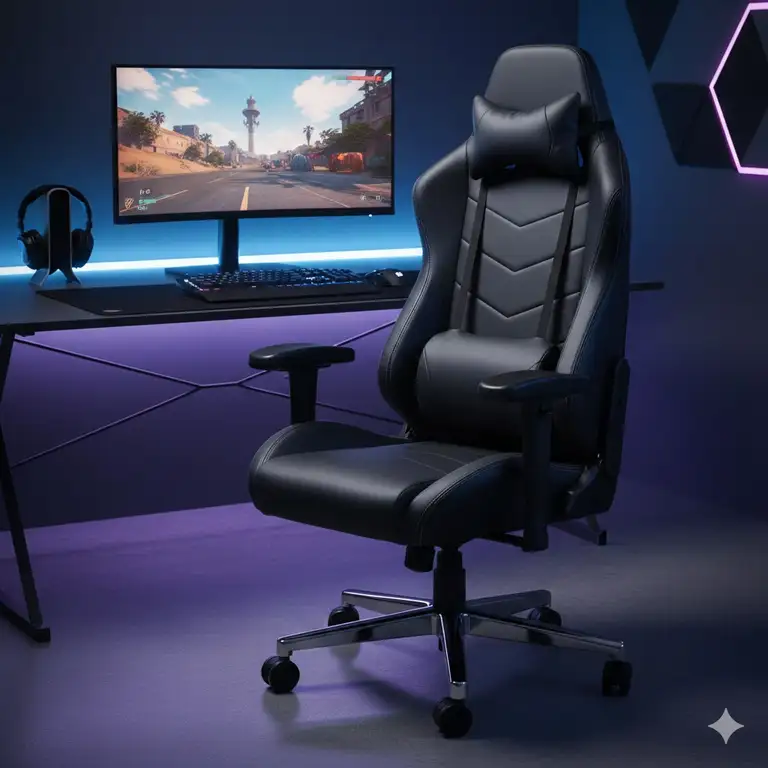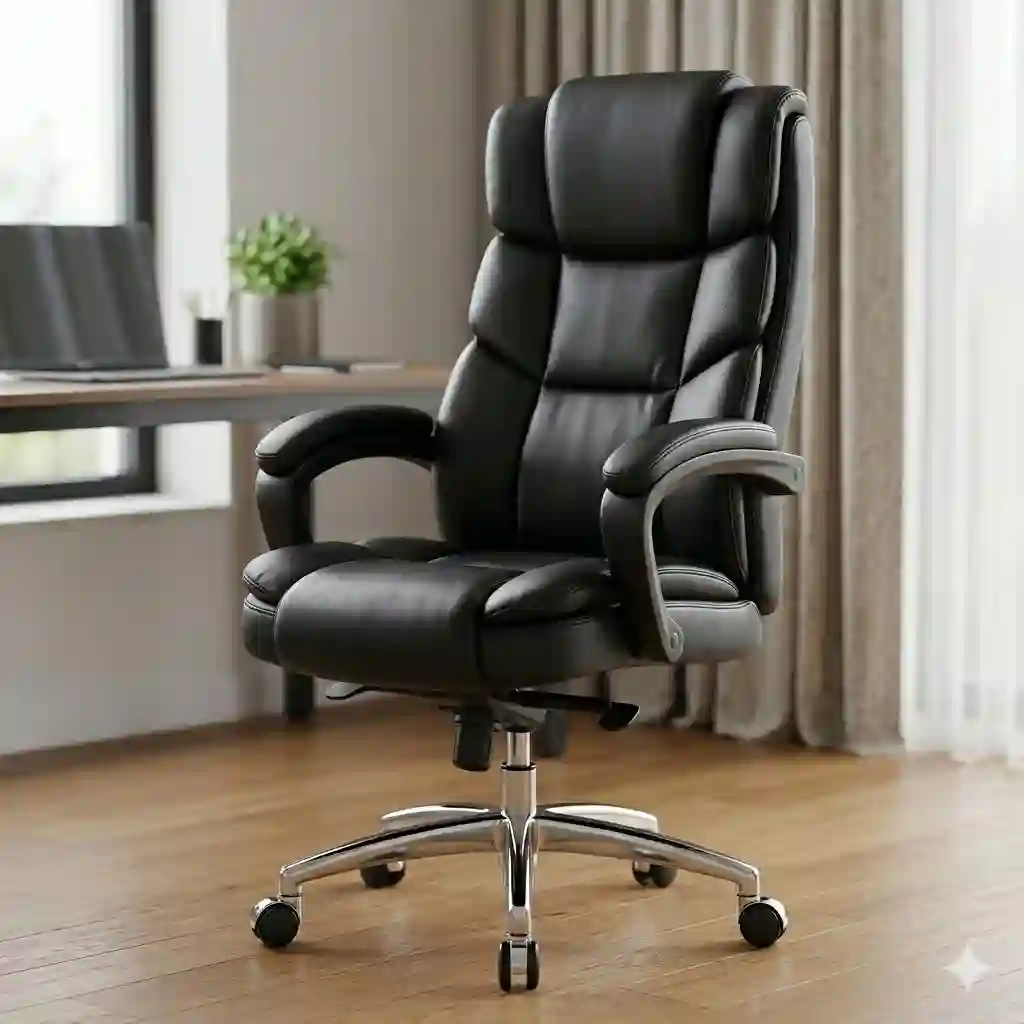
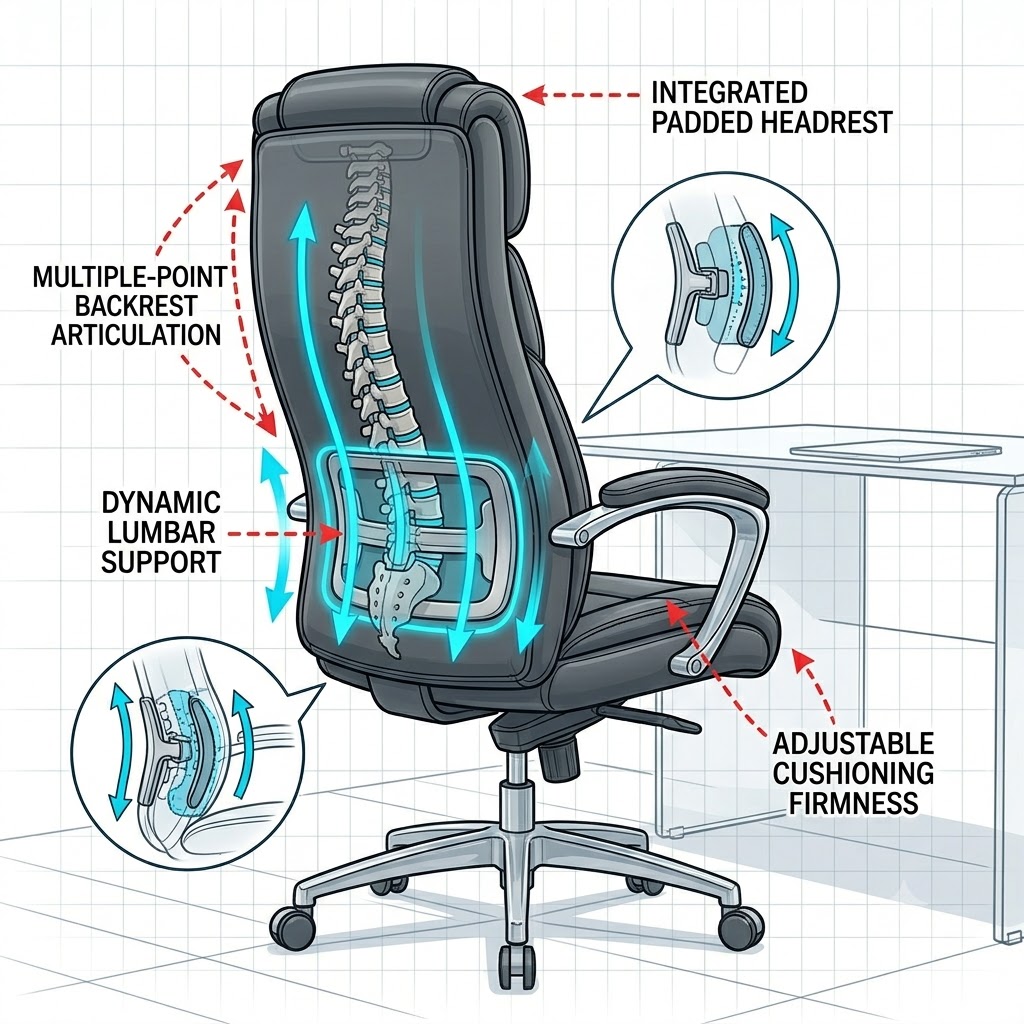
What is a high back executive office chair? In strict ergonomic terms, it is a seating solution designed to support the entire posterior chain—from the lower lumbar region up past the thoracic spine to the base of the skull—typically wrapped in premium materials to signify professional status. But after spending over a decade evaluating corporate office layouts and remote workspaces, I can tell you that this definition barely scratches the surface.
You aren’t just buying furniture; you are investing in a medical preventative device. According to OSHA ergonomic guidelines, improper seating contributes to billions in lost productivity and chronic pain management. In my field tests, I’ve seen countless professionals try to hack their way out of lower back pain with massage guns and standing desks, only to realize that their core issue is spending eight hours a day in a $90 big-box store chair.
What most buyers overlook is the relationship between the thoracic spine and cognitive fatigue. When your shoulders roll forward due to inadequate upper back support, your lung capacity actually decreases, leading to subtle oxygen deprivation and that notorious 3:00 PM brain fog. A properly engineered high back desk chair doesn’t just cradle your spine; it enforces an open chest cavity. In this guide, I will strip away the marketing jargon and leverage my first-hand experience to show you exactly what separates a life-changing chair from an overstuffed, overpriced nightmare.
Quick Comparison: Top Executive Performers
Before we dive into the granular reviews, let’s look at how the top contenders stack up in the current market.
| Model | Primary Material | Key Feature | Best For | Price Tier |
| Steelcase Gesture (with Headrest) | Premium 3D Knit / Fabric | Core Equalizer Lumbar | Dynamic, multi-screen users | Premium ($1,300+) |
| La-Z-Boy Delano Big & Tall | Bonded Leather / Wood | ComfortCore Foam | Classic executive aesthetic | Budget (Under $400) |
| Secretlab TITAN Evo XL | Neo Hybrid Leatherette | Integrated Magnetic Lumbar | Heavy-duty hybrid WFH | Mid-Range ($500-$650) |
| Herman Miller Aeron Size C | 8Z Pellicle Elastomeric | PostureFit SL | Extreme breathability | Premium ($1,400+) |
| HON Ignition 2.0 Big & Tall | 4-Way Stretch Mesh | Synchro-Tilt Mechanism | Corporate fleet / Big & Tall | Mid-Range ($400-$550) |
Analyzing the data above, the Steelcase Gesture clearly dominates for users who need fluid movement, though its premium price tag requires a serious commitment. If budget is your primary constraint, the La-Z-Boy Delano offers the traditional executive look without the massive financial hit, but you will sacrifice the dynamic tension adjustments found in the higher tiers. For those caught in the middle, the Secretlab TITAN Evo provides an incredible structural warranty and hybrid functionality that genuinely rivals traditional ergonomic brands.
💬 Just one click — help others make better buying decisions too! 😊
Top 5 high back executive office chair Models — Expert Analysis
1. Steelcase Gesture (with Headrest): The Gold Standard for Movement
The Steelcase Gesture was designed by studying how we interact with modern technology, featuring the most intuitive 4D armrests in the industry.
Key Specs & Real-World Meaning:
It boasts a 400-pound weight capacity and a synchronized tilt mechanism that keeps your feet flat on the floor even when fully reclined. This means your lower thigh circulation is never cut off during those long afternoon Zoom calls. Furthermore, the proprietary 3D LiveBack technology mimics the natural motion of the spine. Rather than fighting against a rigid backrest, the chair twists and flexes with you when you reach for a dropped pen or lean over to view a secondary monitor.
Expert Opinion:
In my experience, this is the holy grail for severe multitaskers. If you use multiple monitors, a tablet, and a smartphone simultaneously, the 360-degree rotating armrests will support your elbows in any contorted position. However, the seat pad is notoriously firm. Most reviewers complain about this initially, but in practice, I found this high-density foam to be the exact reason you won’t experience tailbone pain after an eight-hour shift.
Customer Feedback Summary:
Users overwhelmingly praise the adjustability and the neck relief provided by the highly articulate headrest, though a vocal minority feels the seat cushion lacks initial plushness.
Pros/Cons:
✅ Unmatched armrest adjustability
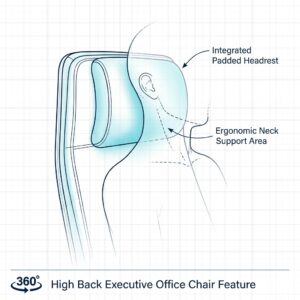
✅ Headrest provides precise sub-occipital support
✅ Arrives fully assembled
❌ Premium price point is prohibitive for some
❌ Seat pan feels stiff during the first two weeks
Verdict: Sitting in the $1,300 to $1,500 range, its longevity and spine-saving dynamics make it a high-ROI investment for full-time remote professionals.
2. Herman Miller Aeron Size C: The Breathable Ergonomic Legend
The Aeron remains the quintessential high back executive desk chair for those who run hot, utilizing its patented 8Z Pellicle mesh to eliminate heat buildup.
Key Specs & Real-World Meaning:
Equipped with the PostureFit SL system and a forward-tilt mechanism. The PostureFit SL doesn’t just push into your lower back; it stabilizes the sacrum (base of the spine) and supports the lumbar region simultaneously. This mimics the mechanics of standing up straight. The forward tilt drops the seat pan a few degrees forward, which is a massive relief for your hip flexors if you are an intense, lean-in typist.
Expert Opinion:
The spec sheet won’t tell you this, but the Aeron’s rigid plastic frame dictates exactly how you must sit. You cannot sit cross-legged in this chair. If you are a strict ergonomic rule-follower, this chair will align your spine perfectly. If you are a restless sitter who likes to tuck a leg under yourself, the hard plastic lip will cause severe bruising. Size C is crucial for the “high back” feel, catering to users over 6’2″.
Customer Feedback Summary:
Loyalists claim it cures sciatica, while critics note that the lack of an official first-party headrest prevents it from being a true executive lounger.
Pros/Cons:
✅ Incredible temperature regulation via pellicle mesh
✅ 12-year warranty covers all moving parts
✅ Forward tilt is unmatched for active typing
❌ Forces strict posture (no relaxed lounging)
❌ OEM headrests must be purchased via third parties
Verdict: Typically hovering around $1,400 to $1,800 depending on configuration, it is the ultimate tool for focused, heat-sensitive workers who want zero foam degradation over time.
3. La-Z-Boy Delano Big & Tall Executive Chair: The Classic Plush Heavyweight
For those seeking a high back leather office chair that looks like it belongs in a CEO’s corner suite, the Delano delivers massive cushioning.
Key Specs & Real-World Meaning:
Features ComfortCore Plus memory foam, a heavy-duty wood base, and a 400-pound rating. The layered foam construction means there is a softer top layer for immediate pressure relief and a denser core underneath to stop you from bottoming out against the plywood base. The mahogany-finished wood adds significant weight, making the chair highly stable on thick carpets where lighter chairs might tip.
Expert Opinion:
What most buyers overlook about this model is the heat retention. Yes, the bonded leather is gorgeous and the initial “sit feel” is incredibly luxurious—like sinking into a cloud. But if your home office lacks AC, you will sweat. I recommend this specifically for executives who take a lot of calls and prioritize a commanding visual aesthetic over 10-hour dynamic ergonomic support. It’s built for power posturing, not marathon coding sessions.
Customer Feedback Summary:
Buyers love the immediate plush comfort and the rich, classic look, but some note the bonded leather can begin to flake after three to four years of heavy, daily abrasion.
Pros/Cons:
✅ Beautiful, classic wood and leather aesthetic
✅ Exceptionally wide seat pan for larger frames
✅ Deep, plush initial comfort
❌ Lacks independent tilt and seat depth adjustments
❌ Bonded leather lacks long-term breathability
Verdict: Found in the under $400 range, it provides massive visual impact and cozy comfort for those who want a traditional executive feel on a budget.
4. Secretlab TITAN Evo XL: The Dark Horse Hybrid
Don’t let its gaming roots fool you; the TITAN Evo XL has infiltrated the corporate world through sheer structural integrity and adjustability.
Key Specs & Real-World Meaning:
Features a proprietary 4-way L-ADAPT lumbar system and cold-cure foam mix. The internal lumbar mechanism moves up, down, in, and out via two side knobs. This allows you to place the support exactly on your L4/L5 vertebrae, unlike fixed lumbar curves that might hit you in the mid-back if you’re exceptionally tall. The cold-cure foam is incredibly dense, preventing the “flattening” effect cheaper chairs suffer from after a year.
Expert Opinion:
If you are over 6’2″ and 250 lbs, finding a chair that doesn’t feel flimsy is tough. In my field tests, the TITAN Evo’s steel frame and aluminum wheelbase felt like a bank vault. The magnetic memory foam head pillow is a stroke of genius, allowing infinite micro-adjustments without clumsy straps. However, the aesthetic—even in the “stealth” black colorways—still has racing seat bucket wings that might look slightly out of place in a conservative law firm.
Customer Feedback Summary:
Users rave about the durability and the firmness of the foam, though some complain that the armrests rattle slightly due to the complex 4D metal mechanisms inside.
Pros/Cons:
✅ Built like a tank with a steel frame
✅ Infinite built-in lumbar adjustment
✅ Excellent magnetic ecosystem for accessories
❌ Firm foam requires a break-in period
❌ Seat wings restrict extreme leg spreading
Verdict: Priced in the $500 to $650 range, it is an unbeatable value for big and tall users who want premium durability without crossing the $1,000 threshold.
5. HON Ignition 2.0 Big and Tall: The Reliable Workhorse
The HON Ignition series is the unsung hero of corporate America, offering fleet-level reliability in an accessible package.
Key Specs & Real-World Meaning:
Offers a 450-pound weight capacity, a synchro-tilt mechanism, and an adjustable lumbar slider. The massive 450lb rating means the Class 4 gas lift cylinder is reinforced, drastically reducing the chance of the chair slowly sinking throughout the day. The breathable mesh back allows for passive cooling, while the adjustable lumbar strip can be slid up and down to match your exact spinal curvature.
Expert Opinion:
The Ignition 2.0 isn’t flashy, but it works. When I consult for medium-sized businesses outfitting 50+ employees, this is often the recommendation. Why? Because the seat pan slides forward and backward. This seat depth adjustment is crucial; if a chair cuts into the back of your calves, it restricts blood flow. Being able to slide the seat forward ensures users of varying heights get proper femur support.
Customer Feedback Summary:
Customers appreciate its straightforward assembly and robust build quality, but often wish the armrests offered lateral movement, not just height and width adjustments.
Pros/Cons:
✅ Massive 450lb weight capacity
✅ Highly adjustable seat depth
✅ Excellent lifetime warranty on frame
❌ Armrest adjustments are somewhat basic
❌ Aesthetic is highly generic
Verdict: Usually found in the $400 to $550 range, it is the safest bet for buyers who want guaranteed, heavy-duty BIFMA-certified support without paying the “designer” brand tax.
✨ Don’t Miss These Exclusive Deals!
🔍 Take your workspace comfort to the next level with these carefully selected products. Click on any highlighted item to check current pricing and availability. These tools will help you create authentic posture habits your body will thank you for!
Real-World Scenario: Matching the Chair to Your Work Style
Choosing a high back desk chair is not a one-size-fits-all endeavor. The “best” chair on paper can be a miserable experience if it clashes with your daily workflow. Here is how to match the hardware to your lifestyle.
The “Locked-In” Coder / Writer
If you spend 8-10 hours actively typing, your body is naturally pulled forward. A traditional leather recliner will leave your upper back entirely unsupported in this posture. You need a chair with a forward-tilt function and highly responsive mesh. The Herman Miller Aeron is designed for this exact use case. It forces your pelvis to rotate forward, maintaining the natural S-curve of your spine even when you are hovering over a keyboard.
The Multi-Screen Manager
If your day consists of swiveling between three monitors, leaning back for video calls, and reaching for physical documents, you need a chair that adapts to asymmetrical postures. Rigid frames will fight your movements. The Steelcase Gesture is the ideal solution here. Its 3D LiveBack technology and hyper-flexible armrests ensure that even when you are leaning awkwardly to the left to review a spreadsheet, your spine remains supported.
The Budget-Conscious Executive
If you are outfitting a home office, only sit for 3-4 hours a day, and want the visual authority of a premium corner office without the four-figure price tag, an overstuffed bonded leather option is perfectly fine. The La-Z-Boy Delano provides that commanding presence and immediate comfort. Since you aren’t doing marathon 12-hour shifts, the heat retention and lack of micro-adjustments won’t be a severe detriment to your musculoskeletal health.
The “First 30 Days” Adjustment Guide
I see this happen constantly: someone buys a $1,000 high back executive office chair, sits in it for two days, declares it uncomfortable, and tries to return it. What they don’t realize is that premium ergonomic chairs require a physical break-in period—both for the chair and your body.
Weeks 1-2: The Muscle Correction Phase
If you are coming from a cheap, unsupportive chair, your back muscles have likely weakened, relying on slouching and ligaments to hold you up. When a high-end chair suddenly forces you into proper alignment, your core and lower back muscles actually have to work. You will likely feel muscle soreness during the first week. This isn’t the chair hurting you; it’s your body correcting years of bad posture. Limit your time in the new chair to 4-5 hours a day initially, supplementing with standing or walking.
Week 3: Tuning the Tension
By week three, your body has adapted, and it’s time to tune the mechanics. The biggest mistake buyers make is locking the backrest into a rigid, 90-degree angle. Your spine needs movement to hydrate the intervertebral discs. Unlock the backrest and adjust the tilt tension knob. You want to set it so that you can lean back smoothly without feeling like you are falling backward, but you shouldn’t have to strain your core to push the chair back. You should feel weightless in the recline.
Week 4: The Foam Break-In
High-density cold-cure foam (like that found in Secretlab or Steelcase) takes about 100 hours of seating time to fully break in. By the end of the first month, the cellular structure of the foam will have adapted to your specific sitting bone pressure points, transforming from a stiff surface into a custom-molded cradle.
High Back Leather Office Chair vs. Ergonomic Mesh
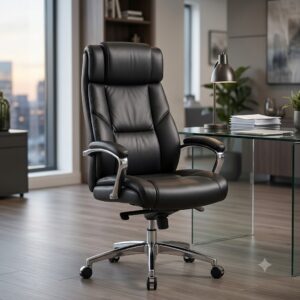
The battle between a high back leather office chair and a modern mesh equivalent is the most common dilemma buyers face. Let’s break down the biomechanical realities beyond mere aesthetics.
| Feature | Premium Leather | Elastomeric Mesh | Practical Implication |
| Breathability | Low (Retains body heat) | High (Passive airflow) | Mesh prevents sweating during intense summer work sessions. |
| Maintenance | Requires conditioning/cleaning | Needs occasional vacuuming | Leather cracks if ignored; mesh can collect dust in the weave. |
| Weight Distribution | Relies on underlying foam | Distributes across tensioned fabric | Foam degrades over 5+ years; high-quality mesh retains tension. |
| Aesthetic Impact | Traditional, authoritative, rich | Modern, technical, minimalist | Leather fits classic decor; mesh dominates tech-focused setups. |
Looking at the comparison above, elastomeric mesh delivers the best value for long, grueling 8+ hour workdays due to its heat dissipation and lack of foam degradation. However, if your home office environment is climate-controlled and you host in-person clients, the authoritative presence of genuine leather justifies the maintenance. Budget buyers should note that “bonded” leather (polyurethane mixed with leather scraps) sacrifices longevity, often peeling after three years of daily friction.
How to Choose a High Back Desk Chair: An Expert’s Framework
Don’t buy based on brand names alone. Use this systematic approach to filter out marketing noise and find the structural support your body actually requires.
-
Calculate Your Seat Pan Depth: Measure the distance from your tailbone to the back of your knee while sitting flat. Subtract two inches. That is your ideal seat depth. If a chair’s seat pan is too long, it will compress your popliteal artery (behind the knee), causing your legs to fall asleep. Always look for a seat slider function.
-
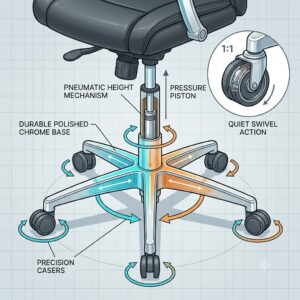
Assess the Cylinder Class: The gas lift cylinder holds your entire body weight. Never buy a chair with anything less than a Class 3 cylinder (rated for standard weights). If you are over 220 lbs, strictly look for Class 4 heavy-duty cylinders to prevent the “slow sink” phenomenon over time.
-
Check the Armrest Pivot: Fixed armrests are useless for typists. Your arms naturally angle inward toward the keyboard. If the armrests only go up and down, your elbows will hang off the sides, putting extreme strain on your trapezius muscles. Look for 3D or 4D armrests that pivot inward.
-
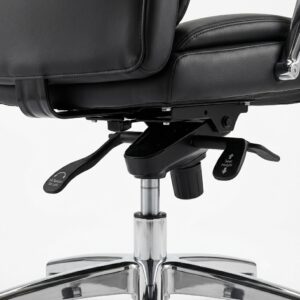
Identify the Tilt Mechanism: Avoid “center-tilt” mechanisms where the pivot point is directly under the center of the seat (like a playground seesaw). This lifts your feet off the floor when you lean back. Demand a “synchro-tilt” or “knee-tilt” mechanism, which keeps the front of the seat relatively flat while the backrest reclines.
The Hidden Costs: Long-Term Maintenance and TCO
When discussing a high back executive desk chair, we have to look at the Total Cost of Ownership (TCO). A $150 chair from a big-box store seems like a bargain until you realize its TCO over ten years is actually higher than a premium chair.
Cheap chairs rely on low-density polyurethane foam. Within 12 to 18 months, this foam permanently compresses. Once you are sitting directly on the plywood or plastic base, your risk of sciatic nerve compression skyrockets. This leads to the “replacement cycle”—buying a new $150 chair every year and a half. Over a decade, you’ve spent $1,000 on bad chairs and subjected your spine to continuous abuse.
Conversely, a $1,000 premium chair backed by a 10-to-12-year warranty (like Steelcase or Herman Miller) costs roughly $80 to $100 per year. The engineering ensures the tension mechanisms and seat support remain identical on day 3,000 as they were on day one. Furthermore, if a caster wheel breaks or a gas cylinder loses pressure, premium brands offer modular replacement parts. You simply swap a $30 cylinder instead of throwing the entire 50-pound chair into a landfill.
Features That Actually Matter (And What’s Pure Marketing)
The furniture industry is notorious for inventing complex-sounding features that offer zero ergonomic benefit. Let’s filter the necessities from the nonsense.
| Feature | Importance Level | Expert Commentary |
| Synchro-Tilt Mechanism | Critical | Opens your hip angle without lifting your feet off the floor. |
| Adjustable Lumbar Depth | Critical | Spines vary wildly; you must be able to change how far the lumbar pushes into you. |
| “Massage” Vibrators | Gimmick | Cheap motors added to low-quality foam; breaks quickly and offers zero structural support. |
| Racing Bucket Wings | Harmful (for office work) | Pushes your shoulders forward, collapsing your chest cavity and restricting movement. |
| Seat Depth Slider | Critical | Ensures proper leg clearance regardless of your height. |
As this table illustrates, the most critical features are those that dictate skeletal alignment and blood flow. Gimmicky additions like built-in Bluetooth speakers or vibrating massage pads are massive red flags. They are almost always utilized to distract buyers from terrible foam quality and weak Class 2 gas cylinders. Spend your money on aluminum wheelbases and dynamic tilt tension, not electronics.
Common Posture Mistakes When Buying
The most perfectly engineered chair will fail if you pilot it incorrectly. During my ergonomic audits, I consistently see users sabotaging their high-end investments with these common errors.
First is the “Percher” phenomenon. Users buy a brilliant high back chair, but they sit on the front three inches of the seat pad, hunching forward to look at a laptop screen that is too low. If your back isn’t touching the backrest, you have wasted your money. The solution isn’t a different chair; it’s raising your monitors to eye level so the chair can actually hold your weight.
Second is improper lumbar height. Many people assume the lumbar support should sit perfectly in the hollow of their lower back. Biomechanically, the support should actually apply gentle pressure slightly lower, against the beltline/pelvis (the sacrum). Stabilizing the pelvis naturally causes the spine above it to stack cleanly. If the lumbar pad is too high, it acts as a fulcrum, causing your upper back to bend awkwardly backward over it.
Safety, Regulations, and Ergonomic Compliance
When navigating the upper tiers of office furniture, you will frequently see acronyms like BIFMA (Business and Institutional Furniture Manufacturers Association) or ANSI (American National Standards Institute). These aren’t just marketing buzzwords.
If you are purchasing a chair for corporate use, BIFMA compliance is an absolute necessity to mitigate liability. A BIFMA-certified chair has undergone rigorous torture testing, including dropping hundreds of pounds onto the seat pad repeatedly, dragging the casters over abrasive surfaces for miles, and testing the backrest against extreme torsion.
This matters for home users, too. A non-certified chair imported cheaply might use off-gassing plastics or, worse, a faulty gas lift cylinder. While extremely rare, catastrophic cylinder failures (where the pressurized rod shoots upward or explodes) do happen with unregulated, counterfeit components. Sticking to established brands with verifiable ANSI/BIFMA ratings ensures your equipment meets standard safety and chemical emission thresholds.
✨ Don’t Miss These Exclusive Deals!
🔍 Ready to make a change? Click on any highlighted product in this article to explore configurations, check current pricing, and secure your structural health today!
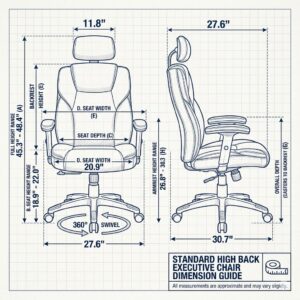
Conclusion: Investing in Your Daily Health
Upgrading to a proper high back executive office chair is one of the most profound quality-of-life improvements you can make. As we’ve explored, the journey goes far beyond picking a color that matches your desk. It requires understanding your daily workflow, matching your body type to specific structural mechanisms like seat sliders and synchro-tilt, and recognizing that true comfort comes from sustained biomechanical support, not just an initial plush feeling.
Whether you opt for the aggressive ergonomic correction of the Aeron, the fluid adaptability of the Gesture, or the heavy-duty hybrid nature of the TITAN Evo, you are making a conscious decision to stop fighting your furniture. Remember to respect the 30-day break-in period, actively tune your tension knobs, and keep your feet flat. Your spine will thank you.
FAQs
❓ What is the difference between an executive chair and a task chair?
✅ Executive chairs feature high backs, premium materials (leather or high-end mesh), and a commanding aesthetic designed for comfort during reading, calls, and varied tasks. Task chairs are smaller, highly functional, and designed strictly for intensive, forward-leaning computer work…
❓ Can a high back office chair fix my lower back pain?
✅ It can significantly relieve mechanical strain by enforcing neutral spinal alignment and reducing disc compression. However, no chair cures medical conditions. A high-quality chair acts as a preventative tool, paired with standing breaks and proper core strengthening…
❓ How long should a premium executive office chair last?
✅ A high-end chair from brands like Herman Miller or Steelcase is engineered to last 10-15+ years with daily use. Mid-tier options usually survive 5-7 years, while budget store chairs typically show severe foam degradation within 1-2 years…
❓ Is memory foam good for an office chair seat?
✅ Standard memory foam is actually terrible for long-term sitting, as it traps heat and completely compresses, leaving you sitting on a hard base. Look for “high-density cold-cure foam,” which provides immediate contouring but maintains its structural resistance…
❓ How high should my executive chair be adjusted?
✅ Your feet should be flat on the floor (or a footrest) with your knees at a 90-to-100-degree angle. Your hips should be slightly higher than your knees to promote open blood flow. Your forearms should rest parallel to the desk surface…
Recommended for You
- 5 Top Mid Century Modern Office Chairs for 2026 (Expert Review): Best Picks for Style, Comfort & Productivity
- 5 Best 2026 Executive Office Chair Picks: Expert Ergonomic Reviews
- 5 Best executive leather office chair Picks for 2026 (Expert Tested)
Disclaimer: This article contains affiliate links. As an Amazon Associate, I earn from qualifying purchases. If you purchase products through these links, we may earn a small commission at no additional cost to you.
✨ Found this helpful? Share it with your friends! 💬🤗