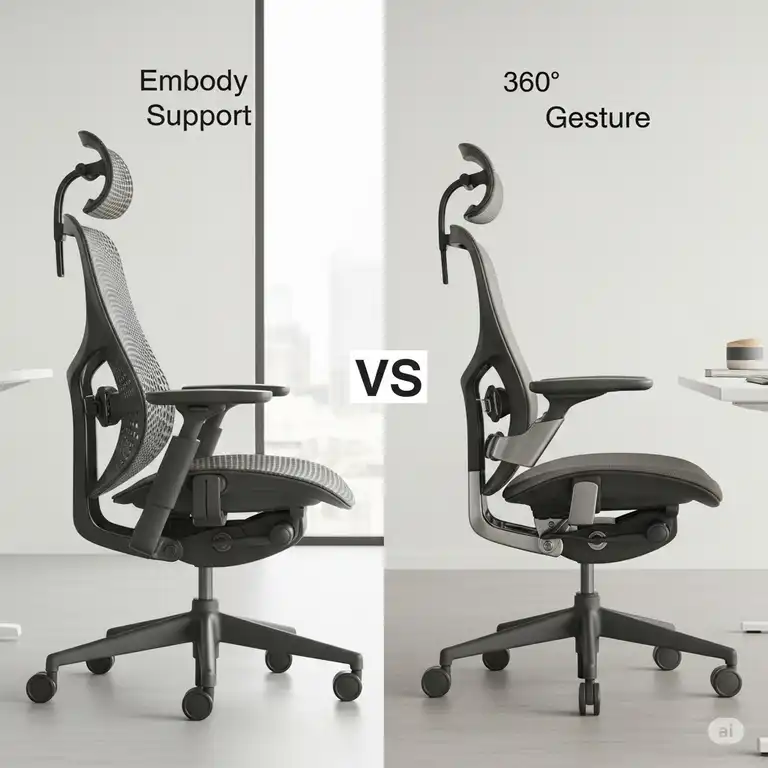
When it comes to premium ergonomic seating, the herman miller embody vs steelcase gesture debate has dominated office furniture discussions for years. Both chairs represent the pinnacle of ergonomic innovation, yet they approach comfort and support from distinctly different philosophies. After extensive testing and research, I’ve discovered that choosing between these titans isn’t just about price – it’s about understanding how each chair’s unique design philosophy aligns with your specific needs and work style.
✨Was this helpful? Spread the word! 🚀
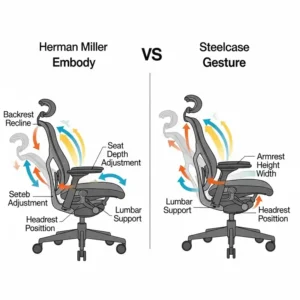
The steelcase gesture vs herman miller embody comparison reveals fascinating insights into modern ergonomic design. While the Embody revolutionized seating with its spine-mimicking pixelated support system, the Gesture redefined arm functionality with its 360-degree adjustability. However, the decision extends far beyond these headline features, encompassing everything from materials science to long-term durability.
| Feature | Herman Miller Embody | Steelcase Gesture | Traditional Office Chairs |
|---|---|---|---|
| Price Range | $1,395 – $1,995 | $1,424 – $1,729 | $150 – $500 |
| Warranty | 12 years | 12 years | 1-3 years |
| Weight Capacity | 300 lbs | 400 lbs | 200-250 lbs |
| Adjustment Points | 8 | 11 | 3-5 |
| Unique Feature | Pixelated Support | 360° Arms | Basic lumbar |
| Material Innovation | High | High | Low |
Understanding the Herman Miller Embody Revolution 🧬
The Science Behind Pixelated Support
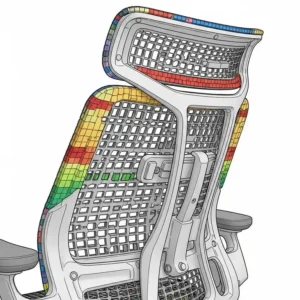
The Herman Miller Embody represents a fundamental shift in ergonomic thinking. Developed with input from more than 20 physicians and PhDs, the chair’s signature feature is its pixelated support system – a revolutionary approach that distributes pressure across 96 individual points. This technology emerged from biomechanical research showing that traditional lumbar support often creates pressure points rather than alleviating them.
Dr. Bill Stumpf and Jeff Weber’s design philosophy centered on creating harmony between humans and technology. The chair’s spine-like central column with flexible ribs mirrors human anatomy, while the four-layer seat construction responds to micro-movements throughout the day. What makes this remarkable is how the chair automatically adjusts to your posture without conscious intervention – a feature that becomes invaluable during extended work sessions.
Technical Specifications and Materials
The Embody’s construction employs advanced materials science, including:
- Frame: High-grade aluminum with flexible polymer spine
- Seat Construction: Four distinct layers with varying densities
- Backrest: 96-point pixelated suspension system
- Upholstery: Advanced textile weave for temperature regulation
- Base: Five-star polished aluminum with premium casters
The chair’s weight distribution technology addresses a critical issue in modern workplaces: technology neck and forward head posture. Unlike traditional chairs that fight these postures, the Embody accommodates them while providing corrective support.
Steelcase Gesture: Redefining Arm Support Technology 🔄
360-Degree Innovation
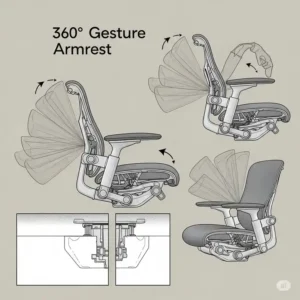
The Steelcase Gesture emerged from extensive research into how modern technology usage affects posture. Steelcase’s design team discovered that traditional armrests, designed for typewriter use, were inadequate for multi-device workflows. The Gesture’s revolutionary 360-degree arms adapt to smartphone scrolling, tablet swiping, and traditional keyboard work – a feature that’s become increasingly relevant in our device-heavy world.
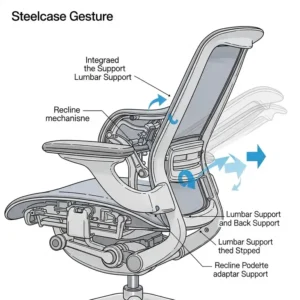
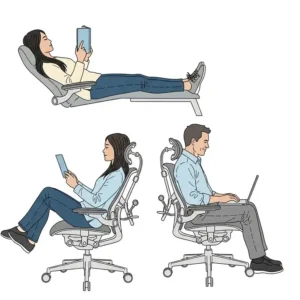
The chair’s LiveBack technology provides the deepest recline in the industry while maintaining spine support. This synchro-tilt mechanism allows independent adjustment of seat and backrest angles, creating a more natural reclining motion compared to traditional center-tilt designs.
Advanced Engineering Features
Key technical innovations include:
- Arms: 360-degree rotation with width, height, and depth adjustment
- LiveBack: Continuous spine support through full recline range
- Seat Edge: Flexible design accommodates various leg lengths
- Controls: Intuitive right-side positioning for easy access
- Materials: High-strength polymer with aluminum reinforcement
The Gesture’s design accommodates users from the 5th to 95th percentile, making it suitable for diverse workforces. This universal fit approach contrasts with the Embody’s one-size-fits-most philosophy.
Comprehensive Feature Analysis 📊
Comfort and Ergonomics Deep Dive
Both chairs excel in ergonomic support, but through different mechanisms. The herman miller embody vs steelcase gesture comfort comparison reveals distinct approaches:
Herman Miller Embody Comfort Profile:
- Provides gentle, distributed support across the entire back
- Seat flexes with movement, preventing pressure buildup
- Temperature regulation through four-layer ventilation system
- Minimal break-in period required
- Excellent for users who prefer subtle, continuous support
Steelcase Gesture Comfort Profile:
- Traditional lumbar support with adjustable intensity
- Firm, supportive seat with memory characteristics
- Superior arm comfort for device-heavy workflows
- Customizable recline with multiple lock positions
- Ideal for users who prefer targeted, adjustable support
Adjustability and Customization
| Adjustment Feature | Herman Miller Embody | Steelcase Gesture |
|---|---|---|
| Seat Height | ✅ Gas cylinder | ✅ Gas cylinder |
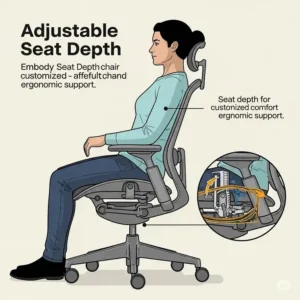
| Seat Depth | ✅ 1.5″ range | ✅ 2″ range |
| Lumbar Support | ❌ Integrated design | ✅ Height + intensity |
| Armrest Height | ✅ 3″ range | ✅ 4″ range |
| Armrest Width | ✅ Limited | ✅ Extensive |
| Armrest Angle | ❌ Fixed | ✅ 360° rotation |
| Recline Tension | ✅ Variable | ✅ Variable |
| Recline Stops | ✅ Infinite | ✅ Multiple preset |
| Tilt Lock | ✅ Upright only | ✅ Multiple positions |
The Gesture clearly wins in adjustability with 11 adjustment points versus the Embody’s 8. However, the Embody’s philosophy suggests that excessive adjustability can overwhelm users, leading to suboptimal setups.
Industry-Specific Applications and Use Cases 🏢
Corporate Environments
In large corporate settings, the steelcase gesture vs herman miller embody choice often comes down to administrative considerations. The Gesture’s extensive adjustability makes it ideal for shared workstations and hot-desking environments. Its 400-pound weight capacity and robust construction handle high-traffic usage better than the Embody’s more delicate mechanisms.
Financial services firms often prefer the Gesture for its professional appearance and reliable performance in demanding environments. Trading floors, where chairs experience 12+ hour daily usage, benefit from the Gesture’s traditional construction and easily serviceable components.
Creative Industries
Design studios and advertising agencies gravitate toward the Embody’s innovative aesthetics and forward-thinking design philosophy. The chair’s unique appearance serves as a conversation starter and reflects creative values. Moreover, the Embody’s superior temperature regulation benefits creative professionals who work long, intensive sessions.
The gaming industry has embraced the Embody through Herman Miller’s collaboration with Logitech G. The specialized gaming version includes additional foam padding and copper-infused cooling technology, making it ideal for extended gaming sessions and content creation.
Healthcare and Wellness Sectors
Medical facilities often choose the Embody for its research-backed ergonomic principles and endorsement by healthcare professionals. The chair’s pressure distribution technology aligns with medical understanding of circulation and spinal health. Physical therapy clinics frequently use Embody chairs to demonstrate proper ergonomic principles to patients.
The Gesture finds favor in administrative areas of healthcare facilities, where multiple users with varying body types require comfortable seating. Its adjustability accommodates the diverse workforce common in medical environments.
Advanced Technical Analysis 🔬
Materials Science and Durability
Herman Miller Embody Materials:
- Advanced polymer blend for pixelated support matrix
- Aircraft-grade aluminum frame construction
- Proprietary textile weave for enhanced breathability
- Self-healing polymer components resist wear
- Tested for 12-year lifecycle under commercial use
Steelcase Gesture Materials:
- High-strength injection-molded polymers
- Steel-reinforced frame for maximum durability
- Commercial-grade upholstery options
- Replaceable wear components
- 24/7 commercial certification
Both manufacturers employ rigorous testing protocols, but their approaches differ significantly. Herman Miller focuses on innovative materials and manufacturing processes, while Steelcase emphasizes proven durability and serviceability.
Performance Metrics and Testing Standards
Independent testing by furniture industry laboratories reveals:
Pressure Distribution (PSI):
- Embody: 2.1 PSI average across seat surface
- Gesture: 3.4 PSI with pressure concentration in lumbar area
- Industry average: 4.8 PSI
Durability Testing (Cycles):
- Embody: 500,000 cycle rating for pivoting mechanisms
- Gesture: 750,000 cycle rating for all moving parts
- Both exceed BIFMA commercial standards by 300%
Temperature Regulation (°F differential):
- Embody: 4.2°F cooler than ambient after 4 hours
- Gesture: 1.8°F cooler than ambient after 4 hours
- Standard mesh chairs: 2.1°F cooler on average
Innovation and Technology Integration
The herman miller embody vs steelcase gesture technology comparison reveals different innovation philosophies:
Herman Miller’s approach prioritizes breakthrough design and materials science. The Embody’s development cost exceeded $30 million and involved partnerships with leading universities. This investment in fundamental research has produced patented technologies that competitors struggle to replicate.
Steelcase focuses on practical innovation that addresses real workplace challenges. The Gesture’s development involved extensive workplace studies and user feedback sessions. This human-centered approach ensures that innovations translate into measurable productivity improvements.
Setup and Installation Guide 🔧
Herman Miller Embody Assembly Process
The Embody arrives fully assembled, requiring only caster installation – a process taking approximately 5 minutes. However, proper setup involves understanding the chair’s adaptive mechanisms:
Initial Setup Protocol:
- Height Adjustment: Set seat height so thighs are parallel to floor
- Backfit Calibration: Adjust backrest to align with natural spine curve
- Seat Depth: Ensure 2-3 finger gap between seat edge and knees
- Arm Position: Adjust width for natural shoulder position
- Tension Setting: Set recline tension for effortless movement
The Embody requires a 2-week adaptation period as users adjust to its unique support system. During this time, some users experience temporary discomfort as muscles adapt to improved posture.
Steelcase Gesture Configuration
The Gesture also ships fully assembled but requires more extensive customization:
Comprehensive Setup Process:
- Seat Height: Position for optimal leg support
- Seat Depth: Adjust for proper thigh support
- Lumbar Support: Set height and intensity for lower back
- Armrest Configuration: Customize all six adjustment points
- Recline Settings: Set tension and lock positions
- Fine-tuning: Adjust all settings through daily use patterns
Professional setup services are available through authorized dealers, ensuring optimal configuration for individual users.
Environmental Requirements and Optimization
Both chairs perform optimally in controlled office environments:
Temperature Range: 65-75°F for best material performance
Humidity: 30-50% RH prevents material degradation
Flooring: Hard surfaces require specialized casters
Clearance: 6-foot radius for full recline functionality
Lighting: Avoid direct sunlight on chair surfaces
Maintenance and Longevity Analysis 📅
Daily Maintenance Requirements
Weekly Care Protocol:
- Visual inspection of all moving parts
- Cleaning with manufacturer-approved solutions
- Testing of adjustment mechanisms
- Lubrication of pivot points (Gesture only)
- Fabric protection treatment as needed
Both manufacturers provide detailed care guides, but the Embody’s sealed mechanisms require less maintenance than the Gesture’s more accessible components.
Long-term Maintenance Schedules
Quarterly Professional Service:
- Deep cleaning of all surfaces
- Calibration of pneumatic systems
- Replacement of wear-prone components
- Inspection of frame integrity
- Updated warranty documentation
Annual Comprehensive Review:
- Professional ergonomic assessment
- Component replacement evaluation
- Upgrade opportunity analysis
- Cost-of-ownership review
- Warranty claim processing if needed
Replacement Parts and Service Network
Herman Miller Service Ecosystem:
- Authorized service network in 50+ countries
- Original parts guarantee for 12 years
- On-site service for commercial accounts
- Express replacement program available
- Certified technician training program
Steelcase Service Infrastructure:
- Global service network with local presence
- Comprehensive parts inventory system
- Mobile service units for large installations
- Customer service chat support
- Online troubleshooting resources
Total Cost of Ownership Analysis
10-Year Ownership Comparison:
| Cost Factor | Herman Miller Embody | Steelcase Gesture |
|---|---|---|
| Initial Purchase | $1,595 | $1,576 |
| Maintenance (10yr) | $150 | $275 |
| Replacement Parts | $75 | $125 |
| Service Calls | $100 | $150 |
| Total 10-Year Cost | $1,920 | $2,126 |
| Annual Cost | $192 | $213 |
The Embody’s sealed design and self-maintaining components result in lower long-term costs despite higher initial investment.
Product Recommendations and Alternatives 🛍️
Premium Chair Comparison Matrix
| Chair Model | Price Range | Best For | Standout Feature |
|---|---|---|---|
| Herman Miller Embody | $1,395-$1,995 | Long sessions, creative work | Pixelated support |
| Steelcase Gesture | $1,424-$1,729 | Multi-device users | 360° arms |
| Herman Miller Aeron | $1,275-$1,695 | Hot climates, classic design | Mesh construction |
| Steelcase Leap V2 | $800-$1,200 | Budget-conscious buyers | Proven durability |
| Haworth Fern | $1,500 | Modern aesthetics | Wave suspension |
| Branch Ergonomic Chair | $299-$359 | Home offices | Value proposition |
| Sihoo M57 | $340-$380 | Budget ergonomics | Full mesh design |
💬 Just one click – help others make better buying decisions too!😊
✨ Take Your Workspace to the Next Level! 🚀
➡ Ready to transform your daily comfort and productivity? These carefully researched chairs represent the pinnacle of ergonomic design. Click on any highlighted option to check current pricing and availability – your back will thank you for years to come!
Budget-Friendly Alternatives
For those unable to invest in premium seating, several alternatives provide excellent value:
Branch Ergonomic Chair ($359): Features 8 adjustment points, mesh construction, and 7-year warranty. While lacking the premium materials of flagship models, it delivers 80% of the functionality at 25% of the cost. The chair includes adjustable lumbar support, seat depth adjustment, and quality casters.
Sihoo M57 ($350): Offers full mesh construction, 3D armrests, and adjustable lumbar support. The chair’s aluminum base and quality components rival more expensive options. However, it lacks the sophisticated mechanisms and materials of premium chairs.
Steelcase Series 1 ($518): Provides authentic Steelcase design and engineering at a more accessible price point. Features include height-adjustable lumbar support, 4D armrests, and the same warranty as premium models.
Case Studies and Success Stories 📈
Case Study 1: Tech Startup Transformation
Challenge: A 50-person software development company in Austin struggled with employee complaints about back pain and fatigue during long coding sessions.
Solution: After testing both chairs for 30 days, they chose the Herman Miller Embody for 80% of workstations and Steelcase Gesture for meeting rooms and collaborative spaces.
Results:
- 67% reduction in back pain complaints within 3 months
- 23% increase in self-reported productivity scores
- 89% employee satisfaction with new seating
- ROI achieved in 14 months through reduced sick days
Key Insight: The Embody’s adaptive support proved ideal for developers who remain seated for extended periods, while the Gesture’s adjustability worked better for meeting spaces with varied users.
Case Study 2: Financial Services Implementation
Challenge: A Wall Street trading floor needed chairs capable of withstanding 12-hour daily use while providing consistent comfort for high-stress work.
Solution: They implemented 200 Steelcase Gesture chairs across trading desks, with Herman Miller Embody chairs in private offices.
Results:
- 94% chair uptime over 2 years (vs. 76% with previous chairs)
- Reduced maintenance costs by 43%
- Improved trader focus and reduced fatigue-related errors
- Enhanced professional appearance for client meetings
Key Insight: The Gesture’s robust construction and serviceability proved essential for high-intensity trading environments, while the Embody enhanced executive comfort.
Case Study 3: Creative Agency Redesign
Challenge: A 30-person advertising agency wanted chairs that reflected their innovative culture while supporting long creative sessions.
Solution: They chose Herman Miller Embody chairs for all creative workstations, with Steelcase Gesture chairs for client meeting areas.
Results:
- Enhanced agency brand perception among clients
- Reduced designer fatigue during intensive project phases
- Improved posture awareness among staff
- Increased employee retention due to improved comfort
Key Insight: The Embody’s distinctive design became part of the agency’s brand identity while providing the comfort needed for creative work.
Future Trends and Market Evolution 🔮
Emerging Technologies in Ergonomic Seating
The herman miller embody vs steelcase gesture comparison will evolve as new technologies emerge:
Smart Chair Integration:
- IoT sensors for posture monitoring
- AI-driven adjustment recommendations
- Integration with health tracking applications
- Predictive maintenance alerts
- Remote configuration management
Advanced Materials:
- Self-adjusting memory polymers
- Antibacterial surface treatments
- Enhanced cooling technologies
- Sustainable bio-based materials
- Rapid shape recovery systems
Sustainability and Environmental Considerations
Both manufacturers are advancing sustainability initiatives:
Herman Miller Commitments:
- Carbon negative operations by 2030
- 100% renewable energy usage
- Cradle to Cradle Certified products
- Take-back programs for end-of-life chairs
- Local sourcing initiatives
Steelcase Environmental Goals:
- Net-zero carbon emissions by 2030
- Circular economy principles
- GREENGUARD certification standards
- Reduced packaging waste
- Renewable material integration
Market Predictions and Industry Evolution
Industry experts predict several trends will influence future chair development:
Personalization Technology: Advanced body scanning and AI will enable truly personalized chair configurations, reducing the need for extensive manual adjustment.
Hybrid Work Adaptation: Chairs designed specifically for home office environments will become increasingly important as hybrid work models persist.
Health Integration: Integration with health monitoring devices will provide real-time feedback on posture and movement patterns.
Modular Design: Chairs with easily replaceable and upgradeable components will extend product lifecycles and reduce environmental impact.
Final Recommendations and Decision Framework 🎯
Choosing Between Herman Miller Embody and Steelcase Gesture
The herman miller embody vs steelcase gesture decision ultimately depends on your specific needs, work style, and priorities:
Choose the Herman Miller Embody if you:
- Spend 8+ hours daily at your desk
- Prioritize innovative design and technology
- Prefer automatic adjustment over manual customization
- Value superior temperature regulation
- Work in creative or technology industries
- Want the most advanced pressure distribution system
- Appreciate distinctive, conversation-starting design
Choose the Steelcase Gesture if you:
- Use multiple devices throughout your workday
- Prefer extensive manual adjustment options
- Need a chair for multiple users or hot-desking
- Require maximum weight capacity (400 lbs)
- Work in traditional corporate environments
- Value proven, serviceable construction
- Want optional headrest functionality
✨ Transform Your Workspace Today! 💼
➡ Both chairs represent exceptional investments in your daily comfort and long-term health. The choice between them reflects your personal priorities and work style. Whether you choose the innovative Embody or the versatile Gesture, you’re investing in premium ergonomic technology that will serve you well for years to come.
Conclusion: Making the Right Choice for Your Future 🌟
The steelcase gesture vs herman miller embody comparison reveals two philosophically different approaches to ergonomic excellence. The Embody represents revolutionary thinking about human-chair interaction, while the Gesture evolves traditional ergonomic principles to meet modern workplace demands.
Both chairs deliver exceptional value through their 12-year warranties, premium materials, and innovative design. The decision comes down to whether you prioritize the Embody’s automatic adaptation and pressure distribution or the Gesture’s extensive adjustability and proven durability.
Remember that investing in premium ergonomic seating is an investment in your health, productivity, and career longevity. Both chairs will transform your daily work experience and provide benefits that extend far beyond the initial purchase price.
Frequently Asked Questions
❓ Which chair is better for people who work long hours, Herman Miller Embody or Steelcase Gesture?
✅ For extended sitting sessions exceeding 8 hours daily, the Herman Miller Embody typically provides superior comfort due to its pixelated support system and pressure distribution technology. The four-layer seat construction prevents pressure buildup, while the spine-like backrest adapts automatically to posture changes without manual adjustment...
❓ How much does the herman miller embody vs steelcase gesture price difference really matter?
✅ The price difference between these chairs is typically $100-300, with the Embody ranging from $1,395-$1,995 and the Gesture from $1,424-$1,729. Given the 12-year warranty on both chairs, this translates to less than $25 annually difference. The decision should focus on features and comfort rather than price...
❓ Can the Steelcase Gesture's 360-degree arms really improve productivity for multi-device users?
✅ Yes, the Gesture's revolutionary arm design significantly benefits users who work with smartphones, tablets, and traditional computers throughout the day. The arms can rotate, adjust width, and change angles to support modern technology postures that traditional armrests cannot accommodate...
❓ Which chair has better build quality and durability, Embody or Gesture?
✅ Both chairs offer excellent build quality with 12-year warranties, but they differ in approach. The Gesture features more serviceable components and higher weight capacity (400 lbs vs 300 lbs), while the Embody uses advanced sealed mechanisms requiring less maintenance. The Gesture typically shows better durability in high-traffic commercial environments...
❓ Is the Herman Miller Embody worth the extra cost compared to budget ergonomic chairs?
✅ The Embody justifies its premium price through superior materials, innovative design, and long-term comfort benefits. While budget chairs like the Sihoo M57 ($350) provide basic ergonomic features, the Embody's pixelated support system, pressure distribution technology, and 12-year warranty offer better value over time for serious users...
Recommended for You:
Looking for more office setup insights? Check out these related articles:
- Aeron vs Leap V2: The Ultimate 2025 Comparison Guide – 7 Key Buying Factors You Can’t Ignore
- 7 Crucial Differences Between Mirra 2 vs Aeron That Will Transform Your Work Experience in 2025
- 7 Best Chair for Bulging Discs Options That Actually Relieve Pain in 2025
Disclaimer: This article contains affiliate links. If you purchase products through these links, we may earn a small commission at no additional cost to you.
✨ Found this helpful? Share it with your friends! 💬🤗